Preview site. The phone number is a temporary placeholder and the request form isn't connected yet.

La Palma, CA · Home plumbing repair

Plumbing repair for La Palma's slab-built homes

Copper and galvanized lines under the slab, clay sewer laterals running out to the street. We repair what fails in La Palma houses, and this page shows you which valve to close before a plumber gets there.

Preview site for La Palma Plumber. The number shown is a temporary placeholder and the request form isn't connected yet, so nothing you send reaches us. Check any plumber's CSLB license at cslb.ca.gov before work starts.

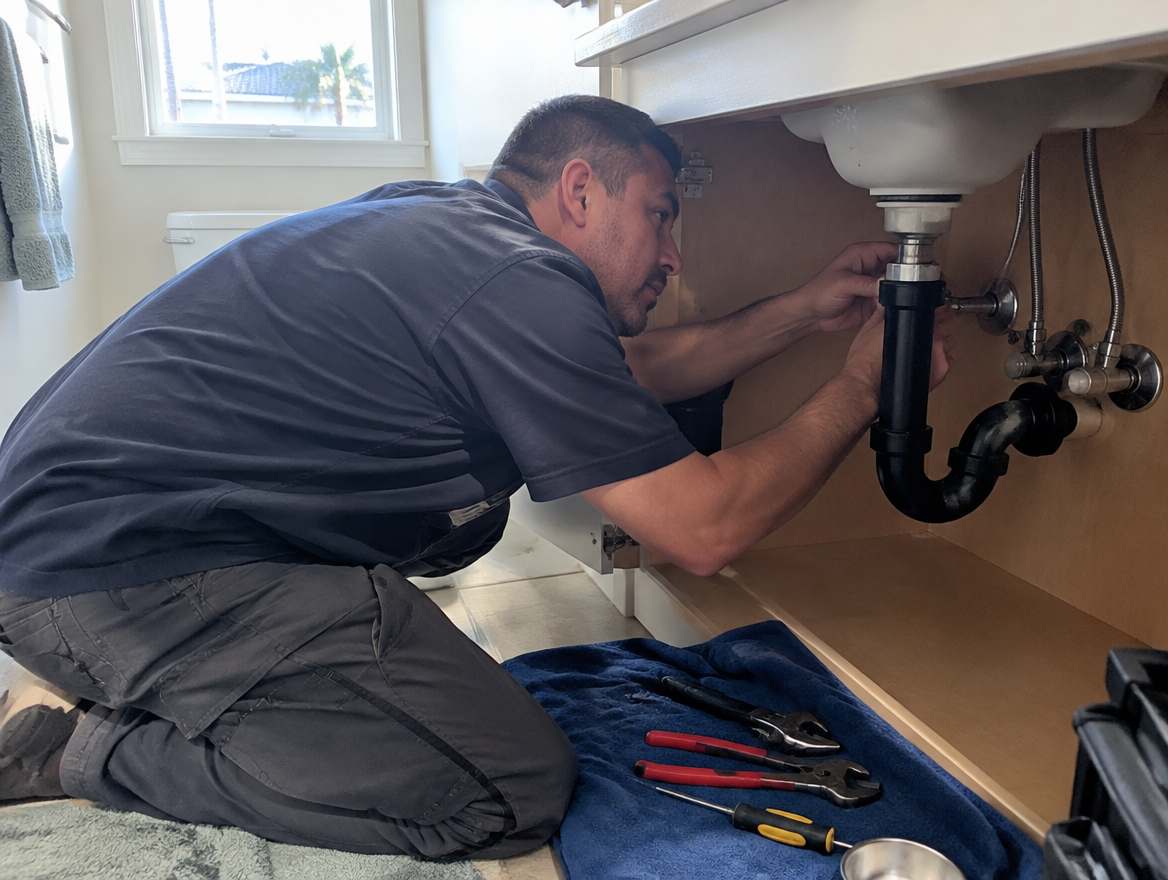
A plumber working under a sink on home plumbing
Illustrative photo

01 / Right now

Leaking right now? Do this first

Stop the water, get people clear of gas or sewage, then take photos. A flashlight and maybe a meter key cover it.

Which valve do I close?
  1. Stop the water. Close the valve under the sink or behind the toilet. If the water comes from a wall, ceiling or the floor, close the main shutoff where the supply line enters the house, often beside the front hose bib.

  2. Smell gas? Leave the house now and call 911 or SoCalGas from outside. Don't touch switches and don't try to relight a pilot.

  3. If the water heater itself is leaking, set a gas unit to pilot or switch off the breaker for an electric one.

  4. If sewage is backing up, stop using water and keep kids and pets away. Clean it up with gloves and disinfectant, or hire a cleaner.

  5. Move what you can, mop up, and photograph the leak and the damage for your insurer.

  6. Note what you saw and when, then call a CSLB-licensed plumber and ask for a diagnosis before a price.

02 / Shutoffs

The valve that stops each fixture

Walk the house with this list once, on a dry afternoon, and turn each valve to make sure it moves. It takes about twenty minutes and no tools.

FixtureWhere the valve isHow to close itWhen it's urgent
Whole house Main shutoff where the supply line enters the house, often beside the front hose bib or in the garage. A second valve sits in the meter box at the curb. Ball valve: turn the handle across the pipe. Gate valve: clockwise until snug. Any leak in a wall, ceiling or slab
Toilet Angle stop low on the wall or floor behind the bowl. Clockwise until it stops. If it won't move, use the main. Overflow or water at the base
Kitchen sink Two angle stops inside the cabinet. The dishwasher usually tees off the hot side. Clockwise. An old multi-turn stop may drip at the stem once you move it. Wet cabinet
Bathroom sink Two angle stops under the vanity. Clockwise until snug. Drip under the vanity
Tub and shower Usually no local stop. Some sit behind an access panel on the other side of the wall. Use the main. Water inside the wall
Water heater Cold inlet valve on top of the tank. Gas units also have a gas valve on the supply pipe. Close the cold inlet. Set gas to pilot, or flip the breaker on an electric unit. Leaking tank or a gas smell
Washing machine Hot and cold valves on the wall box behind the washer. Clockwise, or flip the single lever. Burst hose
Garden and irrigation The hose bib handle. Irrigation often has its own valve near the backflow device. Clockwise at the bib or the irrigation valve. Rarely urgent

If a valve sticks or starts leaking when you turn it, stop forcing it and close the main. A gas smell is different: leave the house and call 911 or SoCalGas from outside.

03 / La Palma

Same street, same pipes, same age

Builders put up most of La Palma in the 1960s and 70s, quickly and to a pattern. Houses on one block often share the same concrete slab, the same copper or galvanized supply lines and the same cast-iron or clay lateral out to the street. If your neighbor's pipe gave out last month, yours went in the same year.

We handle the everyday side of the trade: angle stops that weep, supply lines that split, toilets that run, drains that slow, water heaters that rumble and quit. We find the cause before we price the fix. A wet sink cabinet alone can trace back to three different parts.

Below you'll find the warning signs, the valve that stops each fixture, how we work through a repair, and the questions to ask any plumber, us included.
04 / Warning signs

Small signs from fifty-year-old pipes

In a system this age, a small symptom usually points at a bigger one. Take a closer look if you notice any of these.

  1. Your water meter dial or leak indicator moves while every fixture in the house is off.
  2. Warm or damp spots on the floor, or cracked tile and lifted flooring over a slab.
  3. Water stains, bubbling paint or a musty smell under sinks, behind toilets or near the water heater.
  4. Low pressure at one fixture, or rusty or brown water when a tap first opens, which can point to aging galvanized pipe.
  5. More than one drain gurgling or backing up at the same time, especially the lowest toilet or shower.
  6. A toilet that runs, refills on its own or rocks on the floor.
  7. A water heater that rumbles, leaks from the base, runs out of hot water fast or has rust-colored water on the hot side only.
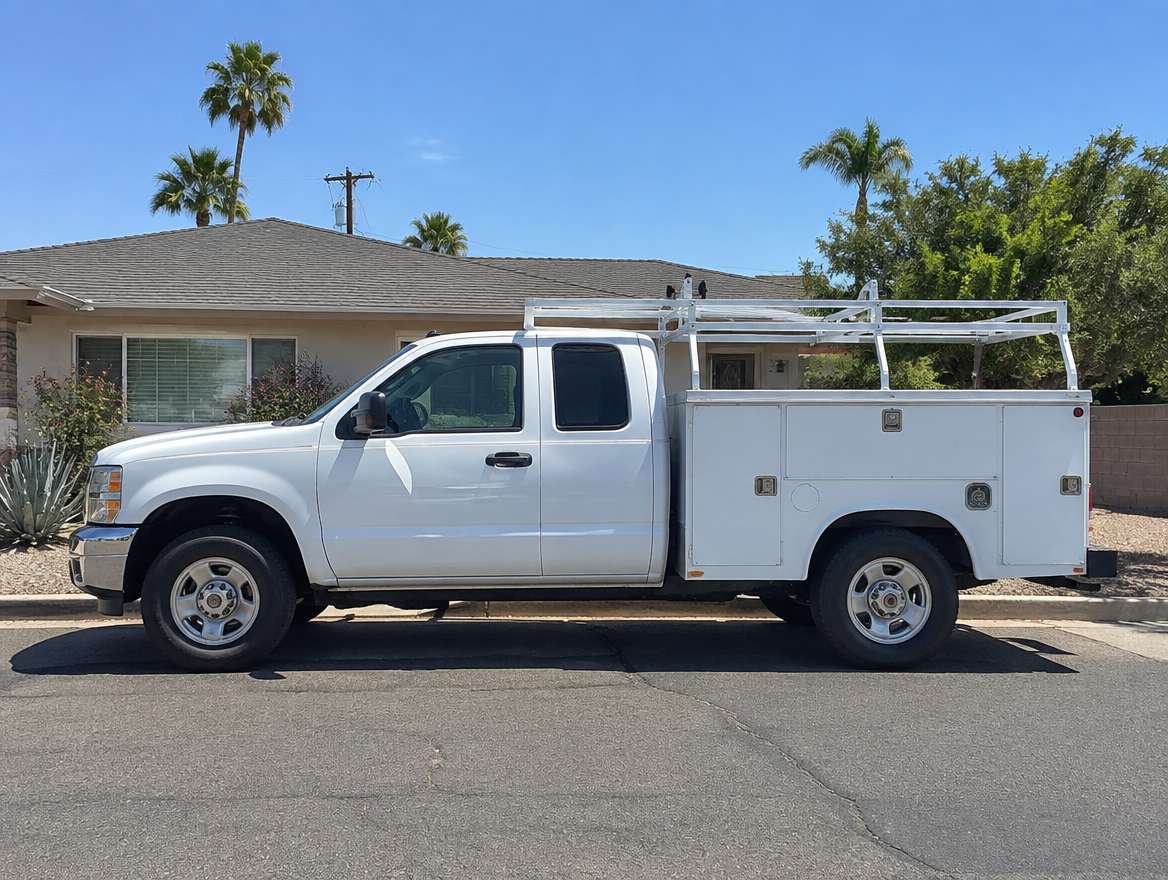
An unmarked plumbing service van parked at a home in La Palma, California

Illustrative photo.

05 / Our process

How we work through a repair

We follow the same order on each job: find the cause, explain it, put the scope and price in writing, then repair and test with you watching.

  1. Listen, then locate

    We ask what you saw, read the meter for a hidden leak and look at the fixture, valve or line you pointed to. A leak we can't see gets a pressure test or electronic leak detection.

  2. Find the cause

    A wet cabinet can mean a loose drain nut, a failed angle stop or a corroded supply line. A slow drain can mean hair in a trap or roots in the lateral. The cause sets the repair.

  3. Write it down

    You get the problem, the proposed repair, any repair-or-replace alternative and the price on paper before we pick up a wrench.

  4. Protect, then repair

    We shut the water off, cover floors and cabinets, and replace the failed part with code-compliant materials. A water heater swap or a repipe also needs a city permit.

  5. Test it in front of you

    We restore water, check every joint under pressure and run the drains. On a water heater we also check the seismic straps, venting and relief valve line.

  6. Leave a record

    Your itemized invoice lists the parts, the work and any permit number, so the next person who opens that wall knows what changed.

06 / Typical calls

Four calls La Palma houses make

Call 01

The kitchen sink cabinet is wet again

In older homes this is often a corroded angle stop or a braided supply line that has reached the end of its life, or a slip-joint drain nut that has loosened. Replacing the stops and supply lines together is common, since they tend to age at the same rate.

Call 02

A warm spot on the floor near the hallway

A warm floor over a slab can mean a hot water line leaking under the concrete. A plumber confirms it with pressure testing and leak detection, then talks through a spot repair through the slab versus rerouting the line overhead or through walls.

Call 03

The tank water heater is leaking from the bottom

A leak from the tank itself usually means the heater needs replacing; a leak from a fitting or the relief valve may be repairable. California requires water heaters to be seismically strapped, and a replacement normally needs a permit.

Call 04

Every drain is slow after the jacaranda got bigger

When several fixtures back up together, the problem is usually in the main line or the sewer lateral, not a single trap. Tree roots in older clay or cast-iron laterals are a frequent cause, and a camera inspection shows what is actually there.

07 / Under the slab

What's under a La Palma house

La Palma is under two square miles and filled in fast, so the same failures show up street after street. Slab construction keeps supply lines under concrete. Galvanized steel rusts from the inside until a shower barely runs. Original cast-iron and clay laterals crack, settle and let roots in.

Our water is a blend of local groundwater and imported water, and it runs hard. Scale builds up in tank heaters, faucet cartridges, aerators and shower valves, so flushing the heater and soaking the aerators pay off here more than in most towns.

  • Know where your main shutoff is before you need it, and make sure it turns.
  • If your home still has galvanized supply lines, ask about their condition when any plumbing work is done.
  • Water heaters in California must be strapped for earthquakes; check yours.
  • For permits on water heaters, repiping or sewer work, check with the City of La Palma before work starts.
  • Ask any company to confirm that your La Palma address is inside its service area.
Map shows the area served, not an office location. Open in Google Maps

ZIP codes served: 90623 (La Palma).

Also nearby: 90620, 90703, 90630, 90701, 90621, 90638, 90720, 90680, 92804, 90650, 92845, 92801, 92833, 90604, 92841, 92832, 90603, 90605.

08 / Calling us

What to expect when you call

Keep the first call short. We'll ask where the problem is, what you've already shut off, how long it's been going on and whether the house sits on a slab. If you know the water heater's age or the pipe type under a sink, tell us.

Before anyone comes out, ask us, or any plumber, for a CSLB license number and how the visit and the repair are priced. You should see the diagnosis and the price in writing before work starts. While this site is in preview, the number shown is a placeholder, so don't count on it in an emergency.

Check before you hire

Get the contractor's CSLB license number and look it up at cslb.ca.gov. Ask whether employees or subcontractors will be in your home, and get the price in writing before work starts. Confirm your address is inside the company's service area.

La Palma Plumber is the business name for this site. Licensing and service details will be published here once confirmed.

Fair questions to ask us

How do I check a plumber's license?
Ask for the CSLB license number and look it up at cslb.ca.gov. Make sure the name on the license matches the company you are dealing with.
What if the price changes once the work starts?
Ask for the scope and price in writing before work begins, and ask that any change be explained and approved by you in writing before the extra work is done.
Will they open walls, floors or my yard?
Ask up front. Many repairs are done at the fixture, but hidden leaks and sewer work can require access. Ask what will be opened, who restores it and whether that is included.
Who will actually do the work?
Ask whether the company's own employees or subcontractors will be in your home, and whether the person doing the work is supervised by the license holder.
Is a permit needed, and who pulls it?
For water heaters, repiping and sewer replacement, ask whether a permit is required and confirm the contractor will pull it. Check with the City of La Palma if unsure.
What if it leaks again after the repair?
Ask what the contractor's policy is on callbacks for the same problem and get it in writing. Keep the invoice listing the parts and work done.

09 / Questions

Residential plumbing repair questions

Where is the main water shutoff in a La Palma house?

In many tract homes it is a valve on the supply line where it rises out of the ground and enters the house, often near the front hose bib or the garage. There is also a valve at the meter by the street, which may need a meter key. Find yours before an emergency and check that it turns.

Should I repair or replace a leaking water heater?

A leak from a fitting, the drain valve or the temperature and pressure relief valve may be repairable. A leak from the tank body usually means replacement. Age, hot water performance and whether the heater is properly strapped and vented all factor in.

Do I need a permit for plumbing repairs in La Palma?

Simple repairs such as replacing a faucet cartridge usually do not. Work like replacing a water heater, repiping or sewer line replacement generally does. Check with the City of La Palma for the current rules before work starts.

Why does my water pressure keep dropping?

Common causes in older homes are scale-clogged aerators and cartridges, a failing pressure regulator, partly closed valves or galvanized pipe that has narrowed from internal corrosion. A plumber can test pressure at a hose bib and narrow it down.

How can I tell if I have a slab leak?

Signs include a moving water meter with everything off, warm spots on the floor, the sound of running water when nothing is on and unexplained cracks or dampness. Leak detection by a plumber confirms where it is before any concrete is opened.

Why do all my drains back up at once?

When multiple fixtures back up together the blockage is usually in the main drain or the sewer lateral. Roots, grease buildup and sagging or cracked pipe are common causes. A sewer camera inspection shows the cause and location.

How do I check a plumber's license in California?

Ask for the contractor's CSLB license number and look it up at cslb.ca.gov. The lookup shows whether the license is active, its classification and whether bonding and workers' compensation are on file.

Questions to ask before hiring a plumber

Tell us what's leaking

What's wrong, where in the house, and since when. In this preview the form isn't connected, so nothing is sent yet. Urgent? Call (714) 555-0144.

By sending this form you agree to the privacy policy.

Before anything else

Water where it shouldn't be?

Close the fixture valve or the main. If you smell gas, get out and call 911 or SoCalGas from outside. Keep everyone clear of sewage. Then pick a plumber whose CSLB license you've looked up yourself.

Call Get help