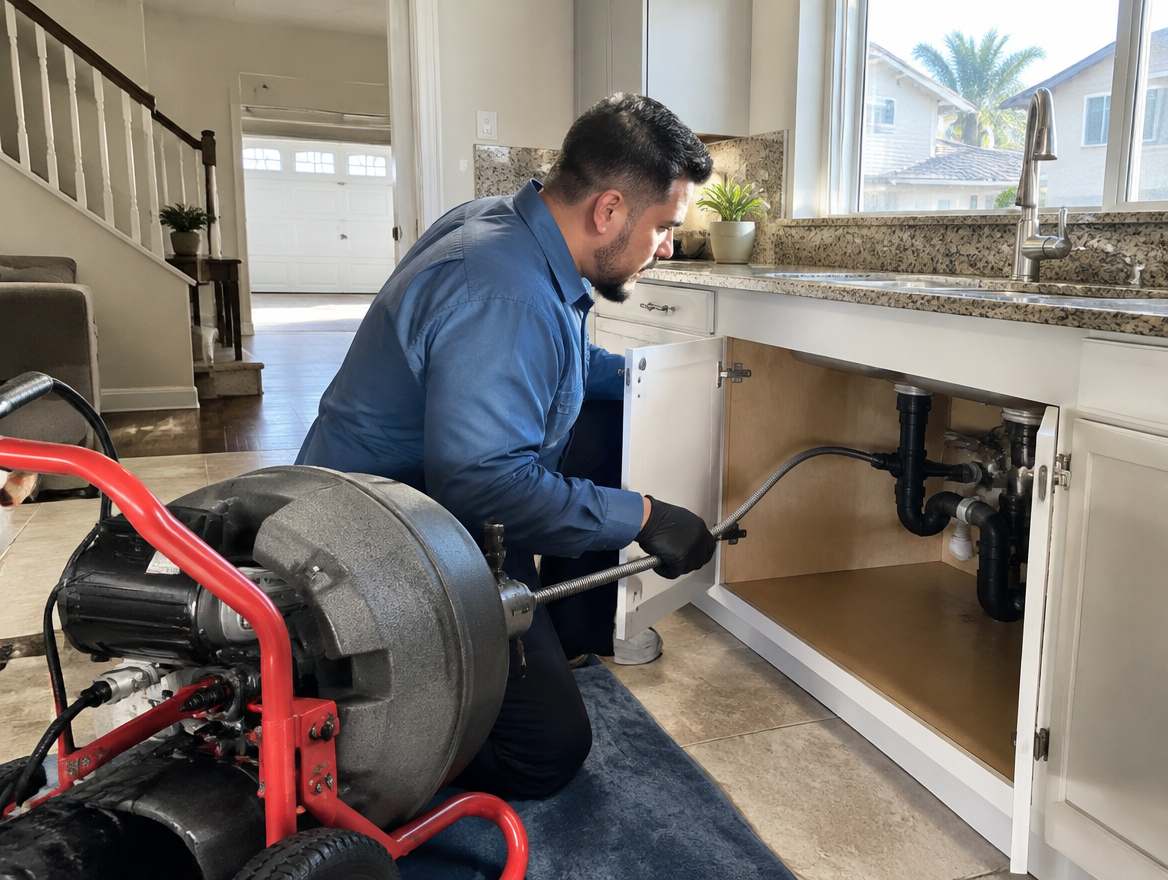
A plumber clearing a clogged drain with a powered drain-cleaning machine under a kitchen sink

Buena Park, CA · Drain and sewer jetting

Hydro jetting for Buena Park drains and sewer lines

A snake pokes a hole through the clog. We scour the grease, scale and roots off the whole pipe wall with high-pressure water, after a camera shows us the pipe can take it.

Preview site for Buena Park Hydro Jetting: the phone number shown is a temporary placeholder and our request form is not connected yet, so nothing here is a quote.

Camera before pressure
We film old clay and cast-iron lines before we jet them.
The whole wall, scoured
Grease, scale and fine roots come off, not just the plug.
Footage you keep
Ask for the video and the footage marks for every defect.
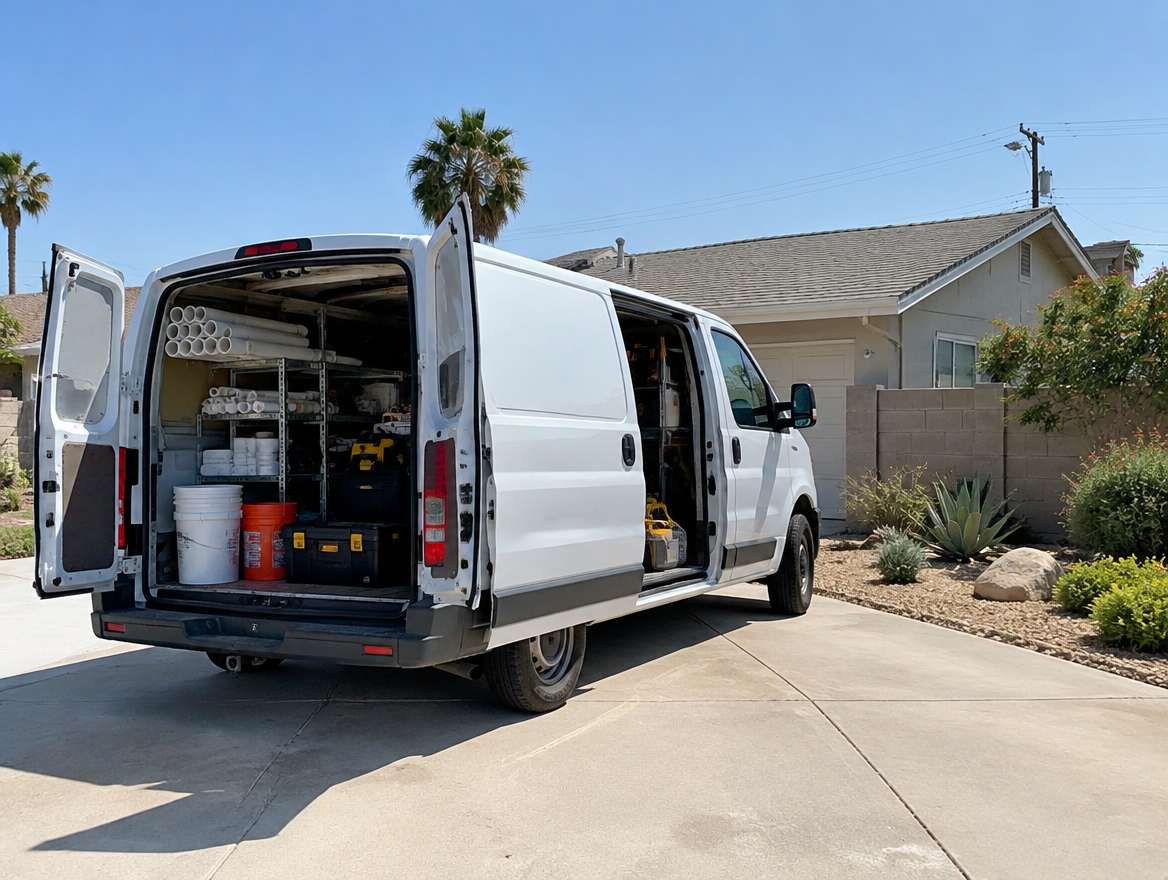
An unmarked plumbing service van parked at a home in Buena Park, California

Why it comes back

The clog comes back because the pipe wall stays dirty

A jetting hose has a nozzle with jets aimed backward. Water at high pressure pulls the hose down the line and blasts the walls on the way, stripping off grease, soap scum, scale and the fine roots that catch everything you flush. That is why we suggest jetting for lines that keep backing up, and a plain snake for one hairball in one sink.

Most of Buena Park went up as slab-on-grade tracts between the 1950s and 1970s. Under those floors you usually find cast-iron drains, and out to the street a clay or cast-iron sewer lateral. Old pipe can come up clean. It can also be cracked, offset or broken, so we run a camera first and set the pressure for the pipe we actually see.

This is a preview site for Buena Park Hydro Jetting. The phone number shown is a temporary placeholder, and the request form does not send anywhere yet.

Choosing the tool

Snake it, jet it, or film it first?

Match what you see at home to the usual first move. It is a starting point; the camera makes the final call.

What you're seeingFirst moveWhy
One sink or tub is slow. Everything else drains fine. Snake it Almost always a local clog in that branch. A cable clears it, and jetting is more machine than the job needs.
The kitchen line closes up again every few weeks. Jet it Grease lines the whole pipe. A snake leaves a narrow tunnel through it; the jetter scrapes the full wall.
Several drains slow, gurgling, or water rising in the lowest one. Camera first That points to the main lateral. Film it, then choose: roots, grease and a broken pipe each need a different fix.
Roots in a clay or cast-iron lateral. Jet it A root-cutting nozzle shaves roots off the wall, once the camera shows the pipe around them is intact.
The camera shows a crushed, collapsed or badly offset section. Don't jet Water at pressure can wash soil into the break and make it bigger. This is a repair conversation.
Old house, no cleanout, nobody knows what is down there. Camera first Access and pipe condition set the method. Adding a cleanout first is often the right call.

Warning signs

Signs your line needs more than a snake

One slow sink is usually a local clog. These patterns point to buildup along the whole line, or trouble in the main lateral.

  • The same drain clogs again within weeks of being snaked or treated.
  • Several fixtures are slow at once, or the tub gurgles when the toilet flushes.
  • Water comes up in the shower or floor drain when the washing machine drains.
  • A sewage smell near the cleanout, floor drains or the yard over the sewer line.
  • The cleanout cap shows standing water, or the line backed up after heavy use like a holiday weekend.
  • A previous camera inspection showed root intrusion or heavy grease and scale in the lateral.
  • A kitchen line in a home or food business keeps closing up with grease.

Right now

Backed up right now? Do this first

  1. Stop running water anywhere in the house: no showers, laundry, dishwasher or flushing. Every gallon you add has to go somewhere, and in a blocked lateral it comes up the lowest drain.

  2. If sewage has backed up, keep children and pets away, do not touch it with bare hands, and ventilate the room. Sewage carries bacteria; contaminated rugs and drywall usually need professional cleanup.

  3. If a supply pipe is leaking as well, close the main water shutoff, usually near where the line enters the house or at the meter by the street.

  4. Find the sewer cleanout (often a capped pipe near the foundation or in the front yard) and keep the area clear. Only loosen the cap if you can stand back, since a full line can push water out under pressure.

  5. Skip caustic drain cleaners on a line that may be jetted. They do not reach a main-line clog, and the chemical sitting in the pipe is a hazard to whoever opens it next.

  6. Write down what happened, which fixtures backed up and when, and any past repairs. A plumber can use that to decide whether a camera, a snake or a jetter comes first.

Smell gas anywhere near the work? Leave the building and call 911 or SoCalGas from outside.

The job

How we jet a line, start to finish

Six steps, with a camera on both ends. If anyone wants to jet an old clay or cast-iron lateral without looking first, ask them why.

  1. 1

    Find an access point

    The plumber locates a cleanout big enough for the jetting hose. If the home has no usable cleanout, they may go through a toilet flange or roof vent, or recommend installing a cleanout first.

  2. 2

    Camera the line first

    A sewer camera shows what the blockage is (grease, roots, scale, a foreign object) and whether the pipe is cracked, offset, sagging or collapsed. Many plumbers first open a small path with a cable so the camera can pass.

  3. 3

    Choose the nozzle and pressure

    Root-cutting, penetrating and flushing nozzles do different jobs. Pressure and flow are set for the pipe material, its diameter and its condition, gentler for older clay and cast iron.

  4. 4

    Jet from the cleanout toward the street

    The hose is fed out in passes, scouring the walls and flushing debris downstream into the public sewer. Roots are cut back and grease is broken up and carried away.

  5. 5

    Camera again to confirm

    A second camera pass shows whether the pipe is clean and reveals defects the buildup was hiding. Ask for the video or still images and the footage location of any problem.

  6. 6

    Plan what comes next

    A clean, sound line may only need periodic maintenance. A broken or root-filled lateral may need a spot repair, lining or replacement, which is a separate decision and a separate written quote.

Around town

Four calls we expect to get in Buena Park

Roots in an older clay lateral

Mature street and yard trees send fine roots into clay pipe joints, and the line slows again a few months after each snaking. Jetting with a root-cutting nozzle clears the pipe wall more completely, and the follow-up camera shows whether the joints are only leaking or actually broken.

Kitchen line closing up with grease

Grease, food and soap cool and harden inside the kitchen branch line, especially where it runs under the slab. A snake opens a small channel; jetting scours the full circumference so the line flows at its real size again.

Backup after a full house

A family gathering, extra laundry and guests showering can push a partly blocked lateral past its limit. The water comes up in the lowest shower or tub. Stop using water, then have the main line cleared and inspected rather than just the fixture that overflowed.

Restaurant or shop with a grease problem

Commercial kitchens on busy corridors can build up grease in branch and main lines fast. Scheduled jetting is a common maintenance approach. Ask the city about any grease-control requirements that apply to your business before setting a schedule.

Local notes

What sits under a Buena Park house

Much of Buena Park was built out as slab-on-grade tract housing between the 1950s and 1970s. Homes from that era often have cast-iron drain lines under the floor and clay or cast-iron sewer laterals to the street, and many have decades of scale, grease and root intrusion inside them. Hard water, from local groundwater blended with imported water, adds mineral scale to the mix.

Who is responsible for which part of the lateral, whether work in the street needs a permit, and what rules apply to restaurant grease all depend on the city. Check with the City of Buena Park before major sewer work, and ask your plumber which permits they will pull.

  • Ask any company to confirm that your Buena Park address is inside its service area before you book.
  • Ask whether the line will be inspected with a camera before and after jetting, and whether you get the footage.
  • For a gas smell anywhere near the work, leave the building and call 911 or SoCalGas from outside.
  • Check the contractor's license at cslb.ca.gov before any work starts.
  • Check with the City of Buena Park about lateral responsibility, street permits and grease-control rules for businesses.
Map shows the area served, not an office location. Open in Google Maps

ZIP codes served: 90620 (Buena Park), 90621 (Buena Park).

Also nearby: 90623, 90638, 92833, 90630, 92801, 92804, 90703, 90680, 90701, 92832, 90604, 92841, 92845, 90720, 90650, 92802, 90603, 92805.

Before you hire

What we ask on the first call

Which drains are slow, when it started, and whether water has come up anywhere. Then the age of the house, where the cleanout is, and whether anyone has cleared or filmed the line before. Those answers tell us if a camera, a snake or a jetter goes in first.

Before any work, you should get in writing whether the line gets filmed, what the price covers, and what happens if the camera finds a broken pipe. Hold any plumber to that, us included. While this site is in preview, the phone number shown is a temporary placeholder and the request form is not connected yet.

Buena Park Hydro Jetting is the business name for this site. Licensing and service details will be published here once confirmed.

Questions to ask before hiring a plumber

How do I check a plumber's license?
Ask for the contractor's California CSLB license number and look it up at cslb.ca.gov. Confirm the license is active, the business name matches, and the classification fits plumbing work.
A company wants to jet without looking at the line first. Is that a problem?
On a simple branch drain it may be fine. On an older main sewer lateral, ask why they are skipping the camera and what they will do if the pipe turns out to be broken.
What should be in writing before jetting starts?
What the price covers (access, camera inspection, jetting, a follow-up camera pass), any extra charges, and what happens if the camera finds damage. Get it in writing before work begins.
The plumber says I need a full sewer replacement. How do I check?
Ask for the camera video with the footage marked at each defect. You can share that recording with a second licensed plumber for another opinion before agreeing to major work.
Can sewage backup damage be covered by insurance?
Policies vary a lot, and some exclude sewer backup unless you added coverage. Call your insurer, take photos before cleanup, and keep receipts.
Will employees or subcontractors do the work?
Ask directly. Whoever does the work should be covered by the licensed contractor you hired, and you should know who will be on site.

FAQ

Straight answers about jetting

Is hydro jetting safe for older clay or cast-iron pipes?

It can be, when the line is inspected with a camera first and the pressure and nozzle are matched to the pipe. Jetting is not a fix for a pipe that is already broken, offset or collapsed; water can wash out soil around the break. That is why the camera comes first on older Buena Park laterals.

What is the difference between snaking and hydro jetting?

A snake (cable machine) bores a hole through a clog or cuts roots with a blade, often leaving buildup on the pipe walls. Hydro jetting uses high-pressure water to scour the full inside of the pipe and flush debris downstream. Snaking is often enough for a single clog; jetting suits recurring grease, scale and root problems.

Will jetting get rid of tree roots for good?

No. Jetting cuts roots back and cleans the pipe, but roots return as long as the joints or cracks they came through stay open. The follow-up camera shows how bad the entry points are, which helps you decide between periodic cleaning and a repair, lining or replacement.

Do I need a sewer camera inspection before jetting?

On a main sewer lateral, especially an older clay or cast-iron one, it is strongly recommended. The camera identifies the blockage and the pipe condition so the job is done safely, and a second pass afterward confirms the result. Ask for the footage.

How often should a line be jetted?

There is no single schedule. A line with a repaired or replaced lateral may rarely need it; a root-prone clay line or a busy commercial kitchen line may need regular maintenance. A camera inspection is the best basis for any schedule, not a sales script.

Can I just use a store-bought drain cleaner instead?

Chemical cleaners rarely reach or clear a main-line blockage, can damage older pipes, and leave a hazard for anyone who opens the line afterward. If more than one fixture is affected, the problem is likely in the main line and needs mechanical clearing.

Who fixes the sewer line between my house and the street?

That depends on where the problem is and on local rules about lateral ownership and work in the public right-of-way. Check with the City of Buena Park, and ask any plumber whether they will handle the permits for work near or in the street.

Tell us what the drain is doing

Which fixtures, what happened, and since when. Urgent? Call (714) 555-0136.

By sending this form you agree to the privacy policy.

Water coming up in the tub?

Stop using water, keep people and pets away from any sewage, and close the main shutoff if a pipe is leaking too. Then pick a plumber whose license you have checked at cslb.ca.gov, and ask for a camera look before anyone jets an older line.

Call Get help