New copper or PEX
Full bore, clean wall
What a repipe puts back: the pipe's whole opening, carrying full pressure to every fixture.
Whole-house repiping · Fullerton, CA
Brown water on Monday morning. A shower that fades when the dishwasher runs. A third pinhole leak in two years. We replace worn galvanized and copper supply lines with new copper or PEX, and in slab homes we run them through the attic so nobody breaks your floor.
Preview site for Fullerton Repiping. The phone number shown is a temporary placeholder, and the request form is not connected yet, so a submission is not sent anywhere.
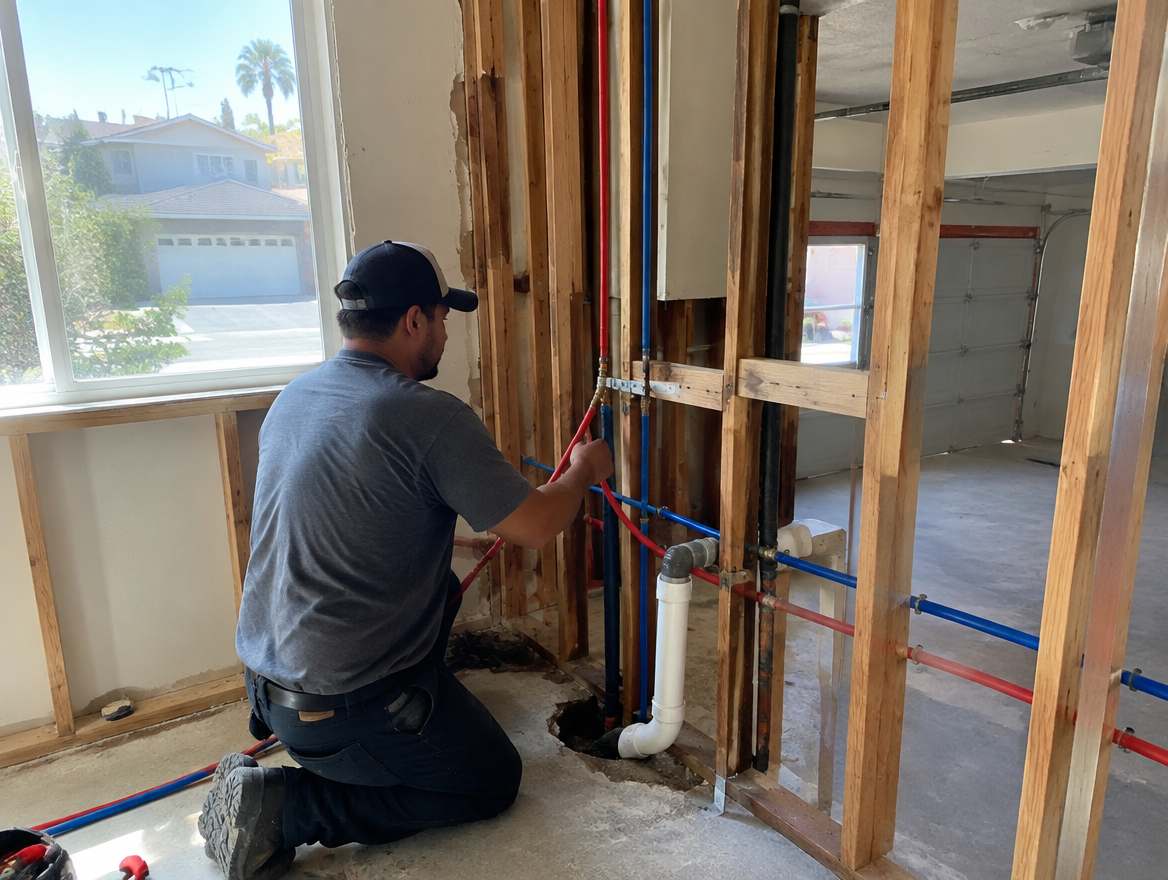
Slab home?New lines run overhead through the attic. The old pipe under your floor gets capped and left alone.
Inside the pipe
Your symptoms come from what is happening inside the wall of the pipe. Here is the difference between the line a repipe installs and the two you are most likely living with. Drawn to explain, not to scale.
New copper or PEX
What a repipe puts back: the pipe's whole opening, carrying full pressure to every fixture.
Copper after decades
The bore stays open but the wall wears thin. Leaks start small, often under a slab or inside a wall.
Galvanized steel
Rust builds inward until water squeezes through a fraction of the opening. That is your weak shower and brown first draw.
Repair or repipe
A repipe swaps out every water supply line between your main shutoff and the fixtures: faucets, toilets, showers, the water heater, the washer. Drains and the sewer line stay put; they are a separate system. The Fullerton houses that need one were mostly built between the 1950s and the 1970s, plumbed with galvanized steel or early copper.
Galvanized steel rusts from the inside until the bore is a fraction of its old width. Copper holds up longer, then starts to pinhole after decades of hard water, often under the slab where you cannot see it. Once leaks show up in a third room, you are paying to chase failures one at a time.
Copper and PEX both meet California code when installed right. We will tell you which one fits your house and why, show you where every new line will run, and put the wall openings and patching in writing before anyone picks up a saw.
Check your house
Any one of these can have a smaller cause. Three or more at once point at the pipe itself.
Log them with our symptom sheetBehind the walls
General traits only. The right pick depends on your house and the routes it allows, and we will explain ours before you agree to anything.
| Material | How to spot it | What to know | Ask the plumber |
|---|---|---|---|
| Galvanized steel What many older homes still have | Gray, threaded joints. A magnet sticks to it. | Rusts from the inside, narrowing the pipe. Causes low pressure and brown water. Nobody installs it for new supply lines. | Is any galvanized left after past repairs, including at the water heater and hose bibs? |
| Copper Older pipe, and a repipe choice | Reddish brown and rigid, with soldered or pressed fittings. | Long track record and heat tolerant. Can pinhole over time, especially under a slab. Rigid pipe needs more wall openings to route. | Which wall thickness, Type L or M, and which fitting method? |
| PEX Common repipe choice | Flexible tubing, often red for hot and blue for cold. | Bends around corners, so fewer fittings and often fewer openings. Must stay out of sunlight. Joined with crimp or expansion fittings. | Which PEX type and fitting system, and how will lines be supported and insulated in the attic? |
Before any quote
Six things you can do yourself, in order of urgency. The first one stops damage. The last one protects your wallet.
Right now
If a pipe is leaking now, close the main water shutoff. In many Fullerton tract homes it is near the front hose bib or where the line enters the house; the city meter box at the curb also has a valve.
Today
Turn off the water heater's power or set a gas unit to pilot or vacation if the house will be without water for a while.
This week
Write down where and when you see rusty water, low pressure or leaks, and photograph exposed pipe under sinks and at the water heater.
Before quotes
Check your water bill history and read the meter with every fixture off. If the dial still moves, there is a leak somewhere on your side.
Any time
If you smell gas at any point, leave the house and call 911 or SoCalGas from outside. Do not work near gas lines yourself.
Before hiring
Look up any plumber you are considering at cslb.ca.gov before you let them open walls.
The job, start to finish
Six stages, in this order. You see each one in writing before we open a wall, and you can hold any plumber you talk to against the same list.
Send us the detailsThe plumber identifies the existing pipe material, finds the main shutoff, checks water pressure and looks for the routes the new lines can take through the attic, walls or crawlspace.
You choose copper or PEX and agree on where the new lines will run. In slab homes, the new supply lines are usually routed overhead through the attic instead of under the floor.
A repipe usually needs a building permit. Check with the City of Fullerton about permit requirements, and agree on which days the water will be off and how long.
Floors and furniture are covered, and small openings are cut in drywall at each fixture and along the route. The old pipes are often abandoned in place rather than torn out.
New supply lines and fixture shutoff valves are installed, connected at the main and the water heater, then pressure tested for leaks before walls are closed and before any required inspection.
Openings are patched, and you walk through the house testing every fixture. Ask in writing whether drywall texture and paint are included or left to you.
Typical houses
Pressure has faded for years and the tub fills with tinted water. The galvanized pipe has rusted closed inside, so repairs at one fixture do little. A full repipe, often with the new lines run through the attic, is the usual answer.
A warm spot on the floor or a moving meter points to a leak in copper under the slab. One repair is common; a second suggests the rest of the buried copper may follow. Many owners reroute all supply lines overhead instead of breaking the slab again.
Earlier owners replaced some sections with copper and left galvanized elsewhere. Corrosion tends to build where the two metals meet. A plumber can tell you whether a partial or full repipe makes more sense for that house.
An inspection report notes galvanized supply pipe or prior leaks. Get the existing pipe material confirmed by a licensed plumber and a written scope before negotiating, rather than relying on a general estimate.
Guides, worksheets you can print, example houses and neighborhood notes for Fullerton.
How galvanized and copper fail, how copper and PEX compare, and what a repipe does to a slab or raised-foundation house in Fullerton.
A shutoff map, a leak log, a quote comparison grid and the walkthrough list you use before final payment.
Invented examples, not real customer jobs.
An early-1900s house near downtown and a much newer one in Amerige Heights need different conversations.
ZIP codes served: 92832 (Fullerton), 92835 (Fullerton), 92831 (Fullerton), 92833 (Fullerton).
Also nearby: 92801, 90621, 92805, 90631, 92870, 92806, 90638, 92821, 92802, 92804, 90603, 90604, 90620, 92865, 91748, 90623, 92840, 90680.
Fullerton
Much of Fullerton's housing went up between the 1950s and the 1970s, with many single-story slab-on-grade tract homes alongside older houses near downtown and the hills to the north. Supply pipe in those homes is commonly galvanized steel or early copper, and in slab homes some of it runs under the concrete.
Fullerton is served by the city's own water utility, which blends local groundwater with imported water. That water is hard, and mineral buildup adds wear to pipes, valves and water heaters over decades. The age of the pipe, the water and the way it was installed all affect when a repipe becomes worth it.
Questions
Get the contractor's CSLB license number and check it at cslb.ca.gov. Ask who will do the work, and get the scope and price in writing before a wall comes open. Confirm your address is inside their service area.
Fullerton Repiping is the business name for this site. Licensing and service details will be published here once confirmed.
Questions to ask any plumberBoth are accepted materials when installed to code. Copper is rigid, long proven and joined with soldered or press fittings. PEX is flexible, needs fewer fittings and is often quicker to route through finished walls. Ask a licensed plumber which suits your house, water and budget, and to explain the fittings they use.
Usually not. A repipe replaces the pressurized water supply lines. Drain, waste and vent pipes and the sewer lateral are separate systems with their own inspections and repairs.
Many people do, because water is typically shut off only during working hours. Ask for a written schedule of when the water will be off and when each room will be opened up.
A whole-house repipe generally requires a permit and inspection. Check with the City of Fullerton for the current requirements, and ask your plumber who will apply for it.
A repipe needs openings in drywall at fixtures and along the pipe routes, but a careful plan keeps them small. Ask whether patching, texture and paint are included or left to you.
A partial repipe of one branch can make sense if the rest of the pipe is in good shape. A plumber should explain what they saw and why they recommend partial or full replacement.
Look at exposed pipe near the water heater, under sinks or at outside hose bibs. Galvanized steel is gray and threaded at the joints; a magnet will stick to it. Copper is reddish-brown and a magnet will not stick.
Start here
When you call us or send us the details, expect questions about the age of the house, the pipe material you can see, how many bathrooms and fixtures there are, whether it is a slab or raised-foundation home, and what problems you have noticed. Photos of exposed pipe help.
Most repipe quotes require a visit to see the routes and the attic or crawlspace. Before agreeing to anything, ask for the CSLB license number, the material to be used, what drywall work is included, who pulls the permit and how the price is stated in writing.
Close the main shutoff first. Everything else can wait an hour. Then note your pipe material and symptoms, and check any plumber's license at cslb.ca.gov, ours included. This is a preview site: our phone number is a temporary placeholder and the request form is not connected yet, so a submission goes nowhere for now.
House age, the pipe you can see, and what has been going wrong. Urgent? Call (714) 555-0108.