Amerige Heights · West Fullerton

PEX, tankless and fixture plumbing for newer Amerige Heights homes

Your house skipped the rusted galvanized pipe of 1960s Fullerton. It fails in newer places instead: a crimp ring at the manifold, scale inside a tankless heat exchanger, a pressure regulator that has stopped regulating. We find the part that failed and repair that part.

Preview site for Amerige Heights Plumber. The phone number shown is a temporary placeholder, and the request form is not connected to a destination yet, so a submission is not sent anywhere for now.

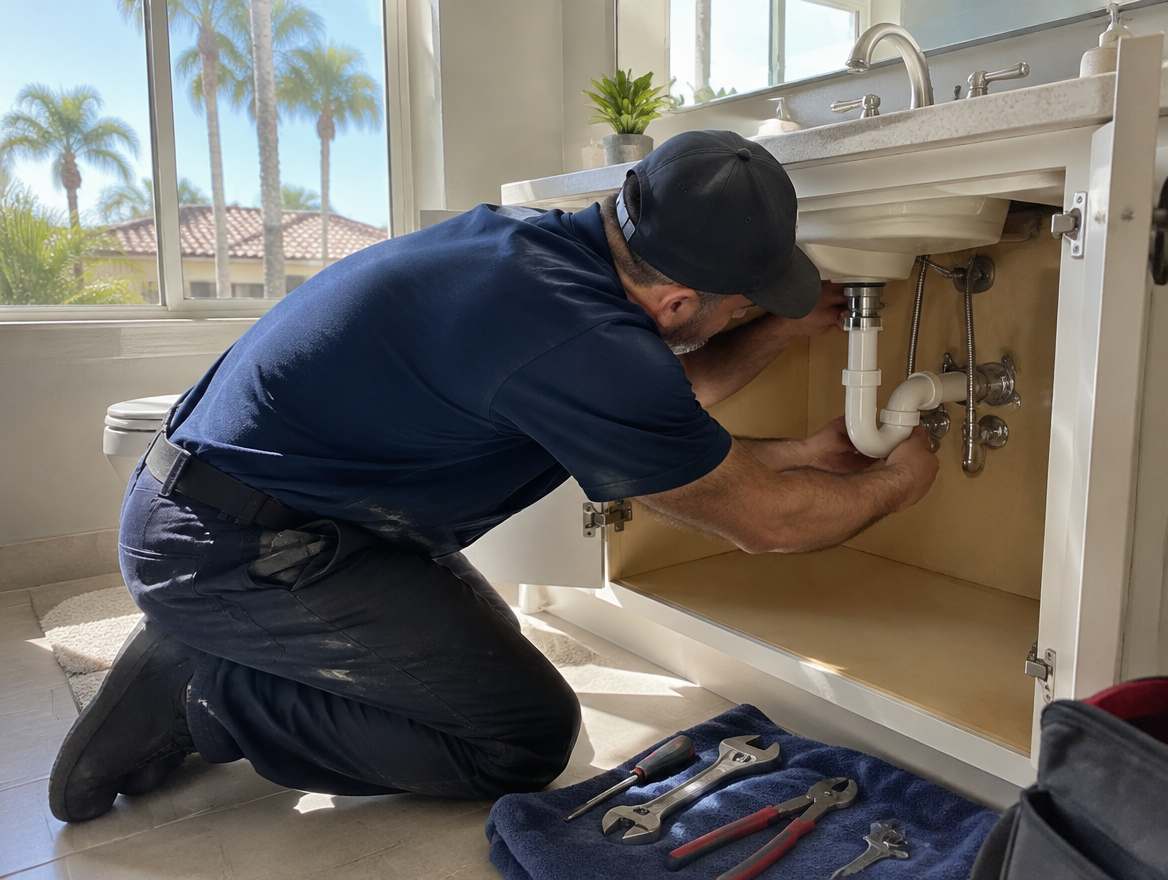
A plumber working under a sink on home plumbing
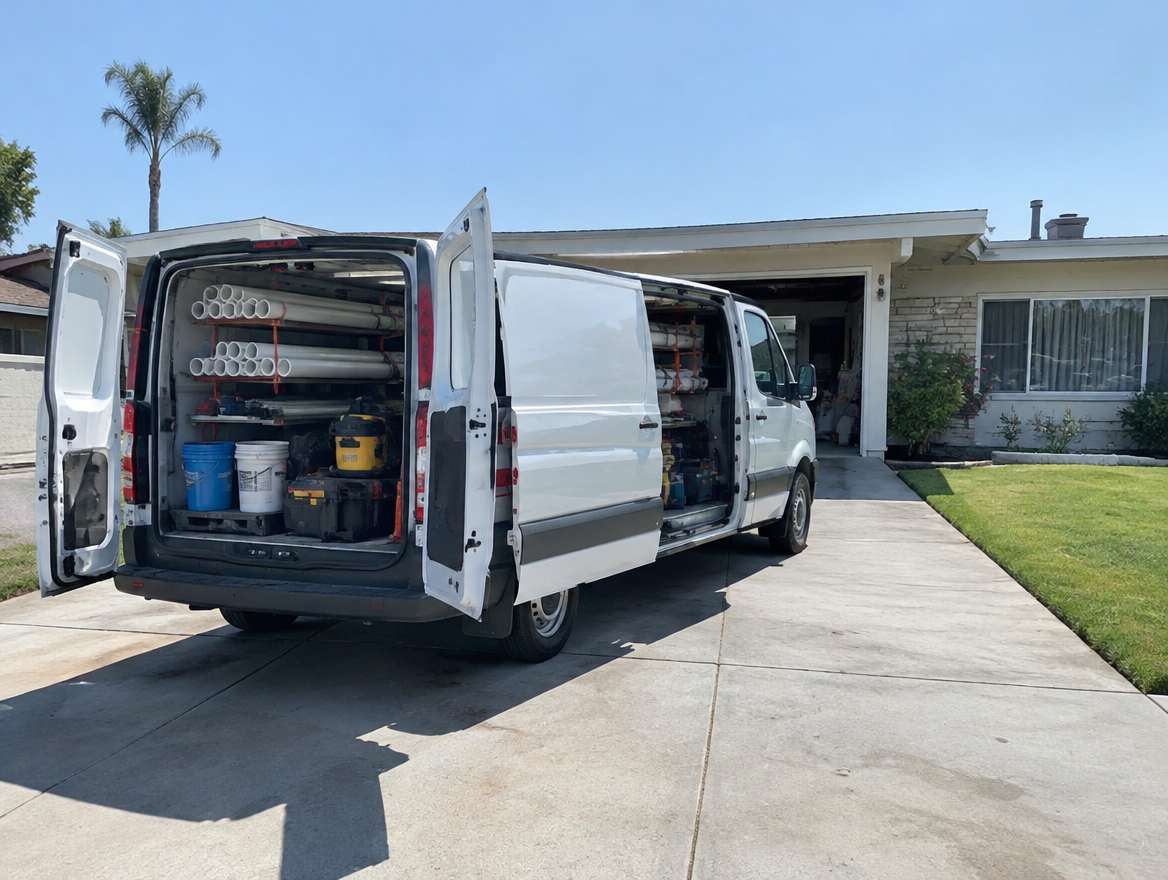
An unmarked plumbing service van parked at a home in Amerige Heights, California

Why newer homes are different

A newer house leaks in newer places

  1. Amerige Heights is one of Fullerton's newer neighborhoods. Most houses here never had galvanized supply pipe or a cast-iron drain, the parts that wear out across the city's 1950s to 1970s tracts. Builders of this era plumbed with PEX or copper and hung tankless or high-efficiency heaters on garage walls.

  2. Those parts fail in their own ways. A crimp ring weeps at the manifold and leaves a white crust on the brass. Hard water scales a tankless heat exchanger until the display throws a code halfway through your shower. A worn pressure regulator lets house pressure climb until the relief valve drips into its pan.

  3. Each of those is one part. We look for the connection, valve or cartridge that failed and talk about that repair first, long before anyone mentions repiping.

Spec sheet

Seven parts to find before anything leaks

Walk the house once with this list. Builders put things in different spots, so write down where yours are. Ten minutes now saves a search with water on the floor.

PartWhere to lookCall us when
Main shutoff Where the water line enters the house: near the front hose bib, on a garage wall or in a box by the foundation It won't close all the way, drips at the stem, or you can't find it
Pressure regulator On the main line near the entry, a bell-shaped brass valve Pipes bang, the relief valve drips, or a gauge reads higher every month
PEX manifold Garage, utility closet or near the heater, with one valve per line Any drip or crust at a fitting, or a line rubbing against framing
Tankless heater On an exterior or garage wall, with its own vent Repeat codes, temperature swings, or no flush on record. Gas smell: leave first
Expansion tank A small tank on the cold line beside a tank heater, if one was installed The relief valve weeps, or the tank sounds full when you tap the top
Fixture stops Under every sink, behind every toilet, behind the washer and fridge Stuck, dripping, or won't stop the flow
Cartridges Inside single-handle faucets and shower valves Drips after closing, stiff handle, or a shower that won't hold temperature

Print the full version: shutoff map worksheet.

Watch for

Signs worth a closer look

None of these mean the house is failing. Each points to one part that needs attention.

  • The shower runs hot, then cold, then hot, or the tankless display shows a code.
  • A damp spot, stain or white crust at the PEX manifold, the heater connections or the valves under a sink.
  • Pipes bang when the washer or dishwasher shuts off, or faucets spray harder than they used to.
  • A toilet refills on its own at night with nobody touching it.
  • Aerators and shower heads crust up fast, or one fixture loses flow.
  • The water meter's leak dial turns with every fixture in the house off.
  • The water heater relief valve drips, or water sits in the drain pan.

First five minutes

Do this before you call

  1. Spraying or spreading water: close the stop under the sink or behind the toilet. If you cannot isolate it, close the main shutoff for the house.

  2. Gas smell near a tankless or tank heater: leave the switches alone, get everyone out, and call 911 or SoCalGas from outside.

  3. Leaking water heater: turn it off at its power or gas control, close the cold supply valve feeding it, and keep cords and outlets dry.

  4. Write down the exact code on a tankless display. Photograph the leak, the fitting and the heater's model label.

  5. Move what can get wet and note when you first noticed the problem. A leak inside a wall needs moisture testing, and dates help.

  6. Before anyone starts work, ask for the contractor's CSLB license number and look it up at cslb.ca.gov.

On site

How we work on a newer system

Most newer-home jobs come down to one failed part. Our visits follow the same order, adjusted to what we find in your house.

  1. 01

    Read the system

    Pipe material, the PEX fitting type, the heater's model and fuel, and where your main and fixture shutoffs sit.

  2. 02

    Gauge the pressure

    A gauge on a hose bib gives static house pressure. A high reading sends us to the regulator or the expansion tank; low flow at one tap sends us to that fixture.

  3. 03

    Find the failed part

    We open up the fitting, valve, cartridge or heater component that is leaking or misbehaving, and check what the water touched before we quote.

  4. 04

    Put the scope in writing

    Which part gets replaced, whether a permit applies, and what happens if we find more damage once the wall is open.

  5. 05

    Repair with matched parts

    PEX fittings, faucet cartridges and heater parts are brand and system specific. We use parts and tools made for your system.

  6. 06

    Test it in front of you

    We pressurize the line, check for drips, run hot water until the heater settles, and show you the shutoffs and any upkeep like a tankless flush.

Four problems newer homes here run into

Problem 1

Tankless heater cuts out mid-shower

Hard water leaves scale on the heat exchanger, and many units answer with a code or uneven temperature. We read the code, check gas supply, venting and the inlet filter, and descale when scale is the cause.

Problem 2

A weeping fitting at the PEX manifold

A slow drip at a crimp ring or expansion fitting usually means one connection gets cut out and remade. Close that line's manifold valve, set a bucket under it, and we redo the joint with fittings that match your system.

Problem 3

Banging pipes and a dripping relief valve

Water hammer and a weeping relief valve often trace back to the same cause: high pressure or thermal expansion. We test the regulator and check for an expansion tank and its air charge.

Problem 4

Fixtures at the end of their parts

Cartridges start to drip, toilet fill valves hiss, shower valves stiffen. These are part swaps. Tell us the fixture brand if you know it, since cartridges rarely interchange.

West Fullerton

Plumbing in Amerige Heights

Amerige Heights sits in west Fullerton, and its construction is a generation newer than the city's slab-on-grade tracts from the 1950s to 1970s, where copper or galvanized lines and cast-iron or clay sewer laterals are the usual story. Here the work centers on modern equipment: tankless heaters, PEX layouts, pressure regulators and the fixtures the builder installed.

Fullerton's water comes from the city's own utility, a blend of local groundwater and imported water, and it is hard. You see it as crust on aerators and shower heads, and it builds up inside water heaters where you can't see it. For permits, fees or any rule tied to your address, check with the City of Fullerton or your HOA.

  • California requires water heaters to be strapped for earthquakes. Any replacement or move should be braced to code.
  • SoCalGas is the gas utility. If you smell gas, leave and call 911 or SoCalGas from outside.
  • Water billing and meter questions go to the City of Fullerton water utility.
  • Check any contractor's license at cslb.ca.gov before work starts.
  • Ask us, or any company, to confirm your Amerige Heights address is in the service area.
Map shows the area served, not an office location. Open in Google Maps

ZIP codes served: 92833 (Fullerton), 92832 (Fullerton), 92835 (Fullerton), 92831 (Fullerton).

Also nearby: 92801, 90621, 90620, 92804, 90638, 92805, 90623, 92802, 90680, 90630, 90604, 92841, 90631, 92840, 92806, 90603, 90703, 92845.

Questions

What homeowners ask about newer plumbing

How do I know if my house has PEX pipe?

Look where pipe is exposed: under sinks, at the water heater, in the garage or at a manifold. PEX is flexible plastic tubing, often red, blue or white, with brass or plastic fittings and printing along its length. Copper is rigid metal.

Can a leaking PEX fitting be repaired, or does the line need replacing?

In most cases the one connection gets cut out and remade with fittings that match the system. We confirm whether the tubing itself took damage and whether anything else is affected.

Why does my tankless water heater show an error code?

Codes point to scale, gas supply, venting, ignition or flow problems, depending on the model. Write the code down and check your manual. Leave gas and venting work to a licensed plumber.

How often should a tankless heater be flushed?

Follow your manufacturer's schedule. Fullerton's water is hard, so scale builds faster than in soft-water areas; the first flush shows how fast your unit scales.

What is a pressure regulator and why does it matter?

It is a valve near where the water line enters the house, and it lowers street pressure to a safe level. When it wears out, pressure creeps up and stresses fixtures, valves, joints and the water heater. A gauge test takes two minutes.

Do I need a permit to replace a water heater?

A water heater replacement commonly needs one, but rules vary. Check with the City of Fullerton building division and ask your contractor who pulls the permit.

Who do I call about a gas smell near my water heater?

Leave the house first. From outside, call 911 or SoCalGas. Don't touch switches, appliances or the heater controls.

Questions to ask any plumber before hiring

Send us the details

Which fixture or appliance, what it's doing, and since when. Urgent? Call (714) 555-0126.

By sending this form you agree to the privacy policy.

Right now

Water on the floor right now?

Close the fixture stop or the main. If you smell gas, get out and call 911 or SoCalGas from outside. Write down any tankless code, then call us or send the details. Check any plumber's CSLB license at cslb.ca.gov before work starts.

Call (714) 555-0126

What we'll ask when you call

What you see, where it is in the house, how long it has been going on, and whether water is still running. For a water heater, read us the brand, model, fuel type and any code on the display. For a leak, a photo and the pipe material help most.

We'll tell you what we can judge over the phone and what needs eyes on it, and you get the scope in writing before work starts. This is a preview site: the number shown is a temporary placeholder and the request form is not connected to a destination yet, so a submission is not sent anywhere for now.

Call Get help