Kitchen drains in Fullerton

Kitchen sink full of water? We find where the clog sits, then clear it.

A kitchen clog lives in one of three places: the trap under the sink, the pipe in the wall, or the main line out to the street. Each one needs a different fix. This page shows you how to tell them apart and what is safe to try first.

This is a preview site for Fullerton Kitchen Sink Clogs. The phone number is a temporary placeholder, and the request form is not connected to anyone yet.

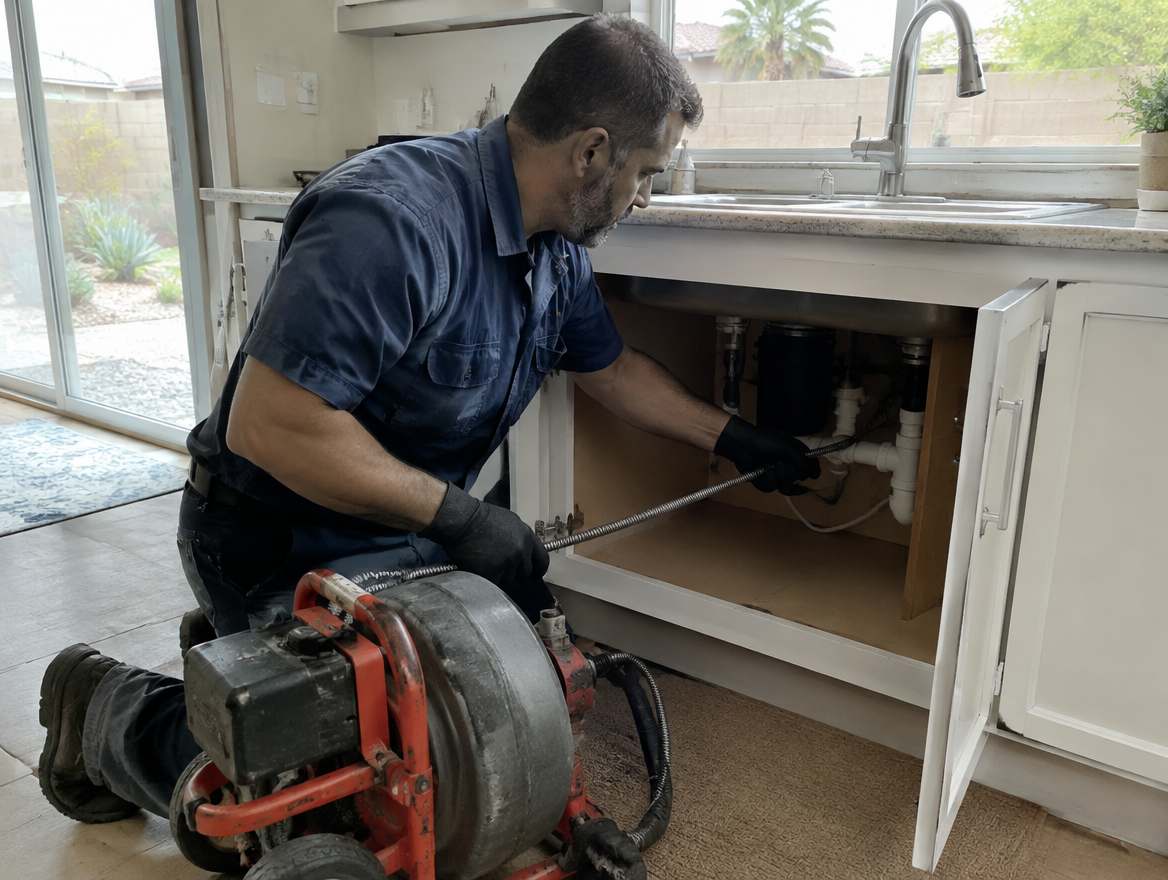
A plumber clearing a clogged drain with a powered drain-cleaning machine under a kitchen sink

Most kitchen clogs end at the trap.The rest live in the wall, a few feet past the sink.

Read the symptom

Where is your clog?

What the water does tells you where the plug sits, and whether you can handle it with a bucket or need a plumber.

What you see Where it sits What it usually means

Slow sink, every other drain in the house is fine

Trap

Grease or peel packed in the P-trap. Pull it over a bucket, or have us open it.

One basin of a double sink fills while the other drains

Trap

The plug sits past the point where the two basins meet. Seal one side before you plunge.

Dishwasher water comes up in the basin

Wall pipe

The shared drain past the dishwasher connection is narrowing. A cable or jetting clears it.

Cleared once, slow again within weeks

Wall pipe

Grease on rough old pipe. Ask about jetting and a camera before paying for another quick clear.

The tub or toilet gurgles when the sink drains

Main line

Stop using water and keep people away from any sewage. The main line needs a licensed plumber.

Several drains back up at once, lowest ones first

Main line

Often roots or a break in the sewer lateral. Do not run water until the line is cleared.

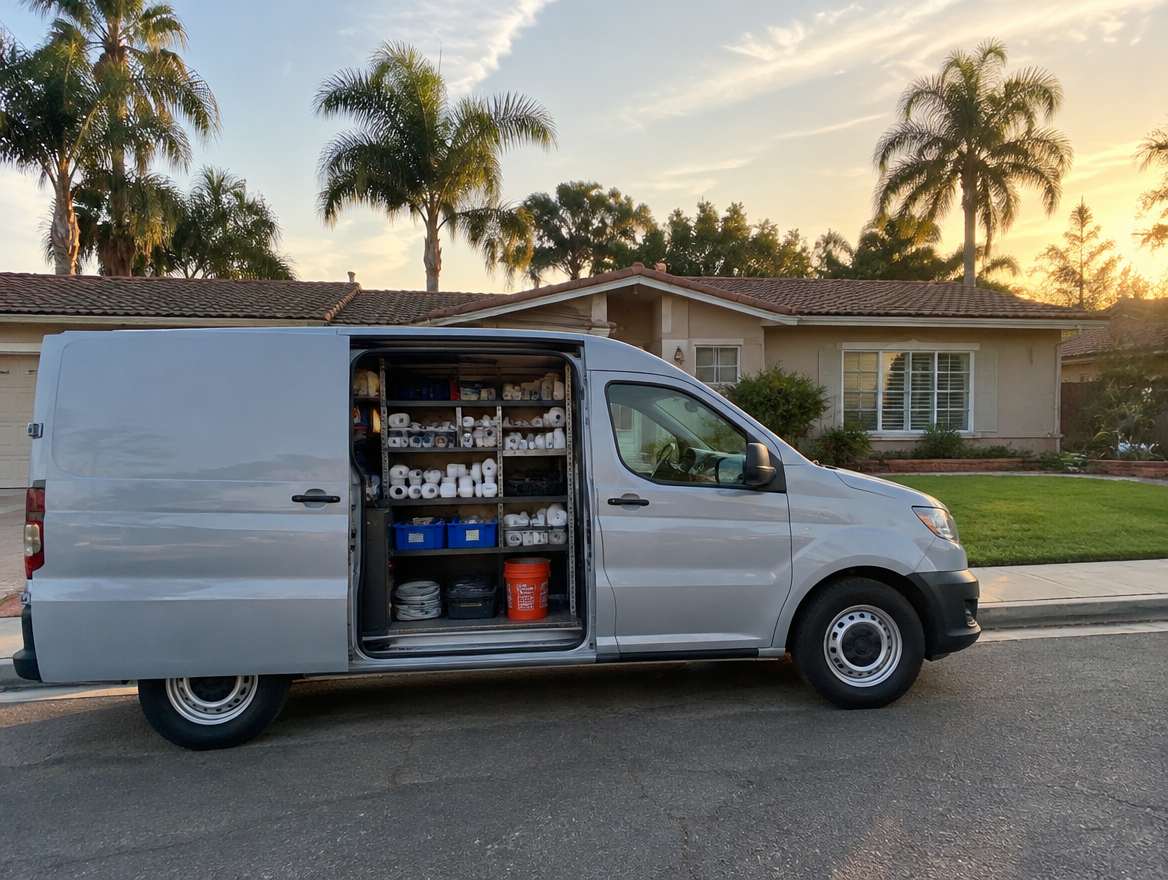
An unmarked plumbing service van parked at a home in Fullerton, California

Why kitchens clog

Grease leaves the pan warm and settles in the pipe cold

Your kitchen drain takes bacon fat, pasta water, coffee grounds and dish soap every day. The grease runs fine at the sink. A few feet into the wall it cools, turns tacky and grabs whatever floats past. The opening shrinks a little every week until one big dinner closes it.

In Fullerton the pipe itself often makes it worse. Many houses from the 1950s through the 1970s sit on slabs with their original cast-iron or galvanized drains, and the inside of that old metal is rough. Grease that would rinse out of new plastic pipe catches and stays.

Early warnings

Your drain warns you weeks before it stops

Catch it at the slow stage and you choose when the plumber comes. Wait for the full stop and the clog chooses for you.

  • Water drains slower than it used to, even with the disposal off.
  • One basin of a double sink fills when you drain or run the other.
  • Dirty water rises in the sink while the dishwasher is draining.
  • A gurgle or glug from the drain after water goes down.
  • A sour or rotten smell from the drain that cleaning does not fix.
  • The disposal hums, then the sink fills instead of emptying.
  • Water also backs up in a tub, shower or floor drain when the sink runs, which points past the sink to the main line.

Before you call anyone

The first ten minutes

Five moves, in order. None of them need tools.

  1. Turn off the faucet and pause the dishwasher. Every gallon you add sits in the basin.

  2. Switch the disposal off at the wall before your hand goes anywhere near the sink. Never reach into the grinding chamber.

  3. Run the bathroom tap and watch the tub. If a tub, shower or toilet rises, stop all water in the house and keep people and pets away from any sewage. That points to the main line.

  4. Leave the drain opener on the shelf. It rarely reaches a grease plug in the wall, it is hard on old pipe and disposals, and it burns whoever opens the trap next.

  5. Water dripping into the cabinet? Close the two valves under the sink, or the main shutoff if those will not turn, and pull everything out to dry.

On the job

How we work down the line

We start at the sink and move outward, one fitting at a time, and we test with real water before we call it done.

  1. Ask before we touch anything

    Which basin backed up first, what ran just before, and whether the tub or toilet acted up too. Those three answers tell us roughly how far down the clog sits.

  2. Open the trap

    We pull the P-trap over a bucket. A lot of kitchen clogs end right here, packed with peel, rice and grease, and the fix takes minutes.

  3. Cable the line in the wall

    If the trap is clean, we feed a drain cable through the trap arm into the branch line. On old galvanized or cast-iron pipe we pick a head that cuts grease without chewing the pipe.

  4. Jet it if grease coats the whole run

    A cable punches a hole. Jetting scours the walls. We suggest it when the line keeps closing up, and only after we know the pipe can take the pressure.

  5. Camera the repeat offenders

    Third clog this year? A camera shows the sag, the scale or the cracked joint that keeps catching food, so you fix the cause instead of paying for the symptom.

  6. Run everything, then explain it

    Both basins, the disposal and a full dishwasher drain. Then you hear, in plain words, what we found and where.

Familiar situations

Four kitchen clogs Fullerton homes know well

After a big holiday meal

Roasting pan grease, potato peels and rinse water all go down within an hour. The sink is fine that night and backs up the next morning. This is usually a grease and starch clog in the trap arm or branch line, and a cable or jetting clears it.

Dishwasher water in the sink

Most dishwashers drain through the sink plumbing or the disposal. When the line past that connection narrows, dishwasher water comes up in the basin. The fix is in the shared drain, not the dishwasher, though the drain hose and air gap are checked too.

Slow every few months in an older home

A 1960s slab-on-grade house with its original metal kitchen drain gets cleared, works for a season, then slows again. A camera look at the branch line helps decide between periodic cleaning and replacing a section of pipe.

Sink backs up and the tub gurgles

When running the kitchen sink makes water rise in a tub or shower, the blockage is likely downstream where the lines join, often the main sewer line. That calls for main line clearing, and roots or a broken lateral are possible causes.

Local plumbing

What sits under a Fullerton kitchen

Most of the city is 1950s to 1970s tract housing on concrete slabs. Your kitchen drain runs under the floor to the sewer lateral, so we reach it through the sink or an outdoor cleanout, never a crawlspace. Some older houses near downtown are the exception and sit on raised floors.

The City of Fullerton runs its own water utility, and the supply blends local groundwater with imported water. It is hard water. The mineral scale it leaves gives grease one more rough surface to grip, and a disposal or dishwasher added during a remodel puts more load on a drain that was sized for neither.

  • Water service comes from the City of Fullerton's own water utility; check with the city for questions about your sewer connection.
  • Hard water leaves mineral scale that helps grease cling inside older drain pipe.
  • Many 1950s-70s slab-on-grade homes still have original cast-iron or galvanized drain lines.
  • If several drains back up together, tree roots in the clay or cast-iron sewer lateral are a common cause.
  • Ask any company to confirm that your Fullerton address is in its service area and to give its CSLB license number.
Map shows the area served, not an office location. Open in Google Maps

ZIP codes served: 92832 (Fullerton), 92835 (Fullerton), 92831 (Fullerton), 92833 (Fullerton).

Also nearby: 92801, 90621, 92805, 90631, 92870, 92806, 90638, 92821, 92802, 92804, 90603, 90604, 90620, 92865, 91748, 90623, 92840, 90680.

Straight answers

Kitchen sink clog questions

What we ask when you call

Which basin, how long it has been slow, whether the disposal or dishwasher ran just before, and whether any other drain is acting up. The year your house was built helps too, and so does any past drain work you know about.

Ask us, or anyone you call, for a CSLB license number and look it up at cslb.ca.gov. Get the price or pricing method in writing before work starts, and ask what happens if the first method does not clear the line.

Fullerton Kitchen Sink Clogs is the business name for this site. Licensing and service details will be published here once confirmed.

Questions to ask before hiring a plumber

Is it safe to use a chemical drain cleaner on a kitchen sink?

It is better not to. Caustic and acid products rarely dissolve a grease clog that sits feet down the line, they can harm older metal pipe, plastic traps and disposals, and they leave hot chemicals in standing water for whoever opens the drain next. If you already used one, tell the plumber before they start.

Can I plunge a double kitchen sink?

You can try on a clog near the trap. Seal the other basin with a stopper or wet cloth so the pressure goes down the drain instead of up the other side, and clamp or kink the dishwasher drain hose if you can reach it. Do not plunge after using a chemical cleaner.

How do I know if the clog is in the sink or the main line?

If only the kitchen sink is slow, the clog is most likely in the trap or the branch line to the main. If tubs, showers or toilets also back up or gurgle when the sink runs, the problem is probably the main line and needs a plumber.

Why does my dishwasher drain into the sink?

The dishwasher usually empties through the disposal or a fitting on the sink drain. When the shared line past that point is partly blocked, the pumped water has nowhere to go but up into the basin. Clearing the kitchen drain normally solves it.

Can the garbage disposal cause the clog?

The disposal grinds food, but it does not make grease, fibrous peels, coffee grounds or eggshells disappear. Those can settle in the trap and branch line. A jammed disposal is a separate issue, often freed with the reset button and the hex socket underneath, with the power off.

What is hydro jetting and does a kitchen line need it?

Jetting sends high-pressure water through the pipe to scour grease off the walls. It can help when a line clogs repeatedly with grease. It is not right for every pipe, so ask the plumber about your pipe's material and condition first.

How can I keep a kitchen drain from clogging again?

Wipe greasy pans with a paper towel before washing, let cooking grease cool and put it in the trash, keep coffee grounds and eggshells out of the drain, use a basket strainer, and run plenty of water when using the disposal. Check with the city for local guidance on disposing of fats, oils and grease.

Tell us what the sink is doing

Which basin, what ran just before, and whether any other drain is slow. This preview form is not connected yet, so nothing is sent. Urgent? Call (714) 555-0121.

By sending this form you agree to the privacy policy.

Right now

Sink backed up right now?

Faucet off, dishwasher paused, disposal switched off at the wall. Then check the tub. If it rises, stay off the water and keep everyone away from sewage until a licensed plumber clears the main line.

Preview site for Fullerton Kitchen Sink Clogs. The phone number shown is a temporary placeholder and the request form is not connected yet.

Call Get help