Kitchen sink after a holiday meal
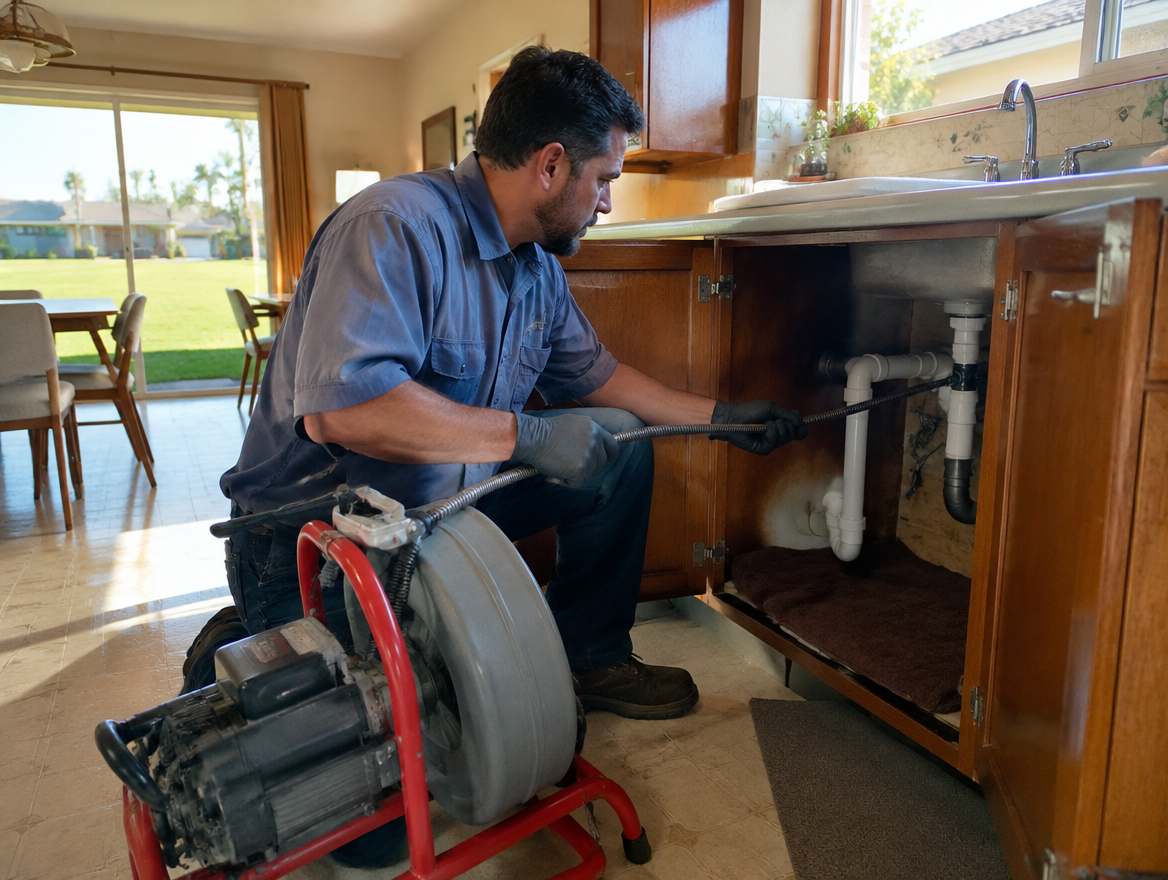
Grease and food scraps cool and harden in the kitchen branch line. A cable usually opens it, but grease that keeps coming back may call for jetting the line after a camera check.
Drain cleaning · Cypress, CA
A slow sink usually means a clogged trap. Three slow drains at once point to the main line. Tell us which fixtures are acting up and we'll bring the right tool for the line that's blocked.
Cypress Drain Cleaning preview site: the phone number shown is a temporary placeholder and the request form is not connected yet.
Start here
The fixture that's acting up tells you most of the story. Try the safe step, and stop where the last column says to.
| Drain | Usual cause | Safe to try first | Call us when |
|---|---|---|---|
| Kitchen sink | Grease, food scraps and coffee grounds hardening in the branch line | Clear the basket strainer, seal the second basin, plunge | Water stands, or the dishwasher drains into the sink |
| Bathroom sink | Hair and soap wrapped around the pop-up stopper or sitting in the trap | Pull and clean the stopper; empty the trap into a bucket | Still slow once the stopper and trap are clean |
| Tub or shower | Hair and soap scum at the strainer | Lift the strainer, pull the hair, plunge with the overflow covered | Water rises here when a toilet flushes |
| Toilet | Too much paper, wipes, or an object in the trapway | A flange plunger; no second flush | Other drains gurgle, or something solid went down |
| Laundry standpipe | Lint and detergent narrowing the line | Stop the washer; fit a lint catcher afterward | It overflows every cycle |
| Several drains at once | Main line or lateral: roots, grease, wipes, a sag or a break | Stop all water use; find the cleanout, leave the cap on | Now. Call us for a main line cable |
Skip chemical openers on a fully stopped drain. If sewage has come into the house, keep children and pets out of the room.
Main line or branch
A clog in one fixture usually sits in that fixture's trap or branch line. When the toilet, tub and kitchen sink all drain slowly or gurgle together, the blockage is more likely downstream in the main line or the sewer lateral that runs to the street.
Many Cypress homes are slab-on-grade tracts from the 1960s and 70s, often with cast-iron drains under the slab and a clay or cast-iron lateral out to the street. Grease, wipes, scale and roots from mature yard trees are the usual suspects. Knowing which line is blocked tells you whether a hand auger, a machine cable, hydro jetting or a camera inspection is the right next step.
How we work
We find the clog first, then pick the tool. A cable for paper and wipes, a camera for roots, a jetter only for pipe sound enough to take it.
Warning signs
One of these in one fixture stays local. Two or three together point at the main line.
While you wait
Stop running water into the drain system. If more than one fixture is backing up, hold off on flushing, showers, the dishwasher and the washer until the line is cleared.
If sewage has come up into the house, keep children and pets away from it, avoid touching it without gloves, and open windows for ventilation.
If water is overflowing or a supply line is leaking, close the main water shutoff, usually where the line enters the house or near the front hose bib.
Find your sewer cleanout, often a capped pipe near the foundation or front yard, so a plumber can reach the main line. Do not open it if the line is full; sewage can spill out.
Skip chemical drain openers on a fully stopped drain. They can sit in the pipe and splash on whoever clears it, and some are hard on older pipes and seals.
Write down which fixtures are affected and when it started. That one detail tells a plumber most of what they need.
The work
We locate the blockage before we choose a tool. A hair clog in a sink trap and a root mass in a clay lateral need different equipment, and guessing costs you an afternoon.
Which fixtures are slow, since when, and whether it has happened before. One fixture points to a branch line; several point to the main line or lateral.
For a single sink, tub or toilet, the trap is cleaned or a hand auger or closet auger is run to reach hair, soap or a lodged object.
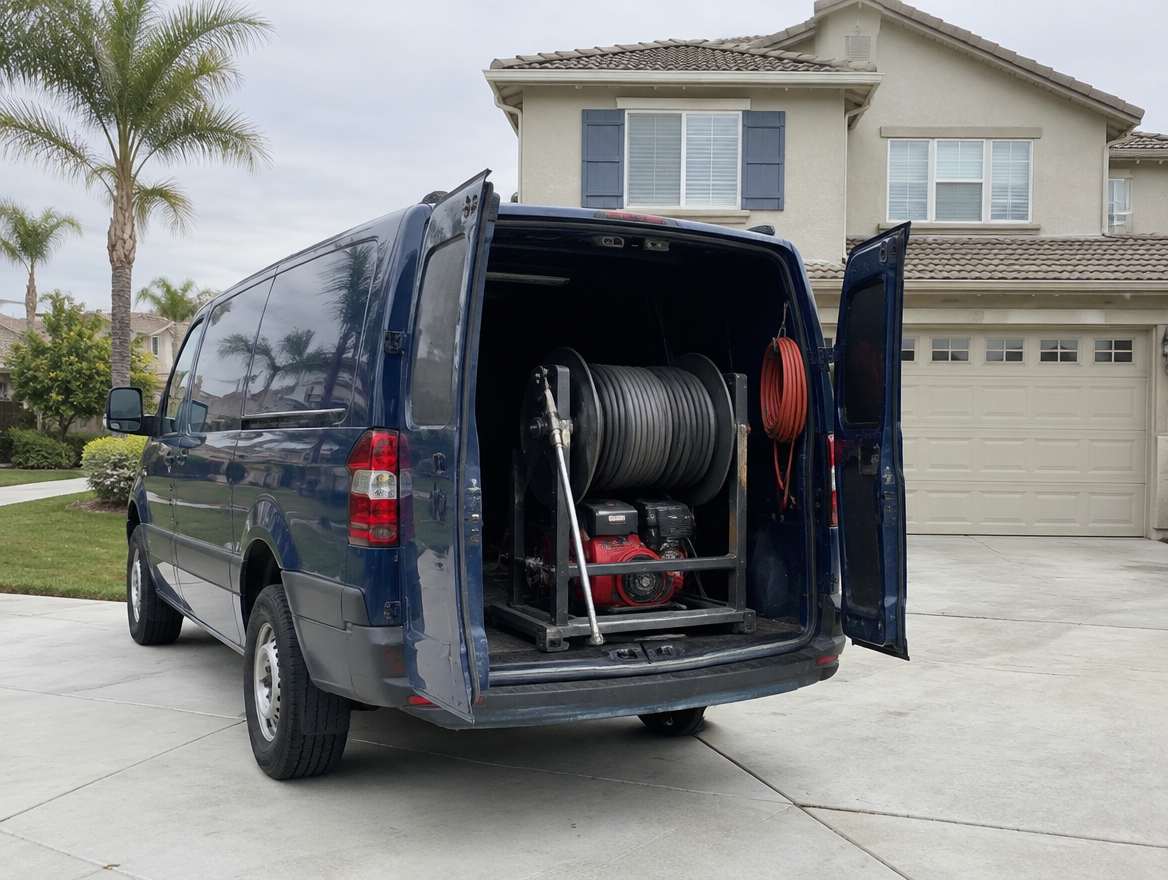
For a main-line backup, a drain machine cable is usually run through the cleanout to open a path and restore flow.
A sewer camera shows roots, grease buildup, offsets, cracks or a sagging section, and where they are. Ask to see the footage.
High-pressure water scours grease, scale and root mass from the pipe walls. It should follow a camera check, since fragile or broken pipe may need repair instead.
Several fixtures are run to confirm flow, and you should get a plain explanation of the cause and any repair worth considering.
In the field
Grease and food scraps cool and harden in the kitchen branch line. A cable usually opens it, but grease that keeps coming back may call for jetting the line after a camera check.
Water taking the easiest way out means the main line is restricted downstream. Stop using water and have the main line cleared through the cleanout.
Clay and cast-iron laterals under mature parkway and yard trees can let roots in at the joints. Cabling cuts them back, a camera shows the joints, and the plumber can explain the options if roots return.
Lint and soap build up in the laundry drain, and a washer pumps water faster than a narrowed line can carry it. Clearing the standpipe line and adding a lint trap on the hose is a common fix.
Guides, fill-in worksheets, worked examples and notes on Cypress streets.
Cypress, CA
Cypress grew quickly in the 1960s and 70s, and much of its housing is single-story and two-story tract homes built slab-on-grade. Under those slabs, drains are often cast iron, which roughens and scales on the inside over decades, and the lateral out to the street may be clay or cast iron with joints that roots can find.
The water here is hard, a blend of local groundwater and imported water, so mineral scale adds to soap and grease buildup in drains and fixtures. Responsibility for the sewer lateral and the public main is split between the homeowner and public agencies; check with the City of Cypress about where your responsibility ends before any work near the street.
ZIP codes served: 90630 (Cypress).
Also nearby: 90720, 90623, 90620, 92845, 90680, 92804, 90703, 92841, 90701, 90621, 92683, 92801, 92844, 90638, 92833, 92840, 92802, 90650.
Questions
Which fixtures, what happens, and since when. Urgent? Call (714) 555-0143.
Stop running water, keep everyone away from sewage and find your cleanout. Then send us the details below. Preview site: the request form is not connected yet, and whoever you hire, check their CSLB license at cslb.ca.gov.
Call (714) 555-0143