Drain cleaning and clog removal in Placentia, CA

Placentia drain cleaning that starts by finding the clog

A slow bathroom sink is a hair clog two inches down. A shower that fills with gray water when the washer drains is the main line. We help you tell which one you have, what you can safely try, and when to call us.

Preview site for Placentia Drain Cleaning. The phone number shown is a temporary placeholder and the request form is not connected yet, so nothing you send reaches us.

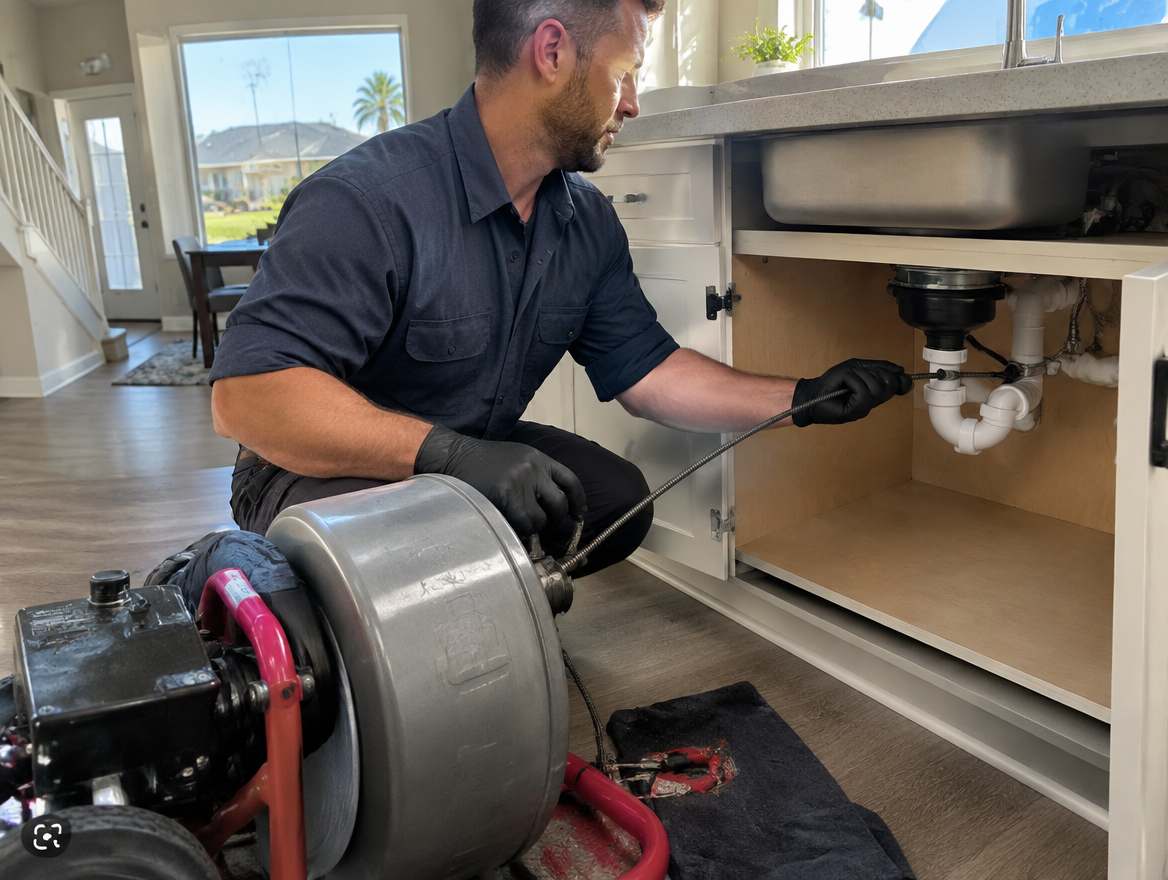
A plumber clearing a clogged drain with a powered drain-cleaning machine under a kitchen sink

Green paint marks sewer lines

How a drain runs from a fixture to the street

  1. Trap The U-bend under each fixture
  2. Branch line Joins one room's fixtures
  3. Main drain Runs under the slab
  4. Lateral Your pipe to the street
  5. Public main The city side

Tell us what the water is doing

Find the row that matches your house. The gauge shows how deep the blockage probably sits, from a fixture trap to the lateral under the lawn. The deeper it goes, the less you should try yourself.

You notice

One sink, tub or shower drains slowly. Everything else is normal.

Likely depth

Safe to try

Pull the stopper or hair strainer and clean it. Then plunge with the overflow covered. A sink trap comes off by hand over a bucket.

Call us when

It stays slow after plunging, or the trap is corroded and will not seal again.
You notice

A toilet will not flush down, but the sinks and shower drain fine.

Likely depth

Safe to try

Use a flange plunger. If the bowl is rising, close the supply valve on the wall behind the toilet.

Call us when

It clogs again within days, or the tub fills when you flush.

You notice

Both sides of the kitchen sink fill, even with the disposal running.

Likely depth

Safe to try

Switch off the disposal, seal one side and plunge the other. No chemicals, and no grease down the drain.

Call us when

It comes back within weeks. Grease along the branch line needs a cable or jetting.

You notice

Toilets gurgle when a nearby sink or tub drains, but water still goes down.

Likely depth

Safe to try

Note which fixture sets off which. That pattern tells us where to start.

Call us when

Drains start slowing too, or the gurgle spreads to other rooms.

You notice

Gray water rises in the shower when you flush or the washer drains.

Likely depth

Safe to try

Nothing that adds water. Stop the washer and dishwasher and ask the house to hold off flushing.

Call us when

Now. This is a main line or lateral blockage.

You notice

Every drain is slow, the house smells of sewage, or water seeps from the yard cleanout.

Likely depth

Safe to try

Stop all water use and keep people and pets away. Leave the cleanout cap on.

Call us when

Now. Once the line is open, ask whether a camera inspection is worth it.

A guide, not a diagnosis. A blocked vent, a broken pipe or a sag in the line can mimic any row above.

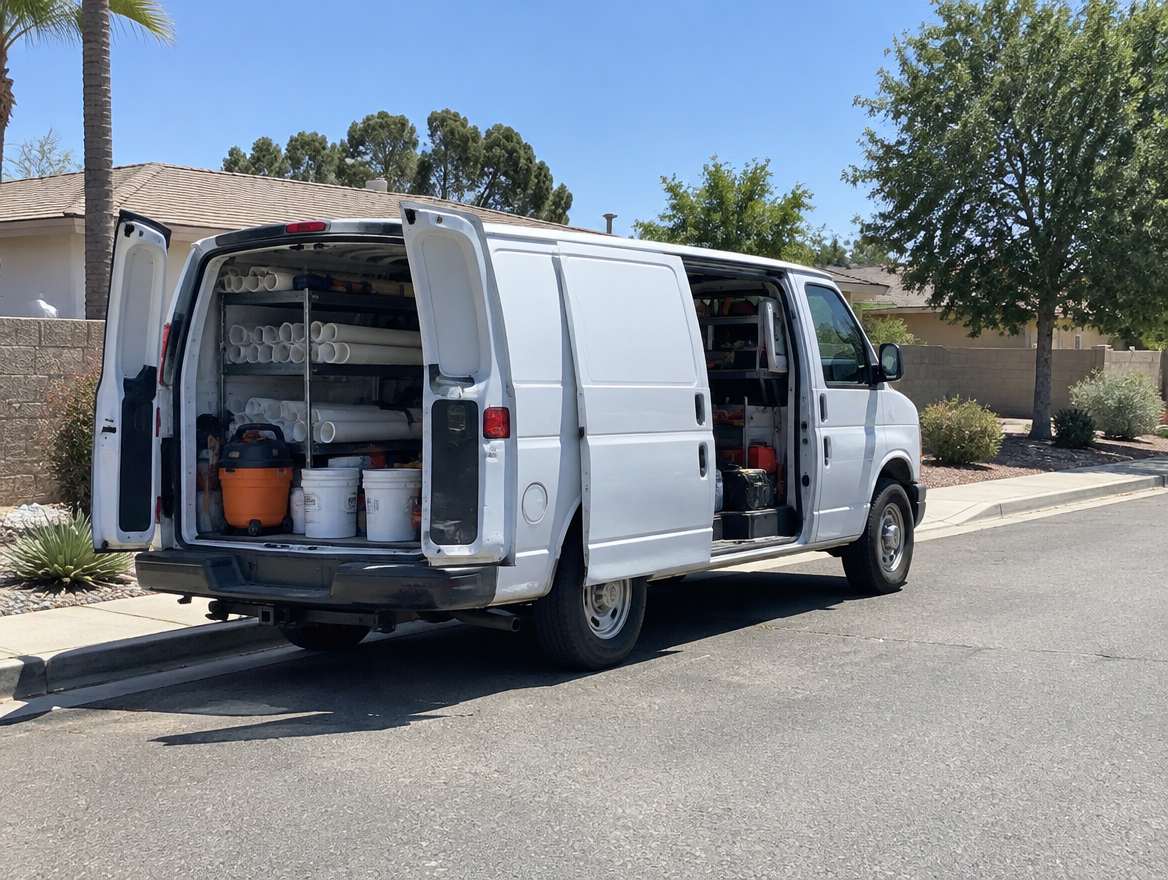
An unmarked plumbing service van parked at a home in Placentia, California

Every drain in your house ends up in one pipe

Water leaves a sink through its trap, joins a branch line, drops into the main drain under the slab and runs out the sewer lateral to the street. A clog in the trap stays in one room. A clog in the main or lateral pushes water up the lowest drain in the house, usually a shower or a ground-floor tub.

Many Placentia homes went up as slab-on-grade tracts between the 1950s and the 1970s. Their laterals are often clay, which lets tree roots in at the joints, or cast iron, which scales and corrodes from the inside. Add hard water and kitchen grease, and an old line narrows a little every year.

So we start with the question that decides the tool: how deep is the blockage? A plunger handles a trap. A cable handles a branch line. A root-choked lateral may need cutting, jetting and a camera look.

When it is more than one slow sink

One slow fixture usually means a local clog. Any of these means the trouble sits further down the line.

  • Two or more fixtures are slow or backing up at the same time.
  • Water comes up in the shower or tub when a toilet is flushed or the washing machine drains.
  • Toilets gurgle or bubble when a nearby sink or tub drains.
  • A sewage smell around floor drains, the yard cleanout or the base of the toilet.
  • Water or sewage seeping from the outdoor cleanout cap or pooling near it.
  • The same drain clogs again within weeks of being cleared.
  • Lush, wet or sunken patches of lawn along the path of the sewer line.

Water coming back up? Do this first

  1. Stop running water and stop flushing. If more than one fixture is affected, every gallon you send down can come back up in the lowest drain.

  2. If a toilet is about to overflow, close the small supply valve on the wall behind it. If water is leaking from a supply pipe, shut off the water at the main.

  3. Keep children and pets away from any sewage, open windows, and wear gloves if you have to touch anything wet. Sewage carries germs.

  4. For a single fixture, try a plunger with a good seal. Skip chemical drain openers, especially with standing water: they can splash back and harm the people who work on the pipe.

  5. Do not open the outdoor cleanout cap when the line is backed up. Wastewater can push out under pressure. Note where it is so you can point a plumber to it.

  6. Write down which fixtures are affected, when it started and what was used last. It helps a plumber pick the right access point and tool.

How we clear a drain

We work from the symptom back to the cause. Find the blockage, clear it with a tool sized for that pipe, then prove the line is open before we pack up.

Before any work starts, you get the price or pricing method in writing.

  1. Ask questions and map the fixtures

    Which drains are slow, which are backing up, and since when. Testing fixtures one by one shows whether the clog is in a trap, a branch line or the main.

  2. Choose the access point

    Small clogs are reached through the fixture or its trap. Main line work usually goes through a cleanout, or by pulling a toilet when no cleanout is available.

  3. Run a cable sized to the pipe

    A drain cable, often called a snake or auger, breaks up or pulls out the blockage. A small hand cable suits a sink; a larger machine and cutting head suit a main line.

  4. Jet when the pipe needs scouring

    Hydro jetting uses high-pressure water to scour grease, scale and fine roots off the pipe wall. It is not right for every line, so pipe material and condition should be considered first.

  5. Look with a camera when it keeps coming back

    A sewer camera shows roots, cracks, offset joints, sags or broken pipe. Ask to watch the footage and to get a copy if a repair is suggested.

  6. Test the flow and explain the findings

    Run water through the cleared line, check the fixtures that were backing up, and get a written note of what was found, what was done and what, if anything, comes next.

Four clogs Placentia homes run into

Kitchen sink that slows every few months

Grease, food scraps and soap build up along the kitchen branch line, often worse in older homes where the line runs a long way under the slab. Cabling opens a path; jetting may be suggested to clean the pipe wall. Keeping grease out of the drain matters more than any product.

Shower backs up when the washer drains

When a low shower or tub fills as other fixtures drain, the blockage is usually past where those lines meet, in the main or lateral. This needs main line access, not a plunger on the shower.

Roots in an older clay lateral

Mature trees and clay sewer pipe are a common pairing in the city's 1960s and 1970s tracts. Roots enter at joints and catch paper and waste. Cutting them restores flow, but they tend to grow back, so a camera inspection helps you decide between periodic cleaning and repair.

Toilet and tub gurgle together

Gurgling usually means air is being pulled through a trap because the line is partly blocked or poorly vented. Testing which fixtures react to which helps separate a drain clog from a vent problem.

What sits under Placentia yards

Much of Placentia's housing went up in the 1950s through the 1970s as slab-on-grade tracts, so drain lines run under the floor and laterals from that era are often clay or cast iron. Clay joints can let roots in, cast iron can scale inside, and a sag or offset in either can hold waste until it clogs.

The water here is hard, a blend of local groundwater and imported water, and the minerals it leaves behind can narrow older drain lines over time. The public sewer main in the street is maintained by the city or sewer agency, while the private lateral from the house is generally the owner's to maintain. Check with the City of Placentia for exactly where that responsibility changes and whether any repair needs a permit.

  • Find your outdoor cleanout before you need it. It is often a capped pipe near the house or between the house and the street.
  • Ask whether your lateral is clay, cast iron or plastic; a camera inspection can tell you if no one knows.
  • Note where large trees sit relative to the sewer line, including parkway trees near the street.
  • Keep kitchen grease, wipes and paper towels out of every drain, even wipes labeled flushable.
  • Ask any company to confirm that your Placentia address is in its service area and to give you its CSLB license number.
Map shows the area served, not an office location. Open in Google Maps

ZIP codes served: 92870 (Placentia).

Also nearby: 92831, 92806, 92886, 92821, 92835, 92865, 92832, 92807, 92805, 92823, 92861, 92867, 92801, 92833, 92802, 92868, 92866, 92808.

Drain questions we hear most

Straight answers on snaking, jetting, cleanouts and who owns the pipe to the street.

Questions to ask any plumber before hiring

How can I tell a single clog from a main line problem?

If only one fixture is slow, the clog is probably in its trap or branch line. If several fixtures are slow at once, or water rises in a shower or tub when you flush or run the washer, the blockage is likely in the main building drain or the sewer lateral.

What is the difference between snaking and hydro jetting?

Snaking, or cabling, pushes a rotating cable through the pipe to break up or pull out a blockage. Hydro jetting sprays high-pressure water to scour grease, scale and fine roots off the pipe wall. Cabling opens a path; jetting cleans the pipe more fully but should only be used after the pipe's material and condition are considered.

Are chemical drain cleaners safe to use?

They are best avoided. They often do not reach a clog that is deep in the line, they can sit in standing water and splash back, and they put anyone who later opens or cables the drain at risk. A plunger or a small hand cable is a safer first try for a single fixture.

Where is my sewer cleanout?

In many Placentia homes it is a capped pipe outside, near the foundation or between the house and the street. Some homes have one inside or none at all. Do not open it while the line is backed up, because wastewater can push out under pressure.

Will drain cleaning get rid of tree roots for good?

No. Cutting roots restores flow, but roots that entered through a joint or crack usually grow back. A camera inspection shows where they enter, which helps you decide between scheduled cleaning and repairing that section of pipe.

Do I need a camera inspection?

It is worth considering when a line clogs repeatedly, when roots are found, when you are buying an older home, or before agreeing to a sewer repair. Ask to watch the footage and to receive a copy.

Who is responsible for the sewer line to the street?

Generally the homeowner maintains the private lateral from the house, and the public main is maintained by the city or sewer agency. Where that line is drawn varies, so check with the City of Placentia for your address.

Before you hire anyone, us included

Ask for the contractor's CSLB license number and look it up at cslb.ca.gov. Ask whether employees or subcontractors will do the work, and get the price in writing before work starts.

Placentia Drain Cleaning is the business name for this site. Licensing and service details will be published here once confirmed.

Tell us what the drain is doing

Which fixtures, what happens when water runs, and since when. Urgent? Call (714) 555-0133.

By sending this form you agree to the privacy policy.

Drain backing up right now?

Stop running water and keep everyone away from sewage. Then call us or send the details. Whoever you hire, check their CSLB license at cslb.ca.gov and confirm they cover your Placentia address.

Call (714) 555-0133

What we ask when you call

When you call us or send us the details, expect questions about which fixtures are affected, whether water is coming back up anywhere, whether there is a cleanout you can find, and the age of the house. Those answers decide which equipment is needed. While this preview site is being set up, the number shown is a temporary placeholder and the form is not yet connected, so a submission is not sent anywhere.

Before anyone starts, ask for the CSLB license number, who will do the work, and the price or pricing method in writing, including what happens if a cable will not clear the line or a camera inspection is recommended.

Call Get help