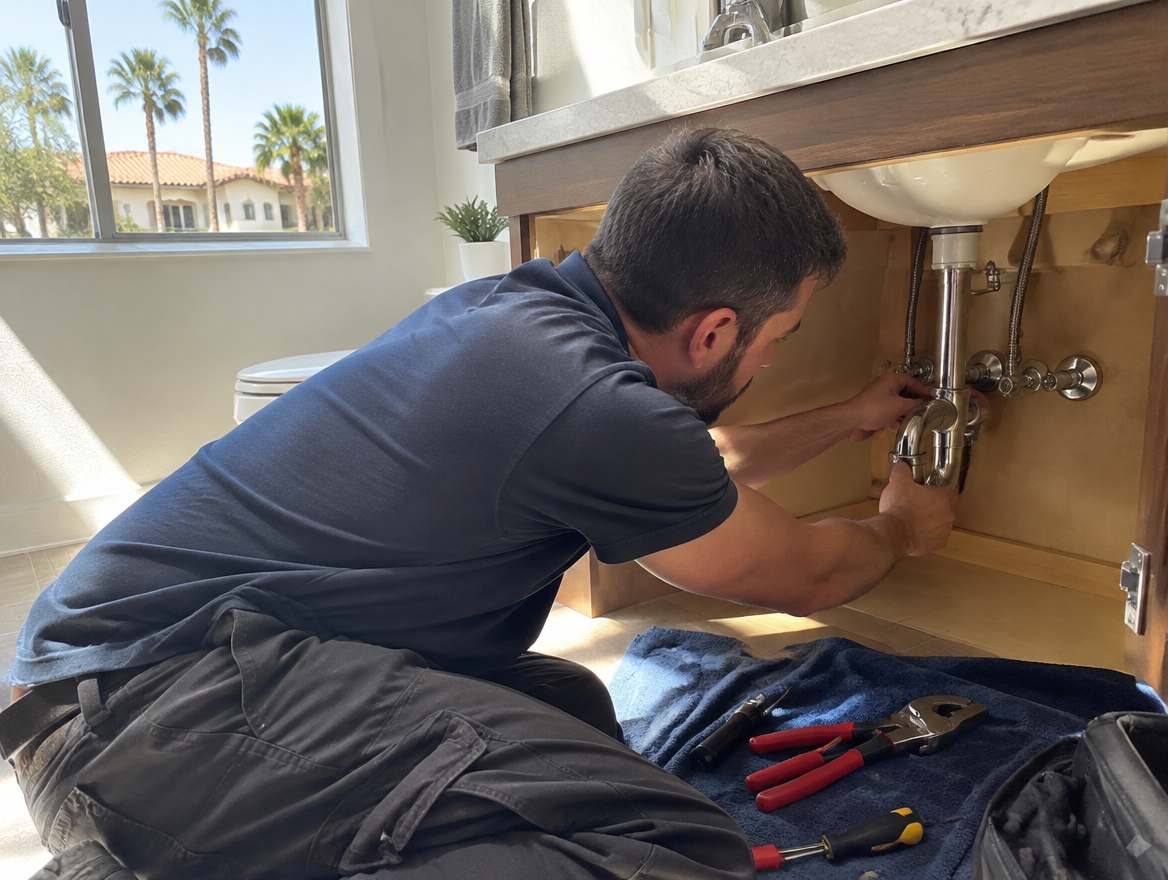
A plumber working under a sink on home plumbing

Cast iron, galvanized steel and clay sewer, around the Plaza

Plumbing for the pipe Old Towne Orange houses were built with

Bungalows and Victorians near the Plaza still run on galvanized supply, cast-iron drains and clay laterals under the front lawn. We find out what your house has, show you the footage, and fix the part that is failing.

Preview site for Old Towne Orange Plumbing. The phone number is a temporary placeholder and the request form is not connected yet, so a form submission goes nowhere for now. Nothing on this page replaces an on-site inspection.

Inside an Old Towne wall

  1. Most houses near the Plaza went up before plastic pipe existed.

  2. Galvanized steel brings the water in, cast iron carries it out, and a clay lateral runs under the front yard to the street.

  3. Galvanized rusts from the inside, so pressure fades over years and the first glass of the morning comes out brown.

  4. Cast iron scales up and splits along the bottom, where the waste runs.

  5. Tree roots find the joints between clay sections.

  6. Ninety years of patches add copper and plastic to the mix.

  7. We map what you have before anyone mentions the word repipe.

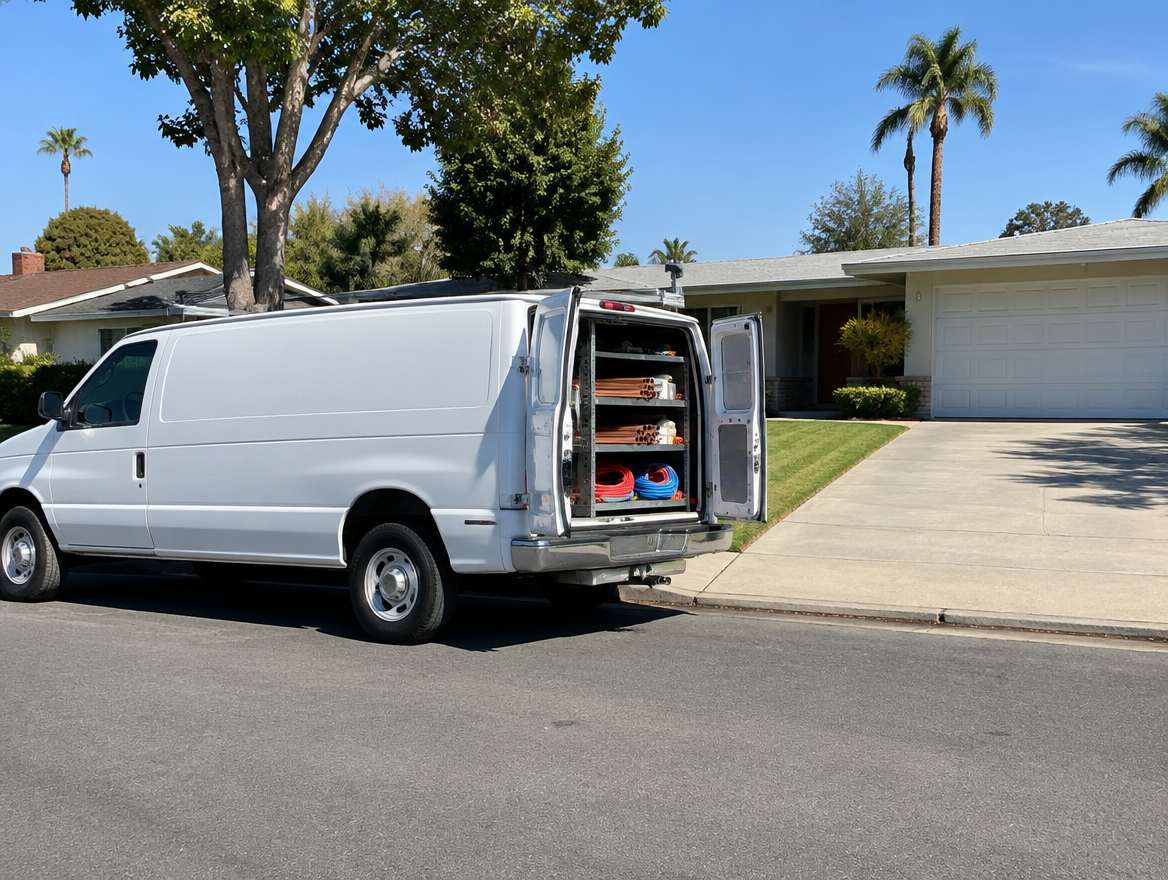
An unmarked plumbing service van parked at a home in Old Towne Orange, California
Older houses near the Plaza hide their plumbing in crawlspaces and plaster walls.

Which pipe is which

Grab a flashlight and a fridge magnet. Check under the sinks, at the water heater and in the crawlspace, then match what you see below. Photos help us confirm it before we arrive.

Galvanized steel

Dull gray, threaded joints, a magnet sticks

Where it runsThe original water lines, from the meter to each fixture, often run through the crawlspace.

How it failsRusts from the inside and narrows. Pressure fades, water runs brown, threads start to weep.

Ask usCan you test pressure and flow, and show me how much galvanized is left?

Cast iron

Heavy and dark, with hub-and-spigot joints

Where it runsDrain, waste and vent stacks, plus the horizontal drains under the floor.

How it failsScale builds inside. The bottom of the pipe rusts thin and cracks, and joints loosen.

Ask usCan you camera it from a cleanout and show me where it cracks or holds water?

Vitrified clay

Short glazed sections with bell joints

Where it runsThe sewer lateral under the yard, from the house to the street.

How it failsRoots push in at the joints. Sections shift, sag or crack, and backups repeat.

Ask usIs it roots, a break or a sag, and how far from the cleanout?

Copper

Reddish-brown with soldered joints

Where it runsLater repairs and partial repipes, mixed in with the old steel.

How it failsCopper holds up well. Trouble shows where someone joined it straight to steel without the right fitting.

Ask usAre the copper-to-galvanized joints fitted properly?

Plastic patches

Black ABS, white PVC or colored PEX

Where it runsNewer drain or supply repairs spliced into the original system.

How it failsThe pipe itself lasts. The weak spot is the joint to the old pipe on either side.

Ask usHow did someone join this to the old pipe, and was the repair permitted?

Signs the original pipe is giving out

One of these can be minor. Three or four together usually mean the original pipe is near the end of its run.

  • The shower has lost pressure a little at a time, and the far bathroom is worst.
  • The first water after a weekend away runs brown or orange.
  • Two drains slow down at once, or the tub gurgles when someone flushes.
  • You smell sewer in the crawlspace or the yard, or one strip of lawn stays wet.
  • Exposed pipe under a sink shows rust, weeping threads or white crust.
  • The main line backs up again a few months after someone cleared it.
  • A stain spreads across the plaster ceiling under a bathroom.

Before you call anyone

  1. Water leaking? Close the main shutoff. On older houses it usually sits near the front hose bib or by the meter at the street. Old gate valves stick, so test yours today.

  2. Smell gas? Leave the switches alone and skip any flame. Get everyone out, then call 911 or SoCalGas from outside.

  3. Sewage backing up? Stop all water use in the house and keep kids and pets out of that room.

  4. Leak near outlets, the panel or old knob-and-tube wiring? Stay clear. Shut the power off at the panel only if you can reach it dry.

  5. Take photos of the leak, the stains and any pipe you can see. They show us the material before we arrive.

  6. Write down when it started and which fixtures are involved.

How we work on an old system

We find out what is there first. Repair, partial replacement or a full repipe comes after, and you see the evidence before you choose.

  1. We map the materials

    Our plumbers check exposed pipe in the crawlspace, under sinks and at the water heater, and mark which runs are galvanized, copper, cast iron or plastic and where old meets new.

  2. We camera the drains and lateral

    A camera through the cleanout shows the inside of the cast iron and the clay: cracks, scale, offset joints, sags and roots. You keep the footage.

  3. We test pressure and flow

    A gauge on a hose bib reads incoming pressure. Normal pressure with weak flow points at clogged galvanized inside the house, which rules out the street.

  4. You choose the scope

    One failed section can often go alone. When pipe is failing in several places, we lay out a repipe or a lateral lining or replacement side by side so you can compare.

  5. We plan the route around your finishes

    Raised floors let us run most new pipe through the crawlspace and keep wall openings small. We agree on plaster, original floors and landscaping before work starts.

  6. Permit, inspection, paperwork

    Repiping and sewer work generally need a City of Orange permit and inspection. You get the final footage and a record of what pipe went where.

Old Towne problems we plan for

Typical patterns, described for illustration. These are not records of real jobs.

The 1920s bungalow with weak showers

Street pressure reads fine, yet the shower dribbles and the kitchen tap spits rust. That pattern usually means galvanized supply closing up from the inside. A pressure and flow test confirms it before anyone talks about repiping.

The main line that keeps backing up

Someone snakes the cleanout, it runs for a few months, then the lowest tub backs up again. A camera run of the clay lateral often finds roots growing in at the joints. Clearing buys time; sealing or replacing the joints ends the cycle.

The crawlspace that smells like sewer

A musty or sewer smell under the house can come from a cracked cast-iron drain, a failed joint or a dry trap. Keep people out of the crawlspace until we find the source, and ask for photos of what we find.

Buying or selling an older home

A sewer camera run and a look at the supply pipe before closing tell a buyer what they are taking on. Ask for the footage and a written list of the pipe materials found.

Plumbing around the Plaza

Old Towne grew outward from the Plaza in tidy blocks of bungalows, cottages and Victorians. Many sit on raised foundations, under big street trees, with original sewer laterals crossing the front yard. Decades of remodels mean one house can hold three generations of pipe.

The City of Orange runs its own water utility, blending local groundwater with imported water, and the result is hard. That mineral scale builds up inside old pipe and water heaters. Old Towne is a historic district, so check with the City of Orange before plumbing work that changes the outside of the house.

  • City of Orange water utility: meter, street-side shutoff and billing questions.
  • SoCalGas serves gas in Orange. If you smell gas, call from outside.
  • California requires seismic strapping on water heaters; older installs deserve a check.
  • Mature street and yard trees send roots into clay laterals.
  • Ask any plumbing company, us included, to confirm your Old Towne address is inside its service area.
Map shows the area served, not an office location. Open in Google Maps

ZIP codes served: 92866 (Orange), 92868 (Orange), 92865 (Orange), 92867 (Orange), 92869 (Orange).

Also nearby: 92706, 92701, 92861, 92806, 92780, 92703, 92705, 92805, 92802, 92840, 92843, 92782, 92807, 92870, 92831, 92801, 92844, 92832.

Questions about old pipe

More answers on questions to ask before hiring a plumber.

How do I tell if my house still has galvanized pipe?

Look at exposed pipe near the water heater, under sinks or in the crawlspace. Galvanized steel is dull gray with threaded joints, a light scratch shows silver, and a magnet sticks to it. Copper is reddish-brown with soldered joints, and a magnet slides off.

Does all galvanized pipe have to go at once?

No. If most of the supply is already copper or plastic and a short galvanized run remains, that run can often be replaced alone. When galvanized is closing up throughout the house, a whole-supply repipe usually beats chasing one section at a time.

Is cast-iron drain pipe bad?

Cast iron is durable and quiet, and plenty of it still works. After many decades it can scale inside, rust thin along the bottom and crack. A camera inspection shows whether yours is sound, flaking or holding water.

Why do roots keep getting into my sewer line?

Clay sewer pipe comes in short sections joined end to end, and roots find the moisture at those joints. Cutting roots clears the line for a while, and then they grow back. A camera run shows how many joints are affected and whether lining or replacing the lateral makes sense.

What is a sewer lateral, and who owns it?

The lateral carries waste from your house to the public sewer main. Responsibility for the stretch between your property line and the main varies by city, so check with the City of Orange before planning work near the street.

Can you repipe an old house without opening every wall?

Often, yes. We run much of the new pipe through the crawlspace or attic and open walls only where pipe has to reach a fixture. The house decides how much access we need, so we walk the route with you before work starts.

When you call us

We will ask how old the house is, which fixtures are acting up, whether you have a crawlspace and where the sewer cleanout sits. Photos of exposed pipe help us tell galvanized from copper or cast iron before we arrive.

On a big job we inspect before we quote: a camera run of the sewer line, a pressure and flow test, or a look under the house. Ask what the inspection covers and whether you keep the footage, and get any price in writing before work starts.

Old Towne Orange Plumbing is the business name for this site. Licensing and service details will be published here once confirmed.

Check any plumber before you hire, us included

How do I check a plumber's license?

Ask for the contractor's CSLB license number and look it up at cslb.ca.gov. The lookup shows whether the license is active and which classification it covers.

Will repiping or sewer work need a permit?

Repiping and sewer lateral work generally require a permit and inspection. Check with the City of Orange for current requirements, and ask who pulls the permit.

Do historic district rules affect plumbing work?

Interior plumbing rarely raises questions; exterior changes can. If the work adds pipe, vents or equipment visible from the street, check with the City of Orange first.

Should I keep the sewer camera footage?

Yes. Ask for the video or a link, plus the distance to each problem spot. You can get a second opinion with it and hand it to a buyer later.

What if more problems turn up once a wall is open?

Agree before work starts on how changes get handled. Any change in scope or price should be written down and approved by you before anyone does it.

Who will do the work?

Ask whether the company's own employees or subcontractors will be on site, and confirm they work under the license you checked.

Tell us what the house is doing

The age of the house, what you are seeing and since when. Photos of exposed pipe help. Urgent? Call (714) 555-0142.

By sending this form you agree to the privacy policy.

Call Get help