Pipe bursting · Sewer lining · Fullerton, CA

A new sewer line for your Fullerton home, without a trench across the yard

We film your sewer lateral first, then show you the footage. If the pipe needs replacing, we explain whether bursting, lining or a short dig fits your line, and where every access pit would go.

Preview site for Fullerton Trenchless Sewer. Our phone number is a temporary placeholder, and the request form is not connected to a destination yet.

Warning signs

When the main line is the problem

A single slow sink is usually a local clog. These point past the fixtures to the lateral itself.

  1. 01

    Several drains slow down together, and the lowest tub or shower in the house backs up first.

  2. 02

    A toilet gurgles when the washing machine drains.

  3. 03

    You had roots cleared before, and the backup came back a year or two later.

  4. 04

    You smell sewage near the yard cleanout, or one strip of lawn stays soggy and green.

  5. 05

    Water rises out of the cleanout cap.

  6. 06

    An earlier camera inspection showed cracks, offset joints, heavy scale or a sag that holds water.

  7. 07

    Your house is a 1950s to 1970s Fullerton tract home with its original cast-iron or clay lateral.

The two methods

Two ways to replace a sewer pipe you can't see

Your sewer lateral carries everything from your drains to the city main, usually under the front lawn, the driveway or the parkway. Trenchless replacement renews that pipe through one or two small pits instead of a trench along its whole length.

Pipe bursting pulls a steel head through the old pipe. The head cracks the old cast iron or clay outward, and a new continuous pipe, often fused HDPE, follows right behind it. Lining takes the other route: we clean the old pipe, slide in a resin-soaked tube, and cure it into a hard new pipe inside the old one.

The camera footage decides which one fits. Material, depth, sags, offsets and roots all show up on the video, and some lines need a short conventional dig at one bad spot before either method can work.

FactorPipe burstingLining (CIPP)
The old pipe Cracked apart and pushed into the soil as the new pipe follows. Stays in the ground and holds the new resin pipe inside it.
Pipe size after The same, and sometimes larger. A little smaller inside, by the liner's wall.
Digging Usually a pit at each end of the run. Often none beyond the cleanout or one small opening.
Sags and bellies Can improve some grade. Not every belly. Follows the old shape, so a sag stays a sag.
Collapsed spots Can often pass through if the cable gets by. Needs a round pipe. A collapse gets dug first.
Side connections Reconnected at the pits. Cut back open from inside after the liner cures.
Ask this first Where do both pits go, and what's under them? How will you clean and descale the pipe first?

General differences only. Your camera footage decides the method, and some lines need a short dig as well.

How it works

How we approach a trenchless sewer job

Steps change with the method, the pipe and the yard. This is the usual order, and we walk you through each one for your line before work starts.

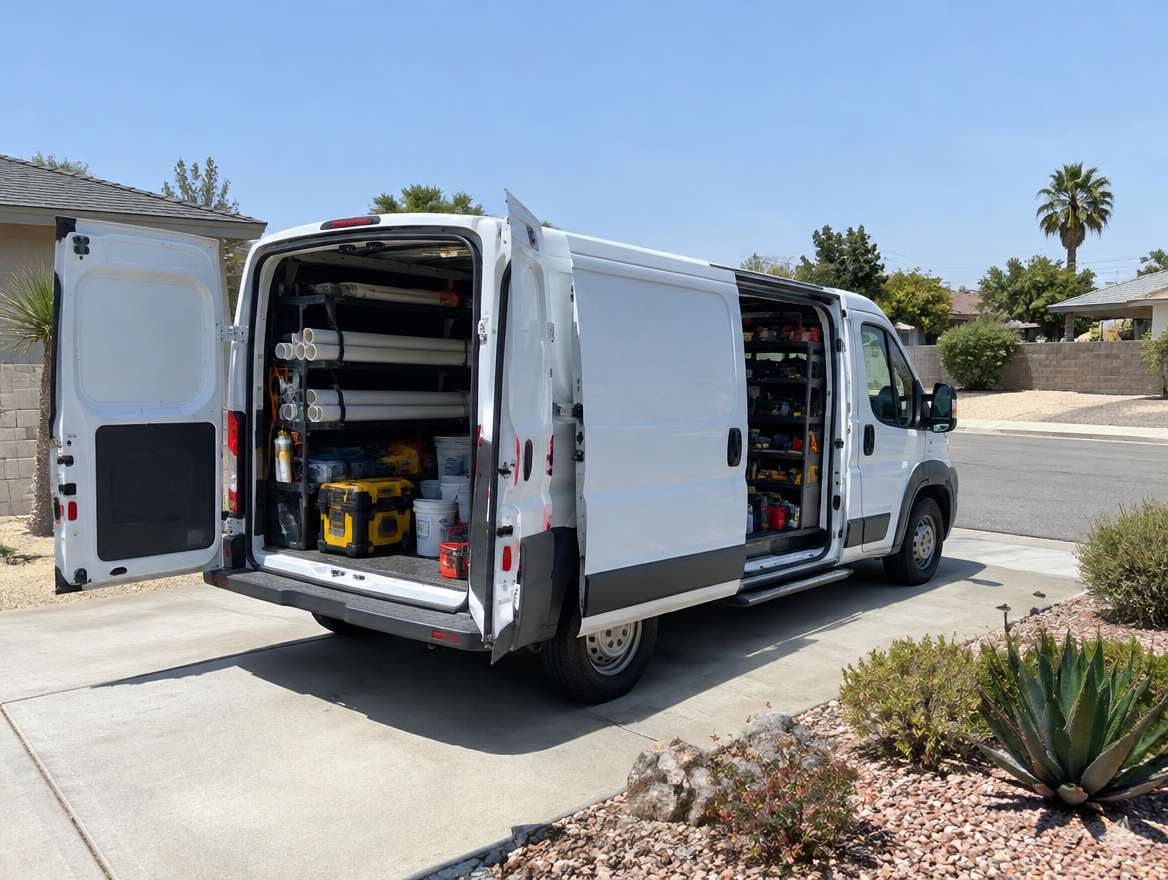
An unmarked plumbing service van parked at a home in Fullerton, California
Fullerton and nearby cities
  1. Clear and film the line

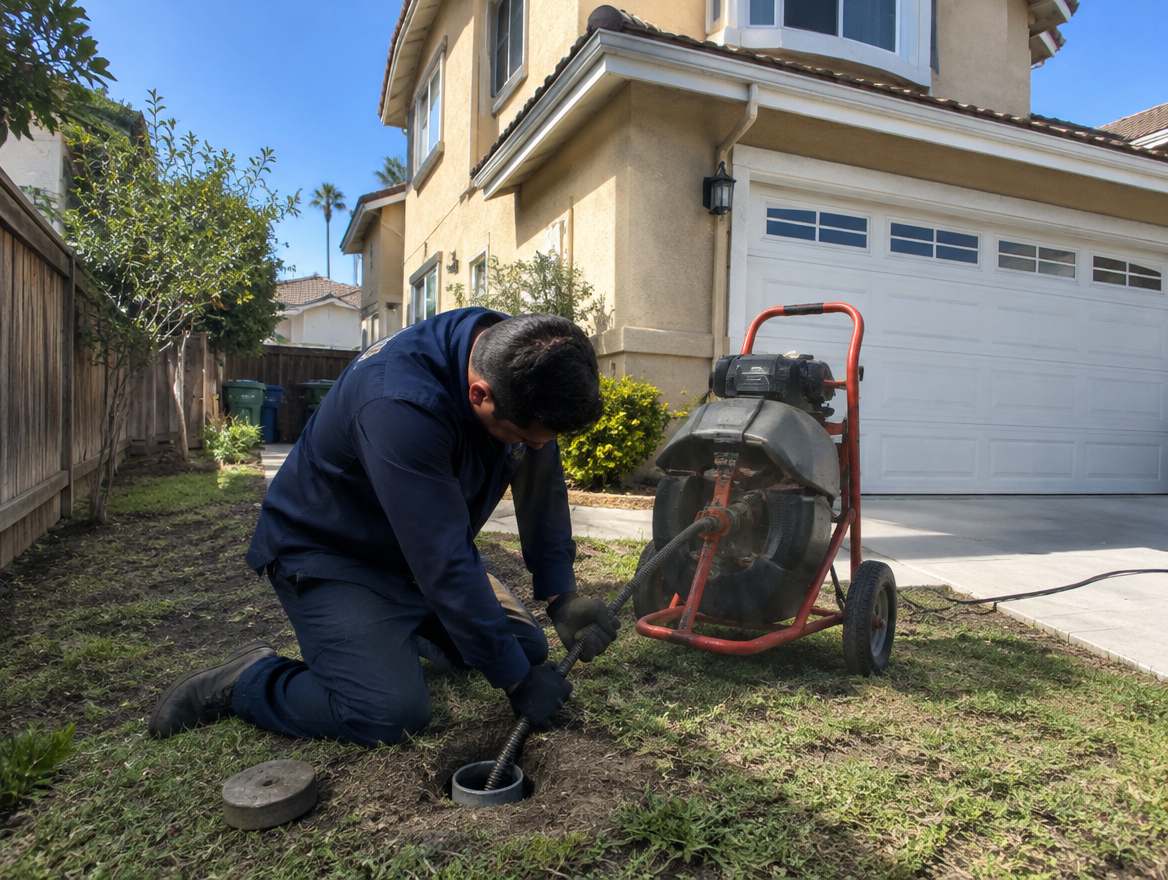
    We clear the lateral with a cable machine or a jetter, then run a camera from the cleanout to the city main. The video records the pipe material and the distance to every crack, root and sag.

  2. Trace the route and pick the method

    A locator marks the pipe's path and depth on the ground. With the video and the route in hand, we explain whether bursting, lining, a spot repair or a dig fits, and why.

  3. Permits and utility marks

    Lateral work commonly needs a permit, so check with the City of Fullerton for your address. Underground utilities get marked through 811 before anyone digs, even for a small pit.

  4. Open the access

    Bursting needs a pit at each end of the run. Lining often goes in through the cleanout or one small opening, after we clean and descale the old pipe so the liner can grip.

  5. Pull or cure the new pipe

    For bursting, the head travels through the old pipe and the new pipe follows. For lining, the tube goes in, cures with hot water, steam or UV light, and a cutter reopens each side connection.

  6. Film it again and close up

    A second camera run shows the finished pipe end to end. You get that video, any permit sign-off and the written terms before the pits close and before you pay the balance.

Right now

Sewage coming up a drain? Start here

Call (714) 555-0114
  1. STEP 01

    Stop running water. No flushing, showers, laundry or dishwasher until the line is clear, because every gallon you send can come back up the lowest drain.

  2. STEP 02

    Keep kids and pets away from the sewage. Wear gloves and boots if you have to step near it.

  3. STEP 03

    If a fixture keeps running and you can't stop it, close the main water shutoff to the house.

  4. STEP 04

    Find the sewer cleanout, a capped pipe near the foundation or in the front yard. Leave the cap on if the line may be full.

  5. STEP 05

    Ask for the line to be cleared, then filmed. Get a copy of the video before you decide on any replacement.

  6. STEP 06

    Smell gas at any point? Leave the house and call 911 or SoCalGas from outside.

Common situations

Four lines we see under Fullerton yards

A

Roots at every clay joint

A 1960s ranch house has a clay lateral and a shade tree out front. Roots return through the joints every year or two. Cleaning restores flow, but the joints stay open, so homeowners in this spot start asking about lining or bursting.

B

Cast iron with scale and a split bottom

Under a slab-on-grade house, the old cast iron has thick scale and a crack along the bottom. Descaling shows how much wall is left. A sound wall can take a liner; a thin or missing bottom points toward bursting.

C

A belly that holds water

One section has dropped and stays full of water. A liner follows that dip. Bursting can improve some grade, and a deep belly may need a short dig to re-lay that piece at the right slope.

D

A line under the driveway

The lateral runs under concrete or past a mature tree. Trenchless methods earn their keep here, because careful pit placement can leave the driveway and the big roots alone.

Local notes

Fullerton sewer laterals, block by block

Builders put up much of Fullerton between the 1950s and the 1970s, mostly slab-on-grade tract homes. Many of those houses still drain through their original laterals, usually cast iron near the house and vitrified clay out under the yard. Decades of street and yard trees have had time to find the clay joints.

The lateral from your house is generally yours to maintain. The city decides where your section ends and what permits and inspections apply, so confirm both with the City of Fullerton before work starts.

  • Call us to confirm your address is in our service area before you schedule.
  • Check any contractor's license at cslb.ca.gov, including ours once it is published.
  • Ask the City of Fullerton whether your job needs a permit and inspection.
  • If the lateral crosses the parkway or sidewalk, ask the city what applies to work there.
  • Have utilities marked through 811 before anyone digs, including gas lines served by SoCalGas.
Map shows the area served, not an office location. Open in Google Maps

ZIP codes served: 92832 (Fullerton), 92835 (Fullerton), 92831 (Fullerton), 92833 (Fullerton).

Also nearby: 92801, 90621, 92805, 90631, 92870, 92806, 90638, 92821, 92802, 92804, 90603, 90604, 90620, 92865, 91748, 90623, 92840, 90680.

Before you hire

What happens after you call

We ask about the line before we talk about price: which drains act up, how old the house is, whether anyone has cleaned or filmed the lateral, and where the cleanout sits.

No one should quote a replacement without camera footage. Our written estimate names the method, the feet of pipe, the pit locations, how side connections get handled, who pulls the permit, what gets restored and what the written terms cover. This is a preview site: the number shown is a temporary placeholder, and the request form is not connected yet, so a submission is not sent anywhere.

Check the license first

Ask any contractor for a CSLB license number and look it up at cslb.ca.gov. Ask who will do the work, and get the method, scope and price in writing before anyone starts.

Fullerton Trenchless Sewer is the business name for this site. Licensing and service details will be published here once confirmed.

How do I check a contractor's license?
Ask for the CSLB license number and look it up at cslb.ca.gov. Confirm the license is active, see its classification, and check the bond and workers' compensation details listed there.
Someone says I need a full replacement. How do I know?
Ask to see the video with the distance counter on screen, and have them stop at each defect. For a large job, a second licensed plumber can review the same file before you decide.
What belongs in a written estimate?
Method, feet of pipe, pipe material, pit locations, branch connections, cleanup and restoration, permit responsibility, the payment schedule and the written terms.
Who fixes the lawn and the driveway?
Restoration is never automatic. Get it in writing: backfill and compaction, concrete, sprinklers and planting beds, and anything left for you.
Do I get the final camera video?
You should, before you pay the balance. A video of the new line from cleanout to main is your proof of what went in the ground.
I rent. What should I do?
Tell your landlord or property manager today. The lateral belongs to the property, so the owner arranges and approves sewer work.
FAQ

Trenchless sewer questions

Questions to ask before hiring a plumber

What is the difference between pipe bursting and lining?

Bursting breaks the old pipe apart and pulls a new one into its place, so you end up with an all-new pipe. Lining leaves the old pipe in the ground and forms a resin pipe inside it. Bursting keeps the pipe size or sometimes increases it; lining shrinks the inside a little.

Can every sewer line be replaced without digging?

No. A fully collapsed section, a deep sag or a pipe with the wrong slope may rule out lining, and bursting still needs a pit at each end. Some jobs pair a trenchless run with one short dig. The camera footage tells us which.

How much of my yard gets dug up?

That depends on the method and the property. Bursting usually needs two pits. Lining often goes in through a cleanout or one small opening. We mark pit locations on the ground and put them in writing before work starts.

Does lining work on old cast iron or clay?

Often, if the pipe still holds its round shape. Cast iron needs descaling first so the liner can bond, and clay needs every root removed. Where sections are crushed or missing, bursting or a dig fits better.

Will roots grow into the new pipe?

Roots get in through joints and cracks. Fused HDPE from a bursting job has no joints along its length, and a liner covers the old ones. Ask any installer what their written terms say about root intrusion.

Do I need a permit in Fullerton?

Sewer lateral replacement commonly needs a permit and inspection, but the city sets the rules and fees. Check with the City of Fullerton, and get in writing who pulls the permit.

How long does the work take?

Length, depth, method, access and inspection timing all change it, so we won't guess here. Ask for the window when your drains will be out of use and plan around it.

Get in touch

Tell us what your drains are doing

If sewage is backing up, stop running water and keep everyone clear of it. Then send us the details or give us a call, and check any plumber's CSLB license before you agree to bursting, lining or a dig. This is a preview site, so the form is not connected to a destination yet.

Call (714) 555-0114

Describe the sewer problem

Which drains act up, how old the house is, and whether anyone has filmed the line. Urgent? Call (714) 555-0114.

By sending this form you agree to the privacy policy.

Call Get help