Case A
Roots in a clay lateral
A mature tree near the front walk sends roots into old clay joints. Cleaning buys time, but roots return. A camera shows whether a few joints can be spot-repaired or the whole run should be lined or replaced.
Sewer laterals · Placentia, CA
We clear the line, film it from your cleanout to the city main, and show you every root, crack and sag by the foot. Then you choose between a spot repair, a liner, a burst pipe or a trench, with the footage in your hand.
A plain-language Placentia guide from Placentia Sewer Repair. Preview site: the phone number is a temporary placeholder and the request form is not connected yet.
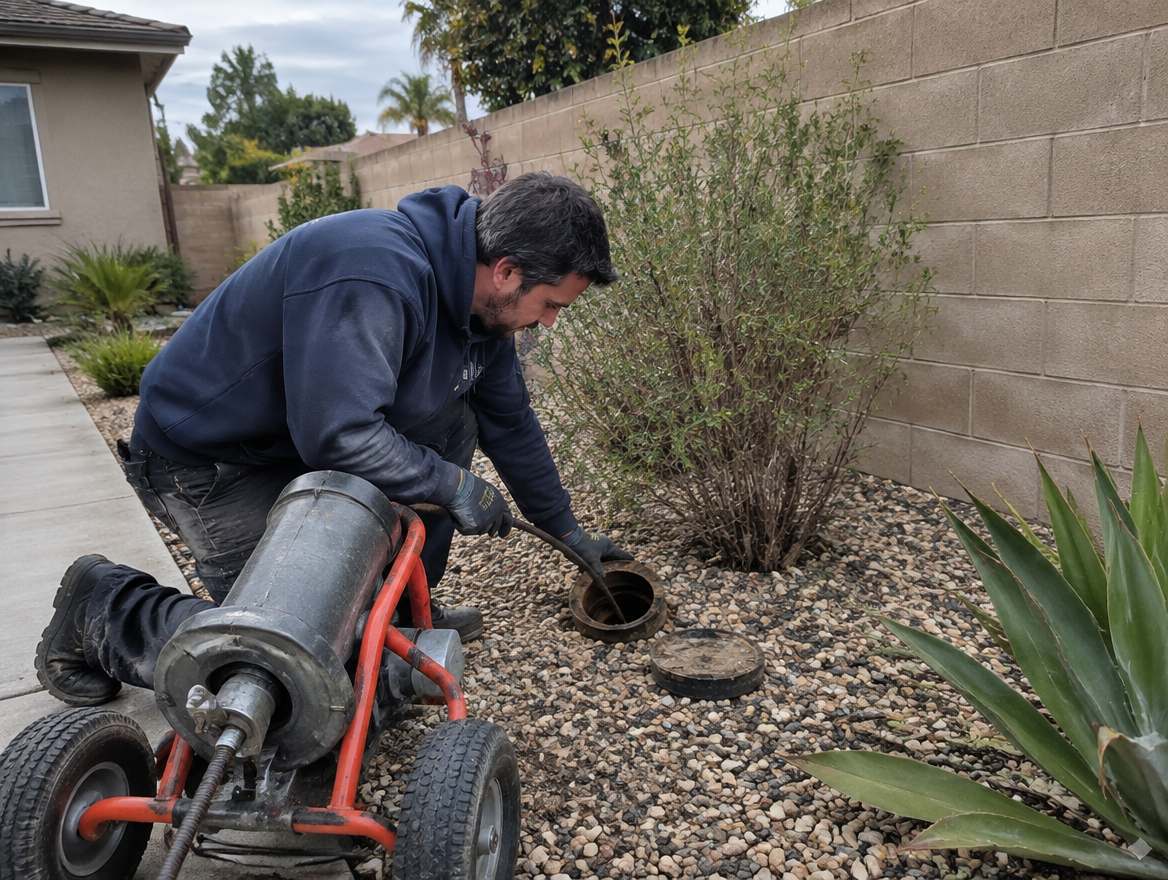
Illustrative image, not a photo of a real job.
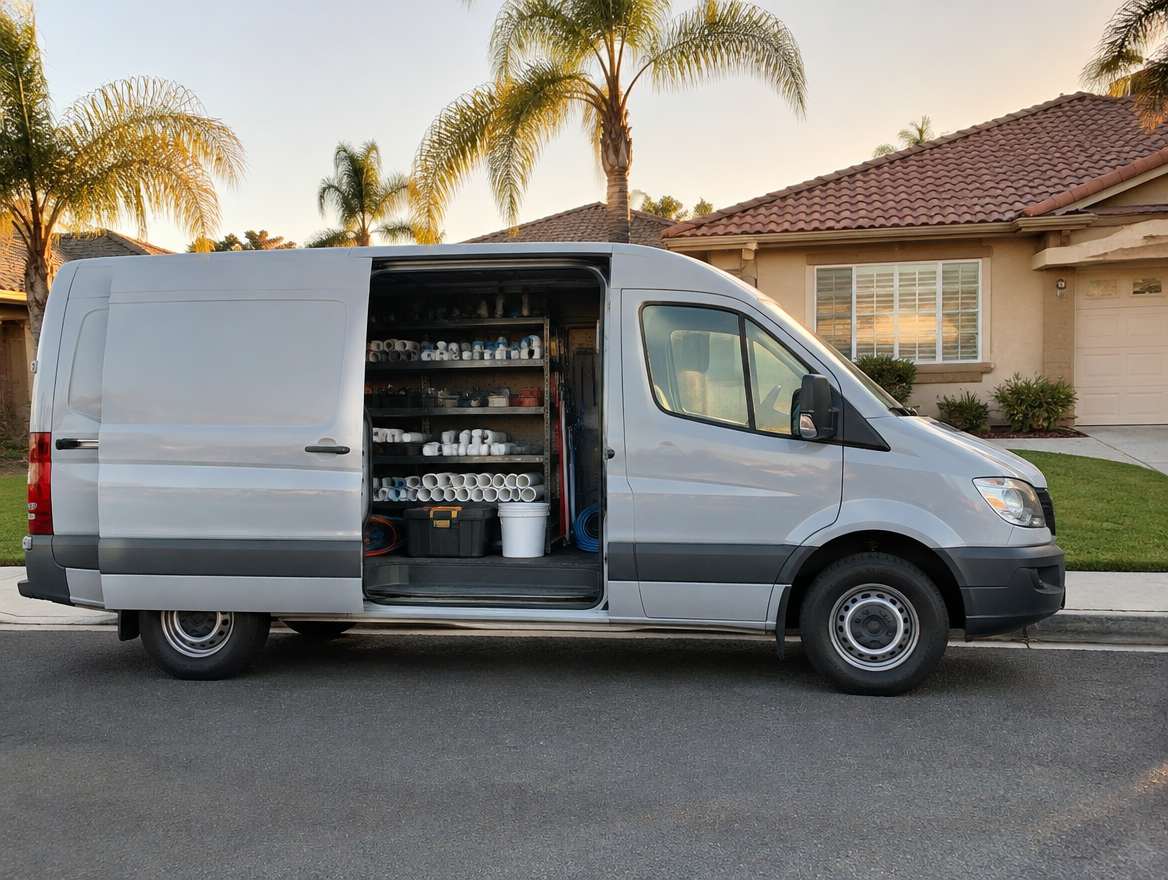
Illustrative image, not a photo of a real job.
The lateral
Every drain in your house empties into one buried pipe: the sewer lateral. It runs from under the slab, out past the cleanout, beneath the lawn and the sidewalk, and into the city main. You own most of it. You will probably never see it.
A lot of Placentia was built between the 1950s and the 1970s, and those laterals are usually cast iron or clay. Cast iron rusts from the inside. Clay holds up, but its joints let roots in. Both can run fine for decades and then start backing up on a Saturday.
A plunger cannot reach this pipe. A camera can. Once you can see the problem and measure where it sits, the repair choice usually gets obvious.
Diagnosis
When the trouble shows up in more than one place, or keeps coming back, the lateral is the usual suspect.
Right now
Smell gas anywhere? Leave the house and call 911 or SoCalGas from outside. That comes before everything on this list.
Stop running water everywhere in the house: no flushing, laundry, dishwasher or showers until the line is cleared.
Keep children and pets away from any sewage, and wear gloves and boots if you must step near it. Wash hands well afterward.
If a fixture keeps overflowing, close the main water shutoff so nobody runs water by mistake.
Find the sewer cleanout, often a capped pipe near the foundation or the front property line, so a plumber can reach the line without pulling a toilet.
Take photos of the backup and any damage for your records and your insurer, then ventilate the room.
If sewage is coming up in the street or a neighbor's yard too, the problem may be the public main: report it to the City of Placentia.
Methods
The footage decides which ones are on the table. The first question to ask about any proposal is what it cannot fix.
| Method | Good fit | Won't fix | What gets dug |
|---|---|---|---|
| Spot repair | One or two defects, with the rest of the pipe sound on camera. | A pipe failing along its whole length. | One pit over the bad section. |
| Lining | Cracks, root joints or rust in a pipe that still holds its shape. | Sags, collapses or badly offset joints. | Often nothing past the cleanout. |
| Pipe bursting | Replacing the whole run along a fairly straight path. | A sag in the old path. The new pipe follows it. | An entry pit and an exit pit. |
| Open trench | Bellies, collapses, or a route that has to change. | Nothing structural. It is just the messiest. | The whole route: lawn, walk, sometimes drive. |
General guidance. A licensed plumber who has watched your footage should recommend the method for your line.
Sequence
This is the order we work in, and the order you should expect from anyone you hire. Nobody should pick a method before you have seen the video.
A cable machine or hydro jetter opens the blockage so the house is usable again and a camera can pass through.
A sewer camera runs from the cleanout to the main. A locator marks the depth and position of any break, belly or root intrusion on the surface.
You should get the footage or stills, the pipe material, the defect locations by distance, and the methods that would work for each.
Spot repair, lining, pipe bursting or open-trench replacement is chosen. Work in the street or public right-of-way generally needs city permits; check with the city.
The crew excavates access pits or a trench, installs or lines the pipe, and reconnects to the cleanout and the city connection.
A final camera pass shows the new or lined pipe running clean from the house to the main before the trench is closed.
Field guides, printable worksheets, invented case files and notes on Placentia neighborhoods.
Sixteen short guides, one problem each.
Built for three moments: sewage coming up a drain, a plumber at the door with a camera, and two estimates that describe the same pipe in different words.
Every case here is made up.
Old Town lots are not Placentia Linda lots.
Field notes
Case A
A mature tree near the front walk sends roots into old clay joints. Cleaning buys time, but roots return. A camera shows whether a few joints can be spot-repaired or the whole run should be lined or replaced.
Case B
In a slab-on-grade tract home, the corroded section may run under the floor. Options include tunneling, lining from the cleanout, or rerouting the drain out of the slab. Each has a different disruption and cost profile.
Case C
Settled soil leaves a low spot where waste and paper collect. Lining does not fix a sag, so a belly usually needs that section dug up and re-graded.
Case D
A sewer camera inspection before closing shows the lateral's condition. Keep the video; it is the clearest record for negotiating a repair or credit.
Placentia
Placentia's neighborhoods grew fast in the postwar decades, so many streets share the same era of construction: slab-on-grade tract homes, cast-iron drains inside, and clay or cast-iron laterals running out to the street. Neighbors often see similar problems around the same age.
Where your responsibility ends and the city's begins depends on local rules, and in many Orange County cities the owner is responsible for the lateral all the way to the main. Ask the City of Placentia before work starts, and have the contractor confirm who pulls any permits.
ZIP codes served: 92870 (Placentia).
Also nearby: 92831, 92806, 92886, 92821, 92835, 92865, 92832, 92807, 92805, 92823, 92861, 92867, 92801, 92833, 92802, 92868, 92866, 92808.
Questions
In many Orange County cities the property owner is responsible for the lateral from the house to the public main, including the part under the parkway or street. Rules vary, so check with the City of Placentia before you hire anyone.
Yes. Without footage nobody knows whether the problem is roots, a crack, a belly or a collapsed section, and each calls for a different fix. Ask for a copy of the video.
No. Lining and pipe bursting avoid long trenches, but they cannot fix a sag, and lining needs a pipe that still holds its shape. Some lines are best replaced with an open trench or a spot repair.
Jetting cuts roots out and restores flow, but the joints they came through are still open. Expect roots to return unless those joints are repaired, lined or replaced.
Look for a capped pipe a few inches across near the foundation on the side facing the street, or near the front property line. In some older homes there is none, and a plumber may suggest adding one.
Use as little water as possible. If water rises in a tub or floor drain when you flush, stop using fixtures until the line is cleared, or sewage can overflow inside.
It depends on the policy and the cause. Some policies exclude wear and tree roots or offer separate service line coverage. Call your insurer and keep photos and camera footage.
You can fill in the form, but this is a preview site: the form is not connected to a destination yet, so a submission is not sent anywhere, and the phone number shown is a temporary placeholder.
Placentia Sewer Repair is the business name for this site. Licensing and service details will be published here once confirmed.
Which drains back up, since when, and where the cleanout is. Urgent? Call (714) 555-0134.