Main sewer stoppages in Fullerton

Sewage coming up in your Fullerton home? The main line is blocked.

Every drain in your house empties into one pipe. When it stops, the lowest drain takes the overflow, usually a shower or tub. Turn off the water, keep everyone clear, and call us. We open the line from your cleanout, then run a camera so you can see what stopped it.

Preview site for Fullerton Main Line Clog. The phone number shown is a temporary placeholder, and the request form is not connected yet, so a submission is not sent anywhere for now.

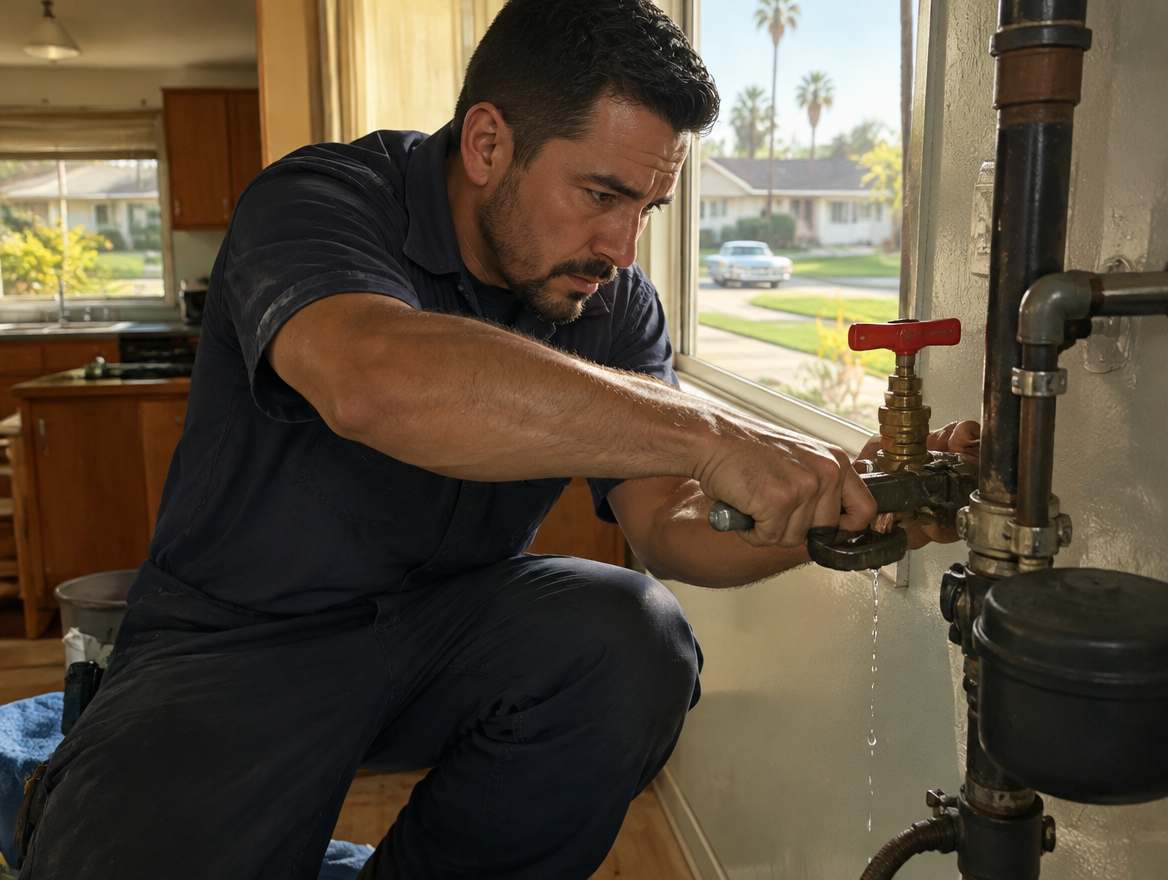
A plumber shutting off the water main during a plumbing emergency
Main line · cleanout to street Fullerton, CA

Sewage on the floor

Your next ten minutes

Do these in order. None of them needs a tool.

  1. Stop all water in the house: no flushing, showers, laundry or dishwasher. Every gallon you send down comes back up on the floor.

  2. Keep children, pets and anyone with a weak immune system away from sewage. Do not touch it bare-handed, and wash well if you do come into contact with it.

  3. If a supply line is also leaking or a fixture will not stop running, close the main water shutoff to the house.

  4. If sewage water is near outlets, cords or appliances, stay out of the wet area. Only switch off a breaker if you can reach the panel standing somewhere dry.

  5. Do not pour chemical drain cleaner into a backed-up main line. It rarely reaches the blockage and leaves caustic water for whoever opens the line.

  6. Do not force open an outdoor cleanout cap that is under pressure; sewage can spray out. Take photos of the backup and any damage for your records and insurance.

Quick read

One clog, or the main line?

Find the row that matches your house. If any row says main line, stop running water everywhere until the line is open.

What you seeLikelyWhy
Water rises in the shower or tub when a toilet flushes Main line Waste can't get past a blockage downstream, so it comes up at the nearest low opening.
The washer drains and the hall shower or floor drain fills Main line The washer's surge hits a stopped line and comes straight back up.
Toilets gurgle while other drains run Main line Air is being pushed back through the traps by water that can't move on.
The outdoor cleanout cap is wet, leaking or overflowing Main line The pipe is full up to the cleanout. The blockage sits between it and the street.
Only the kitchen sink is slow Single drain Grease or food in the kitchen branch. The main line is still moving.
One toilet clogs and the other bathroom works Single drain A blockage in that toilet or its short drain. Try a flange plunger first.
One bathroom sink drains slowly Single drain Hair and soap in the trap. Not a sewer problem.
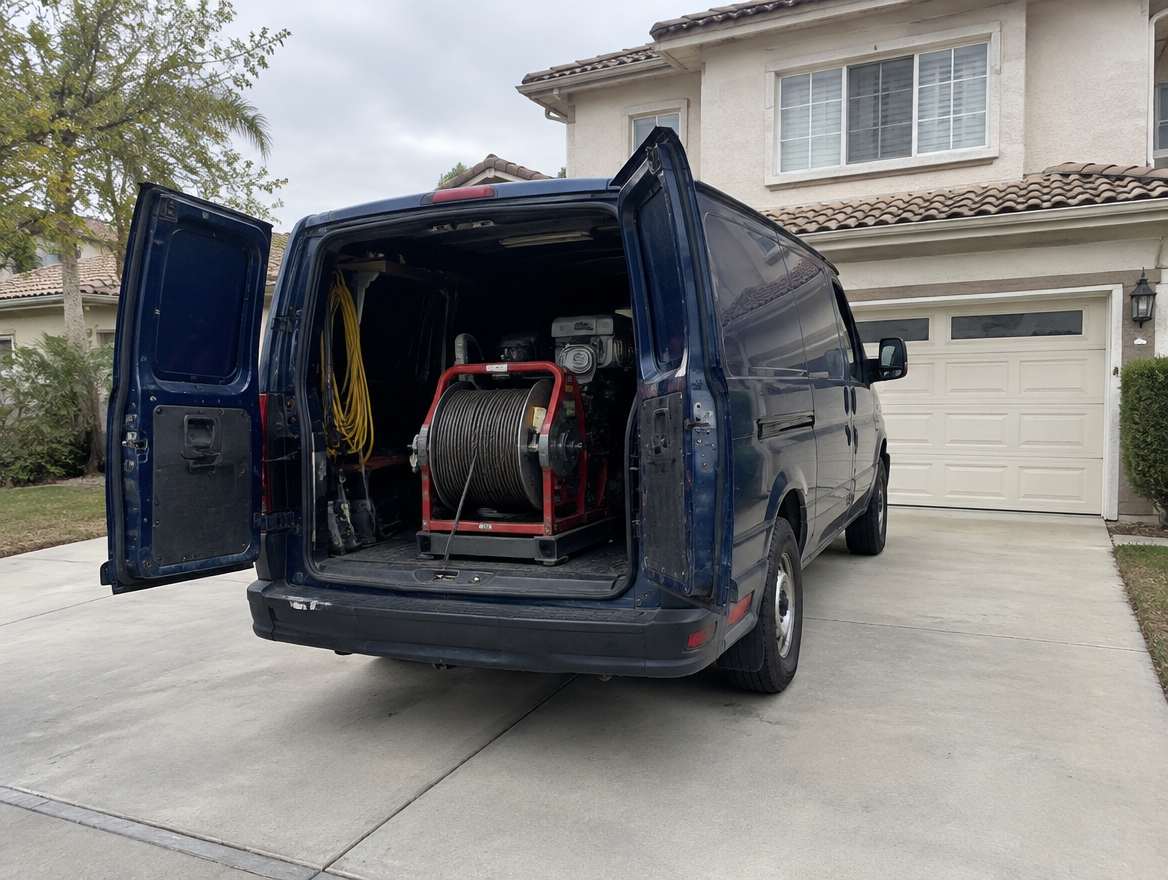
An unmarked plumbing service van parked at a home in Fullerton, California

The shared pipe

A plunger can't reach this clog

Your sinks, tubs, toilets and washer all drain into the main building drain. It leaves the foundation and runs underground as the sewer lateral to the city sewer in the street. Block that pipe and wastewater climbs back out of the lowest opening in the house.

Plunging one toilet moves nothing, and every flush adds to the floor. We reach the blockage from your cleanout with a sewer cable or a water jetter, then look inside with a camera.

In Fullerton, the camera usually finds one of three things: roots in an old clay or cast-iron lateral, grease and wipes packed at a low spot, or a joint that has cracked, sagged or pulled apart. The finding tells you whether a cleaning will hold or a repair is coming.

One pipe carries everything your house sends down. When it stops, the lowest drain in the house pays for it.

Warning signs

Signs it's the main line, not one drain

One slow sink is a local clog. Two of these at once point to the main sewer line.

  • Water comes up in the shower or tub when a toilet is flushed or the washing machine drains.

  • More than one fixture is slow or stopped at the same time, especially on the lowest floor.

  • Toilets gurgle or bubble when other drains are running.

  • Sewage or dirty water appears at a floor drain, tub drain or the lowest toilet.

  • The outdoor cleanout cap is wet, leaking or pushed up, or the ground around it is soggy.

  • A sewer smell inside the house or near the cleanout that does not go away.

  • Clogs that keep coming back every few months even after a drain is cleared.

On site

How we clear a main line

Houses differ, so the order can shift. You'll know each step before we start it, and you can watch the camera screen with us.

  1. Confirm it's the main line

    We run fixtures in a set order and watch where water rises. That separates a main line stoppage from a branch clog under one bathroom or the kitchen.

  2. Find the way in

    Most jobs start at the outdoor cleanout near the foundation. If your slab home has no usable cleanout, we pull a toilet and reach the line from the floor flange.

  3. Open the line

    A motorized sewer cable with a cutting head goes through the blockage and gets water moving. If grease or heavy roots fill the pipe, we may suggest hydro jetting to scour the walls.

  4. Put a camera down

    Once the line drains, the camera shows what stopped it: roots at a joint, a sag where waste settles, a cracked or offset section, or debris. You get a copy of the footage.

  5. Talk through repairs, if any

    A sound line may only need care. A damaged one may need a spot repair, lining, pipe bursting or digging. You get the options and the price in writing before you decide anything.

  6. Clean up and check permits

    Areas the sewage touched need cleaning and drying. If the line gets repaired or replaced, ask the City of Fullerton whether a permit applies; we'll tell you who pulls it.

Local patterns

Four backups we expect to see in Fullerton

Laundry day backup in a postwar tract home

The washer drains and dirty water rises in the hall shower. In many 1950s and 60s single-story homes the shower is the lowest opening, so it is where a main line stoppage shows first. Stop the washer, stop all water use, and have the line cleared from the cleanout and checked with a camera.

Roots that come back every year

A mature parkway or yard tree sits near the sewer lateral, and the line stops up on a roughly regular cycle. Clay and older cast-iron laterals have joints roots can enter. Cleaning cuts the roots back but does not seal the joints, so ask what a camera shows about the pipe before choosing between ongoing maintenance and a lining or replacement.

Slab home with no outdoor cleanout

Nothing outside gives access to the line, so the plumber pulls a toilet to reach it. Once the line is open, many homeowners ask about adding a proper cleanout so the next stoppage can be handled without pulling a fixture. Ask whether that work needs a permit.

Condo or townhome with a shared line

Several units drain into one building sewer, and a backup shows up in a neighbor's unit as well as yours. Call your HOA or property manager right away: who is responsible for a shared line depends on your governing documents, and they may already have a plumber they use.

Fullerton

What's under Fullerton's yards

Much of Fullerton's housing went up in the 1950s through the 1970s as slab-on-grade tract homes, and older neighborhoods around downtown are older still. Homes of that age often have cast-iron drains under the slab and vitrified clay or cast-iron sewer laterals out to the street. Both materials can crack, corrode or separate at joints over decades, and clay joints in particular let roots in.

Fullerton also has a lot of mature trees along streets and in yards, and their roots go looking for the moisture in sewer laterals. That is why recurring stoppages here are so often root-related, and why a camera inspection after clearing is worth asking for. Where the homeowner's responsibility for the lateral ends and the city's begins can vary, so check with the City of Fullerton before assuming who owns a problem near the street.

  • Ask the City of Fullerton where your sewer lateral responsibility ends and whether a repair or replacement needs a permit.

  • The City of Fullerton runs its own water utility; billing or meter questions go to the city.

  • Check any plumber's CSLB license at cslb.ca.gov before work starts.

  • If sewage is coming from a public manhole or the street, report it to the city rather than calling a private plumber.

  • Ask any company to confirm that your Fullerton address is in its service area.

Map shows the area served, not an office location. Open in Google Maps

ZIP codes served: 92832 (Fullerton), 92835 (Fullerton), 92831 (Fullerton), 92833 (Fullerton).

Also nearby: 92801, 90621, 92805, 90631, 92870, 92806, 90638, 92821, 92802, 92804, 90603, 90604, 90620, 92865, 91748, 90623, 92840, 90680.

Before anyone arrives

When you call us

We'll ask which drains backed up, where the water came up, where your outdoor cleanout is, roughly how old the house is, and whether this has happened before. A photo of the backup and one of the cleanout save time.

Ask us the same things you'd ask anyone: the CSLB license number, how the visit is priced, whether the camera inspection is included, and who is coming to the door. This is a preview site. The number shown is a temporary placeholder and the form is not connected yet, so if sewage is coming up right now, call a licensed plumber whose license you have checked.

Check any plumber's license

Ask for the CSLB license number and look it up at cslb.ca.gov. Ask whether employees or subcontractors will do the work, confirm your address is in their service area, and get the price in writing before work starts.

Fullerton Main Line Clog is the business name for this site. Licensing and service details will be published here once confirmed.

Fair questions

What people worry about

How do I check a plumber's license?

Ask for the CSLB license number and look it up at cslb.ca.gov. Check that the license is active and covers the type of work being done.

I was told I need a full sewer replacement. How do I know?

Ask to see the camera footage and where along the line each problem is. A single bad section can sometimes be repaired on its own. For a large job, a second opinion with its own camera inspection is reasonable.

What should be in writing before work starts?

The scope of work, the method, the total price or how it is calculated, what happens if the cable gets stuck or the line cannot be cleared, and who handles any permit.

Will a cleaning prevent another backup?

Not always. Cleaning restores flow, but roots, sags and broken sections stay. Ask what the camera showed and what the plumber expects to happen next.

Does homeowners insurance cover a sewage backup?

Coverage varies by policy, and some policies need a separate sewer backup endorsement. Photograph the damage, keep receipts, and call your insurer to ask.

Should I use enzyme or chemical treatments?

Chemical drain openers should not go into a backed-up main line. Ask a licensed plumber whether any root or maintenance treatment suits your pipe material before using one.

Answers

Main line questions

Questions to ask before hiring a plumber

How do I know if it is the main line or just one drain?

If only one sink or one toilet is slow and everything else drains fine, it is usually a local clog. If several fixtures are affected, or water rises in the shower or tub when a toilet flushes or the washer drains, the main line is the likely problem.

Can I clear a main line clog myself?

Small handheld augers are not long or strong enough for most main line stoppages, and opening a pressurized cleanout can release sewage. Renting a large sewer machine is possible but the cable can kink or get stuck. For most homeowners it is safer to stop water use and call a licensed plumber.

Where is my sewer cleanout?

In many Fullerton homes it is a capped pipe outside near the foundation, often on the side of the house closest to the street or near a bathroom. Some homes have a second cleanout near the property line, and some older slab homes have none that can be used.

Why do tree roots keep clogging my line?

Roots enter through small gaps at pipe joints and cracks, then grow inside where water and nutrients are. Cleaning cuts them back but leaves the gaps, so they regrow. A camera inspection shows whether the pipe can be sealed with lining or should be replaced.

Is a camera inspection worth it after the line is cleared?

Usually yes, especially if the line has stopped up before. Clearing tells you the line is flowing today; the camera tells you why it stopped and whether it is likely to happen again. Ask for a copy of the video.

Is sewage on the floor dangerous?

Raw sewage carries bacteria and viruses. Keep people and pets away, avoid skin contact, ventilate the area, and do not use a household vacuum on it. Porous materials like carpet and drywall that were soaked may need to be removed rather than cleaned.

Who pays if the blockage is under the street?

Responsibility for the public sewer main and for the part of the lateral near the street can differ by city. Check with the City of Fullerton, and ask your plumber to show you on camera where the blockage is.

Tell us what's backing up

Which drains, where the water came up, and when it started. Urgent? Call (714) 555-0116.

By sending this form you agree to the privacy policy.

Call Get help