Find it, fix it, prove it
A creeping meter, a faint sulfur smell by the dryer, a dead strip of lawn. We isolate sections, pinpoint the joint and retest the line.
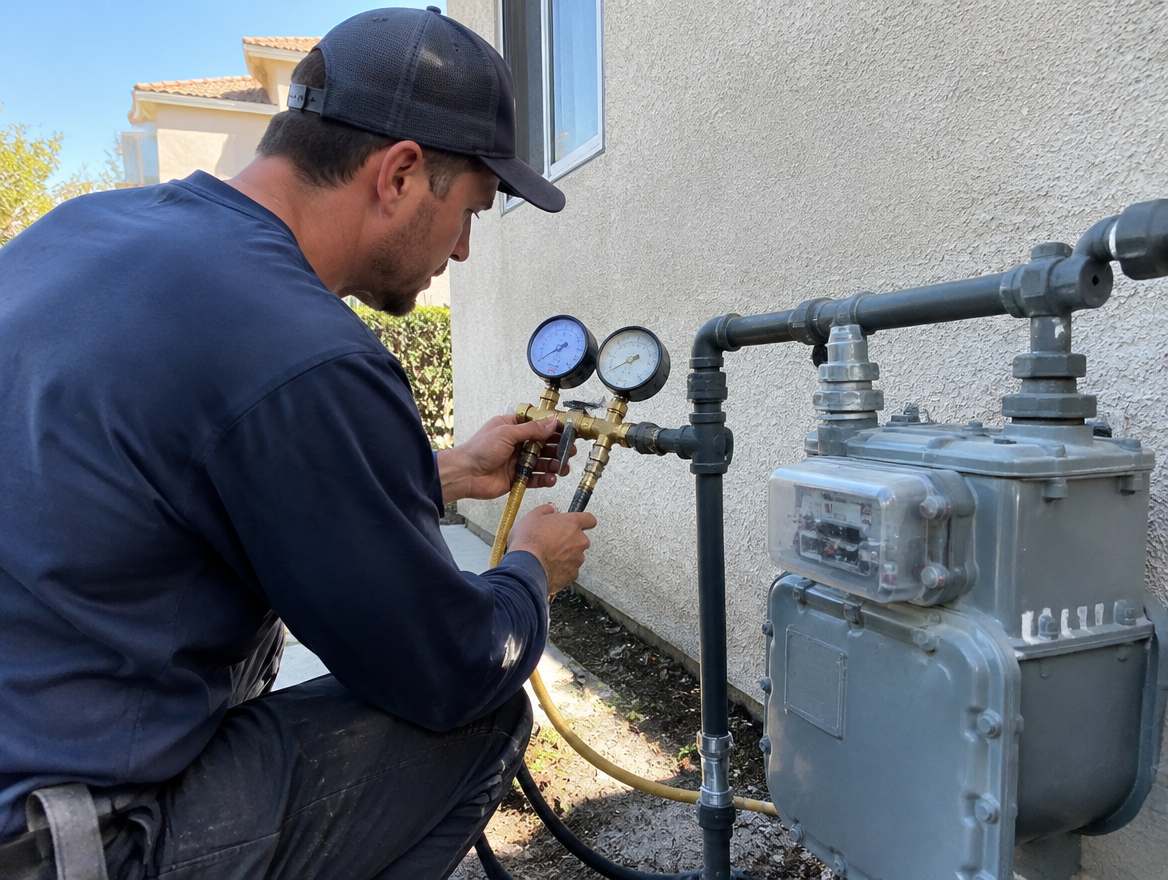
Villa Park gas lines
We track down leaks on your side of the meter, swap out tired valves and connectors, and run new pipe to ranges, dryers, tankless heaters, pool equipment and backyard kitchens. Nothing gets relit until the line holds pressure.
Preview site for Villa Park Gas Line Plumber. The number shown is a temporary placeholder and our request form isn't connected yet, so nothing you send reaches us.
Before you call anyone
The plumber is the last call on this list, not the first. That includes us.
Get everyone out, pets included. Don't stop to hunt for the leak.
Touch nothing that can spark: no light switches, no garage door opener, no car in the garage, no flame, no phone until you're outside and well away.
From a safe distance, call 911 or SoCalGas. They answer leak calls. We don't come first; they do.
Close the meter valve only if it's safe and you know how: a quarter turn with a wrench, tab crosswise to the pipe.
Once the meter is off, leave it off. SoCalGas turns service back on and relights pilots after the cause is found.
When the utility says it's safe, call a licensed plumber to find and fix the leak on your side of the meter.
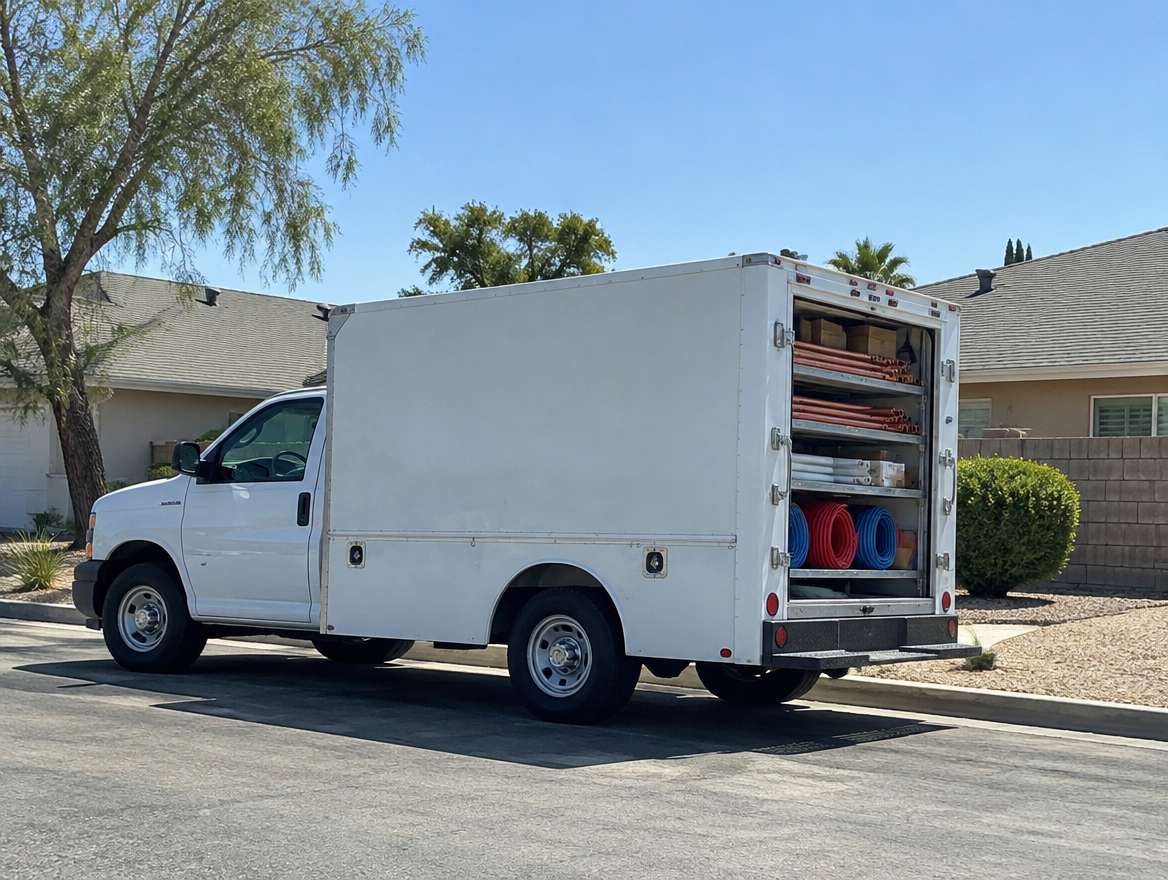
Illustration. Not a photo of our crew or truck.
What we do
SoCalGas owns the meter and the line that feeds it. Everything after the meter is yours: the pipe to the water heater, the furnace, the range, the dryer, the pool heater, the barbecue. That house-side piping is the part we repair, extend and test.
Most calls are one of three things. A leak: a sulfur smell, a hissing fitting, a meter dial that creeps with every appliance off. A repair: corroded buried pipe, a valve that won't turn, an old brass connector behind the range. Or an addition: a new line for a tankless heater, a gas range, a fire pit. The rule never changes. The line holds test pressure before the gas goes back on.
A creeping meter, a faint sulfur smell by the dryer, a dead strip of lawn. We isolate sections, pinpoint the joint and retest the line.
Seized shutoffs, old brass connectors, corroded runs out to the pool pad. Replaced with parts rated for the job and a shutoff you can reach.
Ranges, dryers, tankless heaters, fire pits, outdoor kitchens. Sized for the whole house, permitted, and pressure-tested before first light.
Warning signs
Natural gas has no smell. The utility adds one so a leak smells like rotten eggs. Any one of these is reason enough to act.
Meter side · House side
Your gas system splits at the meter. SoCalGas handles the meter and everything before it. Everything after it is yours, and that's where a licensed plumber works.
| Part of the system | Who handles it | What to know |
|---|---|---|
| A gas smell or suspected leak, anywhere | 911 or SoCalGas | Leave first, then call from outside. We come in after the area is safe. |
| The meter and the line that feeds it | SoCalGas | The utility's equipment. Don't dig around it, move it or repair it. |
| Turning gas back on after a meter shutoff | SoCalGas | Once the meter valve is closed, the utility restores service and relights pilots. |
| Pipe from the meter to the house and yard | You + a licensed plumber | Buried runs to the pool heater, barbecue and fire pit are yours to repair, test and permit. |
| Indoor pipe, valves and appliance connectors | You + a licensed plumber | Shutoffs and flexible connectors at the range, dryer, furnace and water heater. |
| New lines and added appliances | Licensed plumber + city permit | Sized for the total load, inspected where required, tested before gas flows. |
How we work
Find it, size it, permit it, fix it, prove it, relight it. Skipping a step is how a gas job comes back.
We close off the affected section and narrow it down with a gas detector, leak solution on the fittings and a pressure-drop test.
We add up what every appliance on the line burns and measure the run, so the far end still gets enough gas when everything fires at once.
New lines and many repairs need a permit and inspection. We'll tell you which applies; the City of Villa Park has the final word.
Bad sections, fittings, valves and connectors come out. New runs use black steel, pipe rated for burial, or stainless flexible tubing bonded to the maker's instructions.
We seal the piping and hold it at test pressure. If the gauge drops, we find out why before anything is lit.
After the test and any inspection, gas goes back on and every appliance is relit and checked. If the meter was closed, SoCalGas turns service back on.
Gas guides, fill-in checklists, worked examples and street-by-street notes for Villa Park.
How house gas piping actually works, what breaks, and what a proper repair or new line involves.
Print-and-fill sheets for the moments that matter: before you call, while you compare estimates, and before the gas comes back on.
Invented examples, walked through step by step, so you can see the order a gas job should follow.
Street-by-street notes on what's likely buried and behind the walls in Villa Park: the age of the pipe, the foundations, the laterals and the trees.
Around town
A sprinkler fix, a fence post or a new tree can nick a buried line. Move away and call SoCalGas or 911 first. Once the utility clears it, damage on your side of the meter is ours to repair, and the hole stays open if the inspector needs to see it.
Big lots mean long runs from the meter to the fire pit, the outdoor kitchen or the pool heater. We size the pipe for the whole house, not just the new burner, so the water heater doesn't starve when everything runs. Expect a trench, a permit and a pressure test.
Some older homes still have thin, uncoated brass connectors, the kind safety regulators have warned can crack at the fittings. A new rated connector and a shutoff you can actually reach is a small job worth doing now.
A tankless heater can burn several times what the old tank did, and a new range may sit where gas never ran. Have us check the line and meter before you buy the appliance, not after.
ZIP codes served: 92861 (Villa Park).
Also nearby: 92867, 92865, 92807, 92866, 92869, 92806, 92705, 92868, 92808, 92870, 92706, 92886, 92701, 92805, 92780, 92782, 92802, 92831.
Villa Park, CA
Most of Villa Park is single-family homes on generous lots, many built in the 1960s and 1970s and remodeled since. The original indoor pipe is usually threaded black steel, and the valves and connectors on it can be as old as the house. Decades of additions, a pool heater here, a spa or a barbecue there, often leave several long buried branches hanging off one meter.
SoCalGas serves the city and owns everything up to and including the meter. After the meter, it's yours. Permits and inspections for gas work go through the City of Villa Park, so check what applies to your job before anyone digs.
Straight answers
Ask for the CSLB license number and check it at cslb.ca.gov. Confirm they serve your address, ask who pulls the permit, and get the pressure test written into the estimate.
Villa Park Gas Line Plumber is the business name for this site. Licensing and service details will be published here once confirmed.
Not first. Leave the building, then call 911 or SoCalGas from outside. They answer leak calls and can shut off service. Once they've made it safe, a licensed plumber fixes whatever leaked on your side of the meter.
SoCalGas owns the meter and the service line that feeds it. The piping from the meter to your appliances belongs to the property owner, and repairs to it are done by a licensed contractor you hire.
No. Once the gas has been shut off at the meter, contact SoCalGas to restore service. Turning it back on without checking every appliance and pilot can let gas escape.
New gas piping and many repairs require a permit and inspection. Requirements change, so check with the City of Villa Park and ask your plumber who will pull the permit.
After piping is repaired or installed, the plumber seals the system and holds it at test pressure while watching a gauge. If the pressure holds for the required time, the piping is tight. If it drops, the leak is found and fixed first.
Sometimes, but not always. Each appliance is rated for how much gas it needs. A plumber adds up the total demand and the length of the run to see whether the existing pipe is large enough or a larger line is needed.
Common choices are threaded black steel, flexible corrugated stainless steel tubing, and polyethylene pipe for buried runs. Each has its own installation, protection and bonding rules, and the right one depends on where the line runs.
Which appliances, where the line runs, and whether the gas is on. Smell gas right now? Call 911 or SoCalGas instead. Urgent? Call (714) 555-0147.
If you smell gas right now, don't start with us. Leave, then call 911 or SoCalGas from outside. For everything else, we'll ask which appliances are involved, where the meter is, whether the gas is on, and whether this is a repair, a replacement or a new line.
For a new line we'll want the appliance's gas rating, how far it sits from the meter, and the likely route: attic, wall or underground. The written estimate names who pulls the permit, what pipe goes in, and the pressure test before the gas comes back on.
Then call 911 or SoCalGas from outside. For repairs and new lines, whoever you hire: check the CSLB license at cslb.ca.gov, confirm they serve your address, get the scope in writing, and make the pressure test part of the deal.