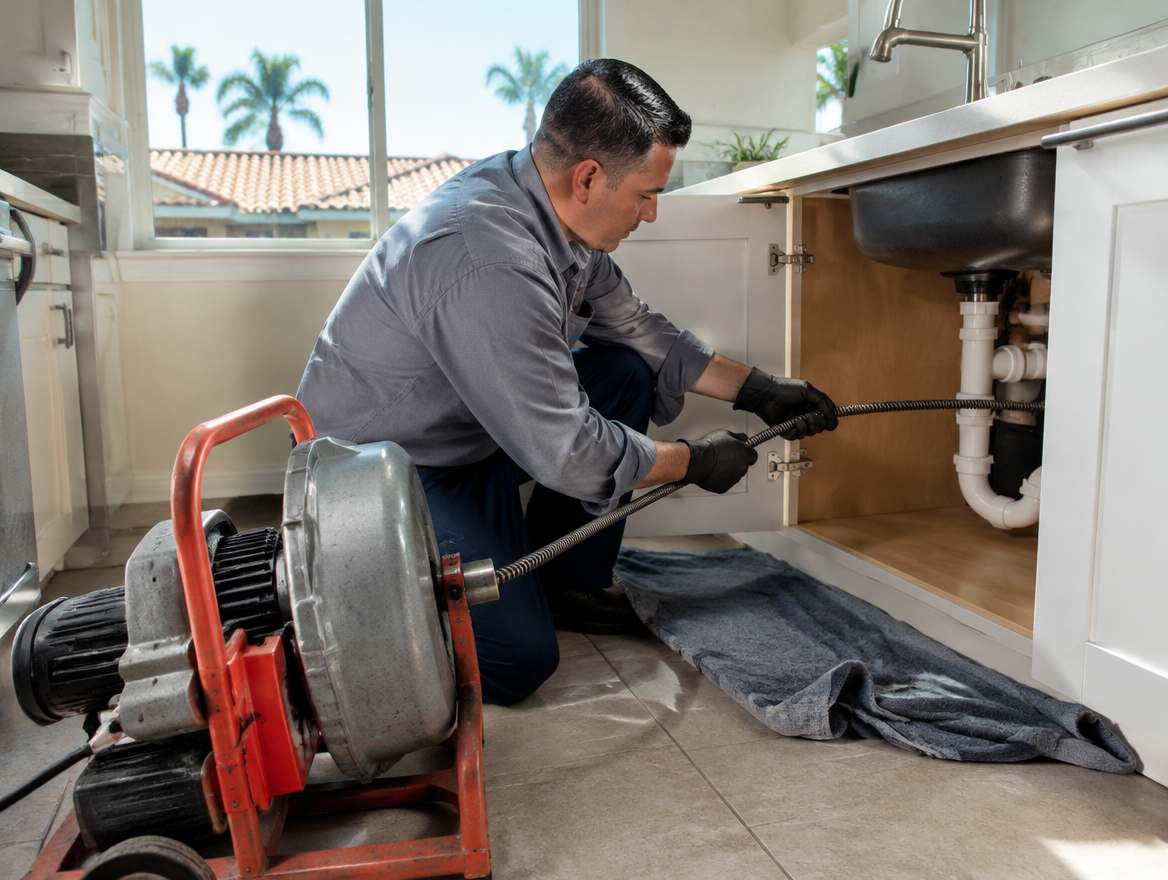
Situation 01
Tub backs up when the toilet flushes
A classic main-line symptom. The shared line past the bathroom is blocked, so water takes the lowest exit. This calls for clearing from a cleanout and, ideally, a camera check of the lateral.
0 ft Stanton, CA · Sinks, toilets, main lines
One slow sink or a blocked main? We help you tell the difference, clear the line from the right access point, and show you what the camera sees inside the pipe.
Preview site for Stanton Drain Cleaning. The number shown is a temporary placeholder and the request form is not connected yet. Nothing on this page replaces an on-site look at your drains.
2 ft Clog locator
Start with the fixture that misbehaves. The pattern tells you whether you have one trap to clean or a line that serves the whole house.
| What you notice | Where the clog usually sits | First move |
|---|---|---|
| One bathroom sink drains slowly | Hair and soap film on the pop-up stopper or in the P-trap under that sink. | Try it first Pull the stopper and clean it, or clear the trap over a bucket. Leave the chemical openers on the shelf. |
| Kitchen sink slow, other drains fine | Grease and food scraps stuck along the kitchen branch line behind the wall. | Book a visit Keep grease out of the sink. If a plunger fails, the branch needs a cable or a jetter. |
| One toilet clogs, the others flush | Something lodged in that toilet's trapway or the short pipe right below it. | Try it first Use a flange plunger. Stop if the bowl nears the rim, and skip the test flush. |
| Tub fills when a toilet flushes | The main line or sewer lateral, downstream of the bathrooms. | Stop the water, call Shut off water use in the whole house. This gets cleared from a cleanout, then checked with a camera. |
| Several drains slow and gurgling | A partial main-line blockage, or a vent that cannot pull air. | Book a visit Cut back on water and note which drains are worst. A plumber can tell a clog from a vent problem. |
| Sewage at a floor drain or the cleanout | A full blockage in the lateral between the house and the street. | Stop the water, call Keep people and pets away, close the main shutoff if water keeps coming, and get the line cleared today. |
A general guide, not a diagnosis. Smell gas? Leave the building and call 911 or SoCalGas from outside.
8 ft How clogs behave
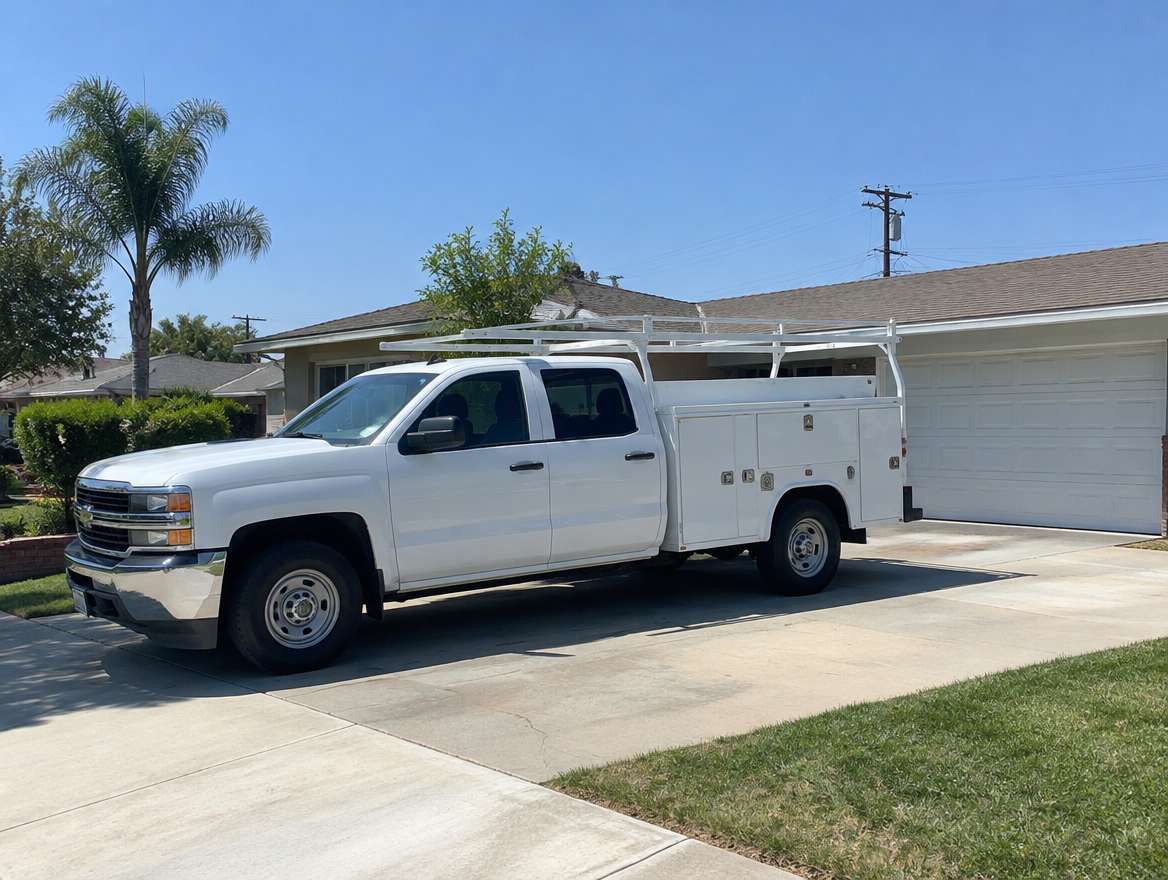
One slow sink points to hair, soap film or grease in that fixture's trap. When the tub fills as a toilet flushes, or every drain in the house slows at once, the blockage sits further down, in the main line or the sewer lateral that runs to the street.
That difference sets the job. We clear a single fixture through its own drain. A main line calls for a cleanout, a cutter sized to the pipe and a camera run afterward, because roots, a sag or a cracked joint will bring the same clog back.
Plenty of Stanton houses went up between the 1950s and the 1970s, with cast iron under the slab and clay or cast iron out to the street. Those pipes scale, shift and let roots in. A second backup in a house that age deserves a look inside the pipe, not another quick punch-through.
15 ft Warning signs
One sign on its own can be minor. Two together usually mean the main line.
22 ft The first hour
Work down the list in order. Stopping the water comes first because every gallon you add has to come back up somewhere.
Stop running water anywhere in the house: no flushing, laundry, dishwasher or showers. Every gallon you add has to go somewhere, and with a blocked main it comes up the lowest drain.
If sewage has backed up, keep children and pets away from it, wear gloves, and do not mix cleaners on top of it. Sewage carries bacteria; contaminated carpet and drywall usually need professional cleanup.
If water is overflowing and will not stop, close the main water shutoff. In most Stanton houses it is near where the line enters, often at the front of the house or in a box by the meter.
Skip chemical drain openers on a fully blocked line. They sit in the pipe, can damage older fittings, and make the work hazardous for whoever opens the drain next.
Find your cleanout if you can: a capped pipe, usually 3 or 4 inches, outside near the foundation or by the front walk. Do not open it if the line is full, because standing sewage will pour out.
If you smell gas at any point, leave the building and call 911 or SoCalGas from outside. That is a separate emergency and comes first.
30 ft The work
We find where the stoppage sits and why it formed, then show you. Ask any plumber, us included, to walk you through each of these steps.
Which fixtures are affected, since when, and what has been tried. Running water at different fixtures narrows the clog to one branch or the main line.
Single fixtures are cleared through the trap or drain opening. Main-line work should go through a proper cleanout rather than pulling a toilet, if one is available.
A drain machine with a cutting head sized to the pipe opens most clogs. Heavy grease, scale or root mats may call for hydro jetting, which scours the pipe wall with high-pressure water.
A sewer camera run after clearing shows roots, offsets, bellies or broken pipe. It is the difference between knowing why the line failed and guessing.
Running several fixtures together for a few minutes confirms the line carries a real load, not just a trickle.
You should hear what was found, see the camera footage if one was used, and get any repair options in writing before more work starts.
38 ft In the field
Situation 01
A classic main-line symptom. The shared line past the bathroom is blocked, so water takes the lowest exit. This calls for clearing from a cleanout and, ideally, a camera check of the lateral.
Situation 02
Cooking grease cools and hardens in the kitchen branch line, catching food scraps. A cable can punch through it, but jetting does a more complete job on heavy grease buildup.
Situation 03
Common in older laterals near mature trees. Roots enter clay or cast-iron joints, get cut back, and regrow. A camera inspection shows whether the pipe needs repair rather than another clearing.
Situation 04
Shared lines and park-owned sewer systems change who is responsible. Check with your HOA or park management before work, because the clog may be in a line you do not own.
Guides, printable checklists, worked examples and notes on Stanton's main streets.
Plain explanations of how household drains clog and how they are cleared.
Short, printable lists for the moments that matter: when a drain first backs up, when you are comparing plumbers, and after the line is clear.
Illustrative walk-throughs of common drain problems in homes like Stanton's.
Notes on the housing and drain lines found along Stanton's main streets.
45 ft Local
Stanton is a compact city in western Orange County with a mix of single-story tract houses, apartments, condos and manufactured-home communities. Many single-family homes were built from the 1950s to the 1970s on slab foundations, with cast-iron drains inside and clay or cast-iron sewer laterals running to the street.
Local water is hard, a blend of groundwater and imported supply, and mineral scale narrows older drain lines over time. Mature street and yard trees add roots to the picture. Who owns which part of the sewer line, and what a sewer permit or repair would require, varies, so check with the City of Stanton before any digging or replacement.
ZIP codes served: 90680 (Stanton).
Also nearby: 92841, 92804, 92845, 92844, 90630, 92683, 90620, 92840, 92801, 90720, 92802, 92843, 90623, 90621, 92805, 92833, 92832, 92703.
52 ft Questions
Get the contractor's CSLB license number and check it at cslb.ca.gov. Ask whether employees or subcontractors will do the work, and get the price in writing before anyone starts.
Ask for the contractor's CSLB license number and look it up at cslb.ca.gov. Confirm the name on the license matches the business you are dealing with and that the license is active.
Ask to see the camera footage and where along the line the problem is. A single bad section may be repairable without replacing the whole lateral. Getting a second written opinion on a major repair is reasonable.
Ask before work starts how the visit is priced, what is included, and whether jetting or a camera run costs extra. Get the price in writing. We do not publish prices on this preview site, because they depend on the specific job.
Sometimes, if there is no usable cleanout. A proper cleanout is the better access point for a main line. Ask which they plan to use and why.
Clearing the drain and cleaning up sewage are different jobs. Ask whether cleanup is included, and for larger backups consider a water damage or sanitation specialist.
Ask for any guarantee in writing, what it covers, and for how long. A clearing without a camera check cannot tell you why the clog formed.
Stanton Drain Cleaning is the business name for this site. Licensing and service details will be published here once confirmed.
We ask which drains are affected, whether water or sewage has come up, roughly when the house was built, and where the cleanout is. Those four answers tell us whether to plan for one fixture or the main line.
Ask us how the visit is priced, whether a camera run is included, and who will do the work. This is a preview site: the number shown is a temporary placeholder, and the request form does not deliver anywhere yet.
Which drains, what they do, and since when. Urgent? Call (714) 555-0146.
Now Backup in progress
Stop running water, keep everyone away from sewage, and close the main shutoff if water keeps coming. Then call a licensed plumber you have checked at cslb.ca.gov, and ask whether a camera run is part of the visit.
Call (714) 555-0146