The warm hallway tile
A 1960s single-story house with a warm strip between the water heater closet and the bathrooms. That pattern points to the hot line under the slab. Close the heater's cold inlet while the line gets traced.
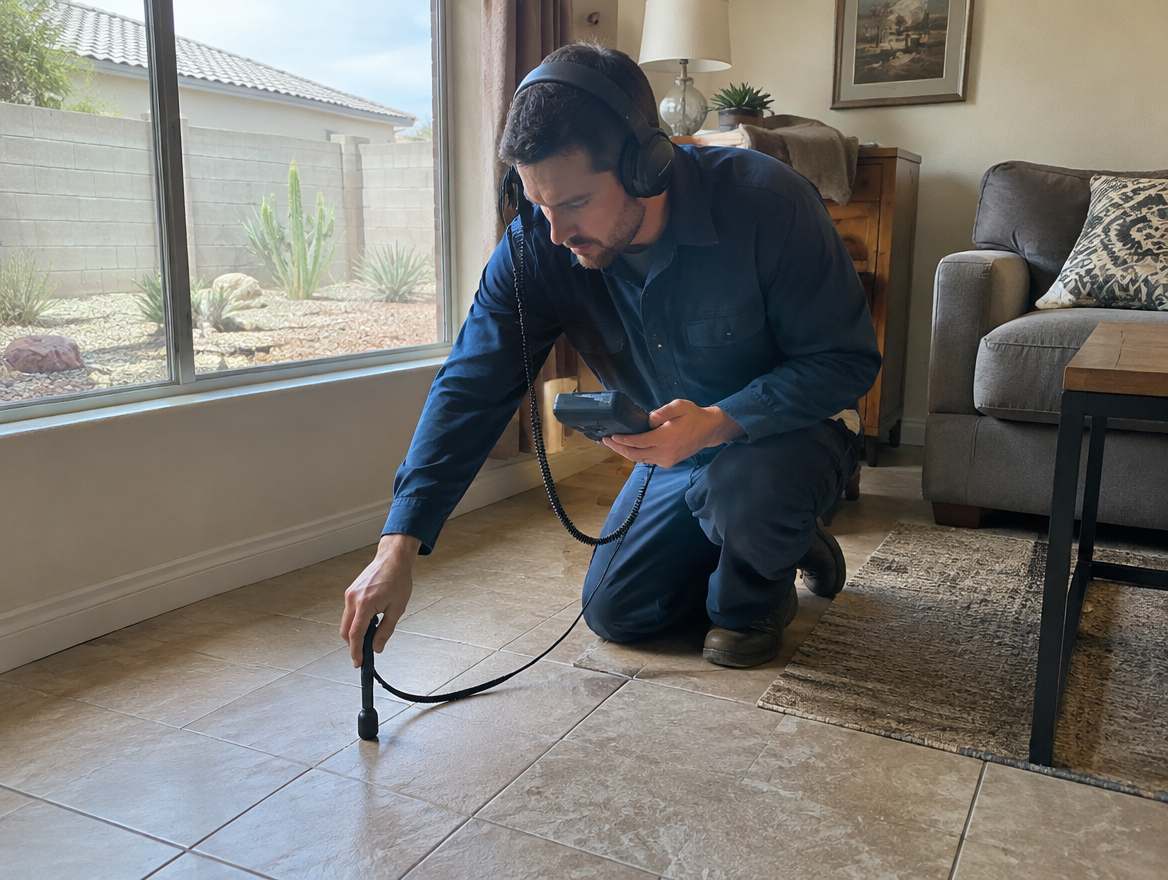
Slab leak detection and repair in Fullerton, CA
Warm tile in the hallway. A meter that turns with every tap closed. We trace the line first, show you where it broke, then put spot repair, reroute and repipe side by side in writing.
Preview site for Fullerton Slab Leak Repair: the phone number shown is a temporary placeholder, and the request form is not connected to a destination yet.
Three valves, ten minutes
Close three valves in order and watch one dial. The result tells you whether water is escaping, whether it's inside the house, and which line to suspect.
Box near the street
Everything off, lid up, watch the leak indicator for three minutes.
Where the line enters the house
Close it and watch the meter again.
Top of the water heater
Reopen the house shutoff, close only this valve. Leave the gas alone.
Printable version: the meter test worksheet.
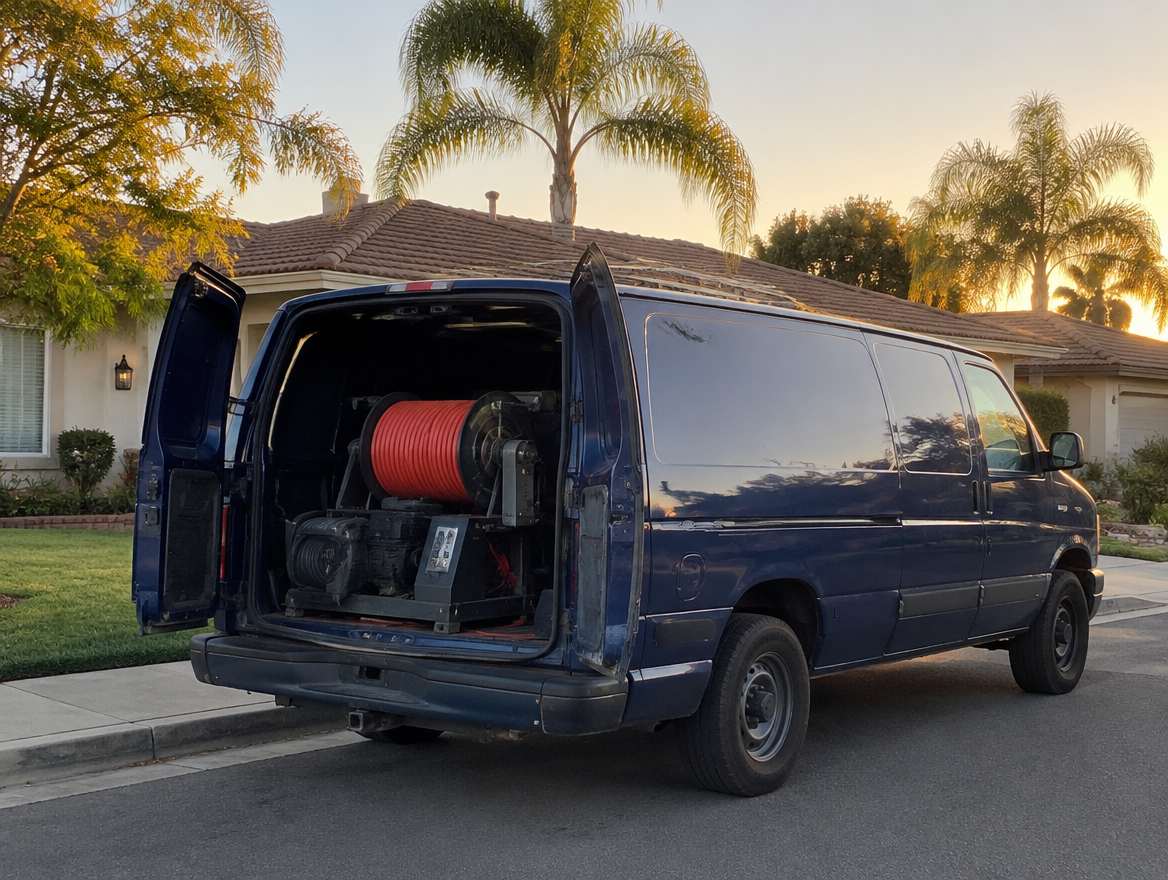
Most Fullerton tracts went up between the 1950s and the 1970s on slab-on-grade foundations, with copper supply lines laid in the soil before the concrete was poured. Plenty of those lines still carry the house's water today.
Hard water, pressure and a hot line rubbing against gravel thin the pipe a little each year. Once a pinhole opens, water drains into the soil and the floor above can stay dry for weeks.
A five-minute meter test tells you whether water is escaping. Leak location tells you where. Choose the repair after both.
Warning signs
One sign proves little. Two together mean you should run the meter test today.
Today
Turn off every tap, appliance and irrigation timer. Lift the meter lid and watch the leak indicator for three minutes.
Water coming up through the floor, or the meter spinning fast? Close the main shutoff where the line enters the house.
Warm floor, nothing surfacing: close the cold valve on top of the water heater. Leave the gas valve alone, and if you smell gas, get out and call 911 or SoCalGas from outside.
Photograph the floor, the meter reading and the time. Keep your last few water bills with the photos.
Pull rugs off wet flooring and keep everyone clear of water near outlets.
Ask for a CSLB license number before anyone opens a floor or wall, and look it up at cslb.ca.gov.
Find the leak first. Then decide what gets broken.
Concrete is the expensive part of a slab leak. Locating the break before the jackhammer comes out keeps the opening small, or lets you skip it with a reroute.
Find, then fix
The work runs in a fixed order: prove the leak, isolate the line, pinpoint the spot, then choose a repair that suits the pipe and the house.
We read the meter with all water off and rule out toilets, softeners and sprinklers, so a stuck flapper doesn't pass for a slab leak.
Hot and cold sides get closed and pressure tested separately. The gauge shows which line is losing water, or whether the loss sits outside the house.
Acoustic listening, thermal imaging and line tracing narrow the leak to a patch of floor before anyone touches the concrete.
You get the options in writing: open the slab for a spot repair, reroute the line through walls or the attic, or repipe when the old lines are worn throughout.
The new section is pressure tested and the meter read again. Concrete gets patched; tile, wood and carpet usually go to a separate trade.
You keep a record of what failed, where, and what was done. Your insurer will ask for it, and so will the next plumber.
Repair choices
The right choice depends on where the leak sits, what floor covers it and how the rest of the pipe looks. Ask for the reasoning and the scope in writing, from us or anyone else.
| Approach | What happens | Usually fits | Ask about |
|---|---|---|---|
| Spot repair | We open the slab at the pinpointed leak and replace the damaged section. | One leak, on a line in fair shape, under floor you can reach. | How was the spot located? Who patches the concrete and the finished floor? |
| Reroute | The under-slab line gets capped, and a new one runs through walls, the attic or along the outside. | A leak under cabinets or tile you want to keep, or a hot line likely to fail again. | Where does the new line run? How many wall openings, and who closes them? |
| Pipe lining | An epoxy coating seals the inside of the existing pipe. | Some lines in suitable condition. Plenty of pipes and leaks don't qualify. | Why is my pipe a good candidate? What happens if the lining fails? |
| Repipe | Most or all supply lines are replaced, usually above the slab. | Repeat leaks, corroded galvanized lines, or copper worn throughout the house. | What shows the whole system is worn? Which pipe, and who pulls the permit? |
Deeper comparison: spot repair vs reroute.
A 1960s single-story house with a warm strip between the water heater closet and the bathrooms. That pattern points to the hot line under the slab. Close the heater's cold inlet while the line gets traced.
Nothing looks wet, yet the indicator creeps with everything off. Rule out sprinklers and toilets first. If the meter still moves, the leak sits under the slab or in the line from the meter to the house.
One spot repair, then a new leak somewhere else. This is the moment to compare another repair against rerouting or repiping the lines that remain under the floor.
Damp soil along the slab with no sprinkler nearby. Close the house shutoff and watch the meter: that one test separates a slab leak from a service line leak in the yard.
Every page answers one question about leaks under Fullerton slabs.
How leaks under a concrete foundation start, how licensed plumbers locate them, and how spot repairs, reroutes and repipes compare for Fullerton's slab-on-grade homes..
Step-by-step lists you can use at home today: confirm a leak at the meter, shut off the right valve, record what you see and prepare for the first conversation with a plumber..
Illustrative situations, not real jobs or customers, showing how a slab leak is usually confirmed, isolated, located and repaired in homes like those found around Fullerton..
Fullerton and its neighbors share many slab-on-grade homes from the 1950s to 1970s.
ZIP codes served: 92832 (Fullerton), 92835 (Fullerton), 92831 (Fullerton), 92833 (Fullerton).
Also nearby: 92801, 90621, 92805, 90631, 92870, 92806, 90638, 92821, 92802, 92804, 90603, 90604, 90620, 92865, 91748, 90623, 92840, 90680.
Local notes
Fullerton's housing ranges from older homes near downtown to large tracts of 1950s, 60s and 70s slab-on-grade houses across the flats and the hills toward Brea and La Habra. In many of those tract homes, copper supply lines run under the concrete, and some older homes still have galvanized steel lines that corrode from the inside.
Water in Fullerton comes from the city's own water utility and, like much of North Orange County, is a blend of local groundwater and imported water that tends to be hard. Mineral content is one of several factors in pipe wear; pressure, pipe movement and how lines were bedded under the slab matter too.
Turn off every fixture, appliance and irrigation timer, then watch the leak indicator on your water meter. If it moves, water is leaving the system. Combined with a warm floor, damp flooring or the sound of running water, a slab leak becomes likely, but a plumber still needs to confirm where it is.
Usually the location is narrowed down first with tools such as acoustic listening equipment, thermal imaging and line tracing. Concrete is opened only where the leak has been pinpointed, or not at all if the line is rerouted.
If water is coming up indoors or the meter is moving quickly, close the main shutoff. If you suspect the hot-water line, closing the cold inlet valve on the water heater stops flow to the hot side while leaving cold water on. Leave the gas controls alone.
A spot repair opens the slab at the leak and replaces the damaged section. A reroute abandons the line under the slab and runs a new one through walls or the attic. Which fits depends on the pipe's condition, where the leak is and how many leaks the house has had.
Water surfacing indoors, water near outlets or a fast-spinning meter needs prompt attention and the main shut off. A slow leak found by a meter test is still worth acting on soon, because water under a slab can affect the soil and flooring over time.
Many were built in the 1950s to 1970s with copper or galvanized lines under the slab. Age, hard water, pressure and pipe rubbing against concrete or gravel can all contribute to wear.
It depends on your policy. Some policies treat access to the pipe, the pipe repair and resulting water damage differently. Ask your insurer before work starts and keep photos and the plumber's written findings.
Where in the house, what the meter did, and since when. Urgent? Call (714) 555-0104.
Next step
Close the main if water is surfacing. Close the heater's cold inlet if the hot side is suspect. Write down the reading, then send us the details. Whoever you hire, check their license at cslb.ca.gov first.
Call (714) 555-0104