FHJDrain and sewer jetting · Fullerton, CA

Hydro jetting that scours Fullerton sewer lines back to bare pipe

A cable pokes a hole through the clog and leaves the grease on the walls. We put a camera down your line first, match the water pressure to clay, cast iron or plastic, then jet the pipe clean and show you the footage.

Preview site for Fullerton Hydro Jetting. The number shown is a temporary placeholder and the request form isn't connected to an inbox yet, so a submission reaches no one. Nothing here is a quote.

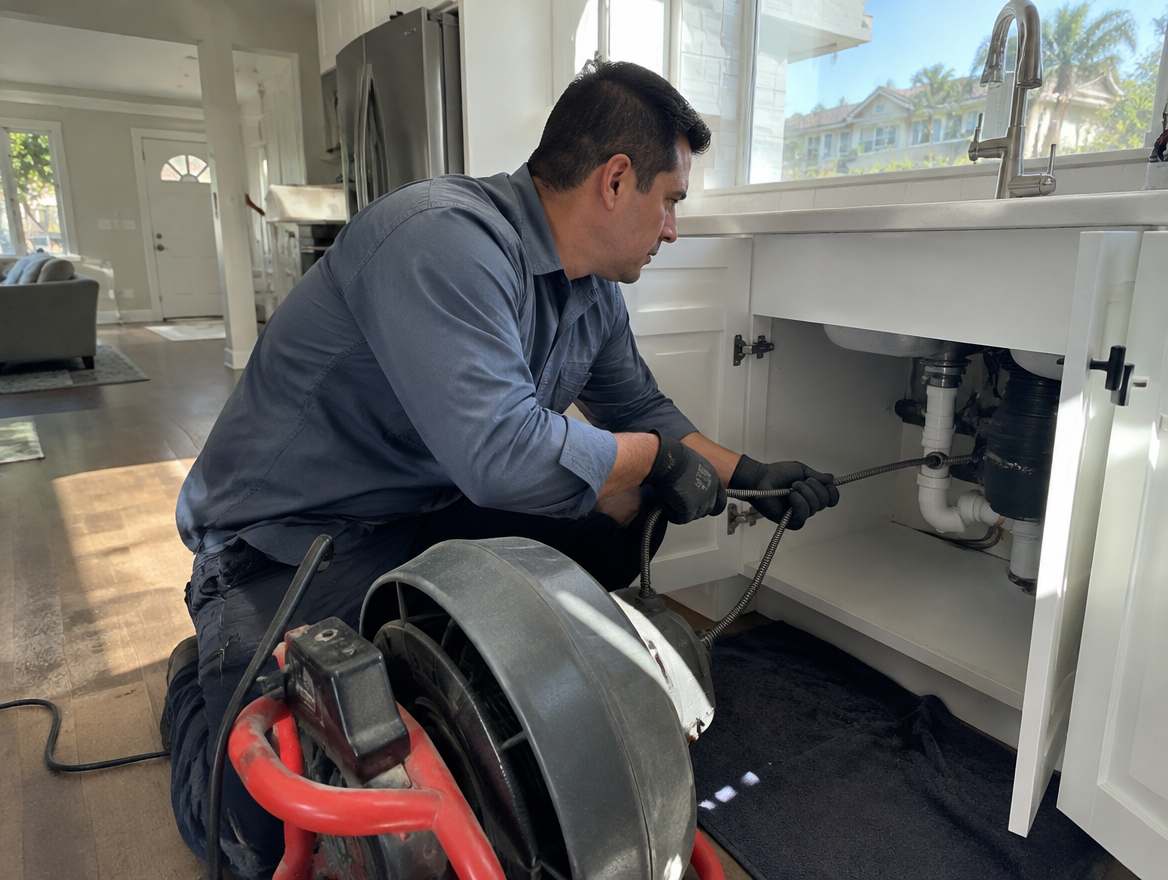
A plumber clearing a clogged drain with a powered drain-cleaning machine under a kitchen sink
Illustration · kitchen branch line
  • Camera, jet, cameraYou see the pipe before and after.
  • Pressure set to the pipeClay, cast iron and ABS each get their own setup.
  • Old laterals in mindMany Fullerton tract homes still drain through 1950s to 1970s clay and cast iron.

01The method

What the jetter does inside your pipe

A jetter pushes water through a hose at high pressure. Jets on the back of the nozzle drag the hose up the line and blast the pipe wall all the way around. Grease, soap scum, scale and fine roots break loose and wash down to the city main.

A snake bores a path through the blockage. Water drains again, but most of the buildup stays stuck to the pipe, and the next wad of paper catches in the same spot. That's how a kitchen line snaked in spring backs up again by fall.

High pressure can hurt a weak pipe. Cracked clay, thin cast iron and collapsed sections need a different plan, so we look with a camera before we jet. Plenty of Fullerton houses built between the 1950s and the 1970s still drain through their original sewer laterals, and that first look decides how hard we can work them.

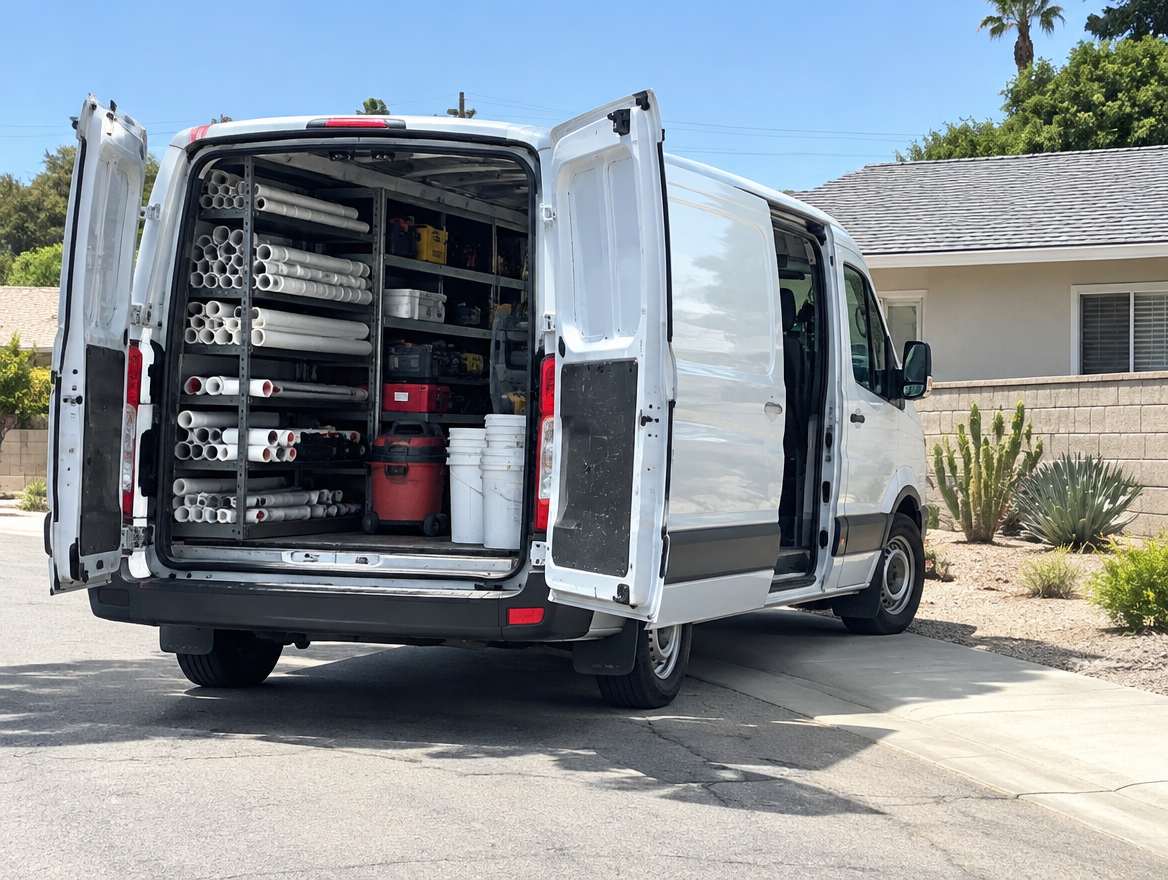
An unmarked plumbing service van parked at a home in Fullerton, California

02Cable or jet

Same clog, two tools, two different pipes

Here is the inside of the same line after each one. The cable leaves a narrow channel through the buildup. The jetter takes the wall back to bare pipe.

After a cableA channel through the grease
After the jetterFull bore, wall scoured
Which tool usually fits which drain problem
What's in the lineUsual callWhy
Grease coating a kitchen line Jet it A cable opens a channel and leaves the grease on the walls. The jetter scours the full circumference.
One solid object, like a toy or a wad of wipes Cable A single obstruction near a fixture usually comes out on a cable, sometimes after a camera finds it.
Fine roots at clay joints Jet, then camera A root-cutting nozzle clears fine roots. The follow-up footage shows whether the joints need repair.
Heavy, mature root mass Camera first Big roots can hide a cracked or shifted pipe. We may cut with a cable, the jetter or both.
Scale in old cast iron Camera first Descaling helps, but thin, corroded pipe needs lower pressure or may be past cleaning.
Sand, silt or sludge Jet it Water carries loose sediment down to the main. A cable slides straight through it.
Sag, offset or collapsed pipe Repair Cleaning buys a few weeks at best. The camera pins down the damage so the repair can be scoped.

General guidance. On a main line, the camera footage makes the final call.

03Warning signs

Signs your line needs more than a snake

One slow sink means one local clog. These patterns point further down, to buildup or roots in the line you share with every fixture.

  1. 01 The same drain clogs again within weeks or months of being snaked.
  2. 02 Water backs up into a tub or shower when the toilet flushes or the washing machine drains.
  3. 03 Several fixtures are slow at once, especially on the lowest floor.
  4. 04 Gurgling in drains or the toilet bowl rising and falling after another fixture runs.
  5. 05 The outdoor sewer cleanout overflows or shows standing water when the cap is opened.
  6. 06 Sewer odor near floor drains or the cleanout with no obvious source inside.
  7. 07 A large tree, especially ficus, pine or a mature shade tree, grows near the sewer lateral.

!Backup in progress

Sewage coming up right now? Do this first

Call (714) 555-0107
  1. Stop running water anywhere in the house: no flushing, laundry, dishwasher or showers until the line is cleared.
  2. Keep children and pets away from any sewage that has come up, and do not clean it barehanded. Wear gloves and wash up afterward.
  3. If water is coming from a supply pipe rather than a drain, close the main water shutoff, often near where the water line enters the house or at the meter box by the street.
  4. Find the sewer cleanout, usually a capped pipe near the foundation or in the front yard. Do not force the cap if sewage pressure is pushing against it.
  5. Skip chemical drain openers. They rarely clear a main line and they make the work hazardous for whoever opens the pipe next.
  6. Note which fixtures backed up, in what order and when, plus any past clogs. With that history, a plumber can choose between a camera, a cable and the jetter before unloading anything.

04On the day

How a jetting visit runs

Six steps, from the first question to the last frame of footage. Old clay and cast iron get the same sequence with gentler settings.

  1. 01

    Questions and access

    We ask how old the house is, when the line last cleared and where the cleanout sits. The jetter goes in through a cleanout or a pulled toilet. A sink drain is too small for the hose.

  2. 02

    Camera first

    The camera shows what's in the line and what the pipe is made of: cast iron, clay, ABS or a mix. Roots, grease, offsets, sags and cracks all show up before any water goes in.

  3. 03

    Pressure and nozzle

    We match pressure, flow and nozzle to the pipe's size and material. A root cutter, a scouring head and a penetrating head each do a different job, and old cast iron gets a gentler setup.

  4. 04

    Jetting the line

    We feed the hose in from the cleanout and pull it back slowly so the jets scour the full wall. Loosened debris washes down to the city main.

  5. 05

    Camera again

    A second pass shows whether the wall came clean and whether the buildup was hiding damage. Ask for a copy of the footage and keep it with your house records.

  6. 06

    Findings, in plain words

    You hear what we found: maintenance only, or a repair such as a spot fix, lining or replacement. Get any repair price in writing before work starts.

05Typical lines

Four Fullerton lines that call for a jetter

Line 01

The kitchen line that keeps coming back

Years of cooking grease coat the inside of the kitchen branch line. A cable clears a channel, but the grease stays on the walls and the clog returns. Jetting scours the line back toward its full diameter, and a camera can confirm the result.

Line 02

Roots in an original clay lateral

Many Fullerton tract homes built in the 1950s to 1970s have clay or cast-iron sewer laterals, and mature street and yard trees send fine roots through the joints. Jetting with a root-cutting nozzle can clear them, but roots grow back through the same joints, so the camera footage is what shows whether repair is the longer-term answer.

Line 03

Scale in cast iron under a slab

Older cast-iron drains under slab-on-grade homes build up rough scale and rust that snag paper and debris. Careful, lower-pressure descaling can help, but heavily corroded pipe can be thin, so the camera decides how hard it is safe to work.

Line 04

A restaurant or shared building grease line

Commercial kitchens and multi-unit buildings can build up grease much faster than a single home. Scheduled jetting is a common maintenance approach there, along with the grease interceptor upkeep the city may require. Check with the City of Fullerton about any requirements that apply.

Map shows the area served, not an office location. Open in Google Maps

ZIP codes served: 92832 (Fullerton), 92835 (Fullerton), 92831 (Fullerton), 92833 (Fullerton).

Also nearby: 92801, 90621, 92805, 90631, 92870, 92806, 90638, 92821, 92802, 92804, 90603, 90604, 90620, 92865, 91748, 90623, 92840, 90680.

06Service area

Fullerton sewer lines, and why their age matters

A large share of Fullerton housing went up in the decades after World War II, much of it slab-on-grade tract homes. Many of those houses still have original sewer laterals of vitrified clay or cast iron running from the house to the city main, and both materials age in ways that matter for jetting: clay joints let roots in, and cast iron scales and thins from the inside.

Mature trees line many Fullerton streets and yards, and their roots look for the moisture in sewer joints. Local water is fairly hard, a blend of groundwater and imported water, which adds mineral scale to drain lines over time. The City of Fullerton maintains the public sewer mains; ask the city where the property owner's responsibility for the lateral ends before planning any work near the street.

  • Ask any company to confirm that your Fullerton address is in its service area before scheduling.
  • Check the contractor's license at cslb.ca.gov before work starts. Sewer and drain work in California should be done by a properly licensed contractor.
  • Ask whether a camera inspection is included before jetting, and whether you can keep the footage.
  • Work that goes beyond cleaning, such as digging up or replacing a lateral, may need a city permit. Check with the City of Fullerton.
  • Older clay and cast-iron lines can be damaged by too much pressure, so ask how the pressure and nozzle will be chosen for your pipe.

07Questions

Hydro jetting questions we hear from Fullerton homeowners

What is the difference between hydro jetting and snaking a drain?
A snake or cable bores through a blockage so water can pass. Hydro jetting uses high-pressure water to scour the whole inside of the pipe, removing grease, scale and fine roots along the walls. Snaking is often enough for a single clog; jetting is used when buildup keeps causing repeat clogs.
Is hydro jetting safe for older Fullerton sewer lines?
It can be, when the pipe is in sound condition and the pressure and nozzle suit the material. Cracked clay, offset joints, collapsed sections or badly corroded cast iron can be damaged by high pressure. That is why a camera inspection before jetting is the careful approach.
Do I need a camera inspection before jetting?
For a main sewer line, yes. The camera shows the pipe material, the cause of the clog and any damage, which decides whether jetting is safe and whether it will solve the problem. A second look afterward confirms the result.
Will hydro jetting get rid of tree roots for good?
Jetting can cut out roots that have grown into a line, but roots usually return through the same joints or cracks. If the camera shows roots entering at many points or a damaged section, a repair such as lining or replacing that part of the line may be the longer-term fix.
How often should a sewer line be jetted?
There is no single schedule. A home with a clean, sound line may never need it, while a commercial kitchen or a line with recurring roots may need regular maintenance. Base the interval on what the camera shows and how quickly problems come back, not a fixed calendar.
Can I rent a jetter and do it myself?
Small electric jetters exist for household drains, but main-line jetting uses much higher pressure that can injure people and damage fragile pipe. Without a camera you also cannot see what you are working on. For a main sewer line, a licensed plumber is the safer choice.
What should I do with sewage that backed up into the house?
Stop using water, keep people and pets away, and wear gloves if you must touch anything. Sewage carries bacteria, so porous items it soaked may need to be discarded and the area cleaned and disinfected. For large backups, consider a cleanup specialist as well as a plumber.

Before you hire anyone, us included

How do I check a plumber's license?
Ask for the contractor's CSLB license number and look it up at cslb.ca.gov. The lookup shows whether the license is active and its classifications.
Someone said my line must be replaced. How do I know?
Ask to see the camera footage and to have the problem spots pointed out with their distance from the cleanout. If the recommendation is a large repair, a second opinion from another licensed contractor with its own camera inspection is reasonable.
Can jetting damage my pipes?
Pressure that is too high for the pipe, or jetting a line that is already cracked or collapsed, can cause damage. Ask how the pressure and nozzle are chosen and whether a camera inspection comes first.
Who is responsible for the sewer line to the street?
The City of Fullerton maintains the public sewer mains. Responsibility for the private lateral from your house can extend to the main, so ask the city where your responsibility ends before planning work near the street.
How do I compare jetting quotes?
Ask each contractor the same questions: is a camera inspection included before and after, can you keep the footage, which line and how many feet will be jetted, and what happens if the camera finds damage. Get each answer and the price in writing.
Will my homeowner's insurance cover this?
Coverage varies widely by policy, especially for root intrusion and sewer backups. Read your policy or ask your insurer before work starts, and keep photos, footage and invoices.

Fullerton Hydro Jetting is the business name for this site. Licensing and service details will be published here once confirmed.

What we ask on the first call

Which drains are acting up, whether sewage has come up anywhere, how old the house is, where the cleanout sits and when the line last cleared. Trees near the sewer path and any old camera footage help too.

Next comes a camera visit and a recommendation: cleaning, jetting or repair. Ask how the inspection and the jetting are priced before anyone drives out. This is a preview site, so our number is a temporary placeholder and the form isn't wired to an inbox yet. A submission goes nowhere for now.

Questions to ask any plumber before hiring

Describe the drain or sewer problem

Which drains, what happened first, and since when. Urgent? Call (714) 555-0107.

By sending this form you agree to the privacy policy.

Drains backing up in Fullerton?

Stop running water, keep everyone away from the sewage, and ask for a camera before anyone jets. Whoever you hire, look up their license at cslb.ca.gov first and confirm they serve your address.

Call (714) 555-0107
Call Get help