Sewer laterals in La Habra and nearby

Sewer line repair and replacement in La Habra

One pipe carries everything your house sends to the street. When it backs up, we put a camera in it first, find the fault, and only then talk about a spot repair, a liner or a new line.

Preview site for La Habra Sewer Line Repair. The phone number shown is a temporary placeholder, and the request form is not connected yet, so a submission is not sent anywhere.

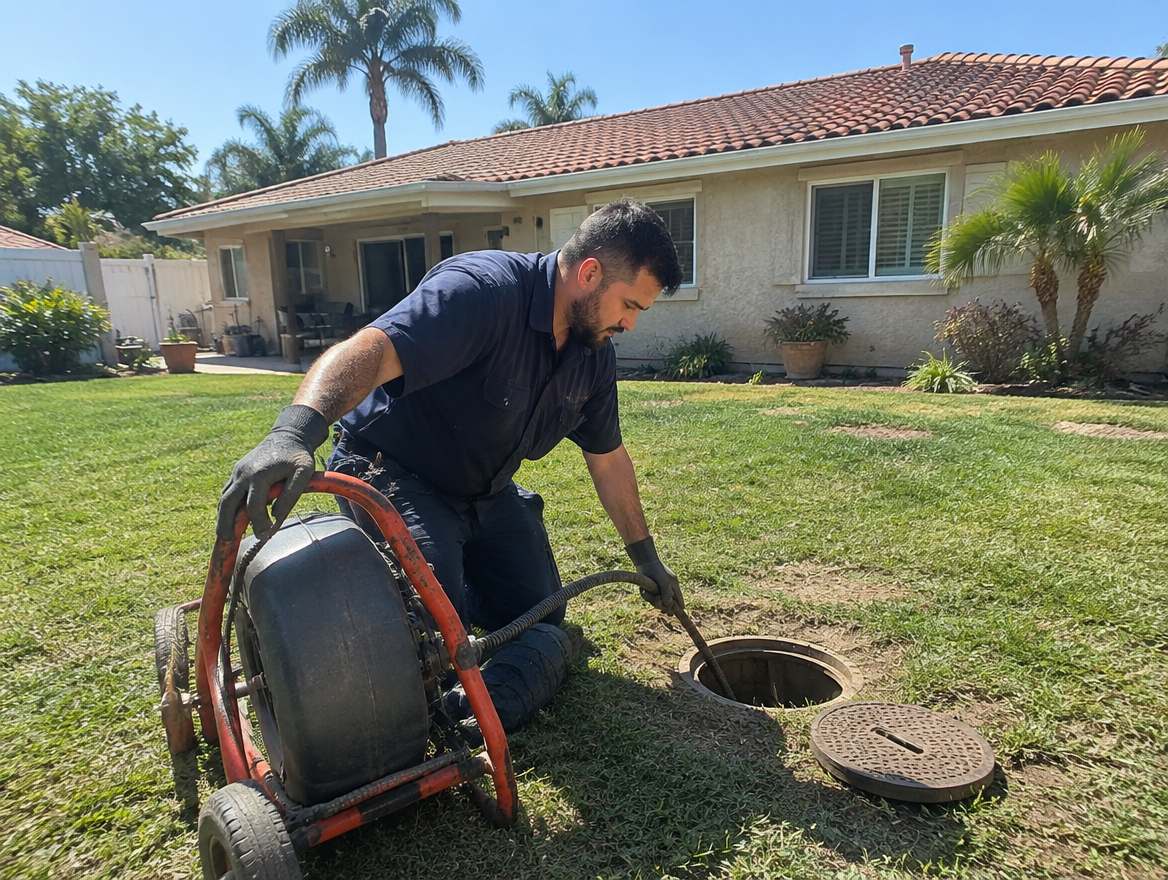
A plumber feeding a motorized sewer cable into an outdoor sewer cleanout

Find the fault before anyone digs

Your house drains through one private pipe, the sewer lateral, that runs under the yard to the city main. In La Habra's 1950s to 1970s tract homes that pipe is often the original clay or cast iron. Decades of roots and settling soil show up as slow drains, gurgling toilets and backups.

A camera run through the cleanout tells you which problem you have: roots at a joint, a crack, a low spot that holds water, or a section that has collapsed. It also tells you where, measured in feet from the cleanout.

With that footage you can choose between a spot repair, a liner cured inside the old pipe, or a new line. Before anyone breaks ground, ask the city of La Habra about permits and where your responsibility for the pipe ends.

Signs the trouble sits in the main line

A single slow sink points to a local clog. Several fixtures acting up together point to the pipe they share.

Sewage coming up right now

Do these in order. Safety first, diagnosis later.

  1. Stop all water use: no flushing, showers, dishwasher or laundry. Anything you send down comes back up the lowest drain.
  2. Keep children and pets away from the sewage. Wear gloves and closed shoes if you have to walk through. Sewage carries bacteria that make people sick.
  3. If a supply pipe or fixture is also leaking, close the main water shutoff, near where the line enters the house or at the meter by the street.
  4. Find the sewer cleanout, a capped pipe near the foundation or in the front yard. Leave the cap on while the line is full; pressure can blow it off.
  5. Photograph the rooms and the cleanout, and note which drains backed up and when. Your plumber and your insurer will both ask.
  6. If you smell gas at any point, leave the building and call 911 or SoCalGas from outside.

What pipe sits under your yard

The material decides how the line fails and which repairs make sense. Only a camera tells you for sure. Here is what each one looks like when it goes wrong.

Common sewer lateral materials, how they fail, what a camera shows and typical repair options
Material How it fails What the camera shows Usual options
Vitrified clay Common in post-war tract homes Laid in short sections, so a joint every few feet. Roots get in at the joints; sections crack or shift as soil moves. Root masses at joints, offset joints, cracks, missing pieces. Root cutting buys time. A liner if the pipe holds its shape. Spot or full replacement if it is broken or sagging.
Cast iron Common under slabs and inside older homes Corrodes from the inside over decades. Scale narrows the bore and the bottom of the pipe wears thin and cracks. Heavy scale, a rough or missing pipe bottom, lengthwise cracks. Descale and line in some cases. Replace sections, often the ones under floors.
ABS or PVC Newer homes and past repairs Long glued lengths keep roots out. Poor bedding lets a section sag or a fitting pull apart. Low spots holding water, separated or misaligned fittings. A local repair at the low spot or fitting.
Lined pipe Lines someone already rehabilitated A resin liner cured inside the old pipe. Trouble shows up at the ends and at branch connections. A smooth, jointless bore. Check the transitions at each end. Repair the ends and connections and leave the run alone.

How we take a sewer job from backup to finished line

Small spot repair or full replacement, the order stays the same. The camera comes first and the method follows the footage.

  1. Clear enough to see

    If the line is blocked, we open it with a cable machine or a water jetter so the house drains and a camera can pass.

  2. Camera and locate

    We push a camera from the cleanout toward the street and record the run. At each defect a locator finds the camera head from the surface and we mark its spot and depth.

  3. Pick the method

    One bad section gets dug up and replaced. Pipe that still holds its shape can take a liner. A broken or sagging line needs a new pipe, by trench or by pipe bursting.

  4. Permit and utility marks

    Sewer replacement generally needs a permit; check the details with the city of La Habra. Underground utilities get marked before anyone digs.

  5. Do the work and connect

    Old pipe comes out or gets rehabilitated, new pipe or liner goes in, and we tie it to the house drain and the public connection. We add cleanouts where they help.

  6. Camera it again

    A second camera run shows the finished line. Keep that video with the permit and invoice.

What we expect to find under La Habra yards

Roots in an original clay lateral

A big front-yard tree and a clay line with a joint every few feet make a common pair. Roots slip into the joints and catch paper and grease. Cutting them buys a few months; the camera footage tells you whether lining or replacement ends the cycle.
Cast iron under a slab floor

Many tract homes poured their slab over cast-iron drains. Over decades the bottom of that pipe corrodes and cracks. The fault can sit under the floor, under the yard or both, so get the footage before anyone cuts concrete.

A low spot that holds water

Where soil settled under the line, a dip collects water and solids, and the line clogs at the same distance every time. Clearing helps for a while. Re-laying that section at the right slope fixes it.

Buying or selling a house

A camera inspection during escrow shows a buyer what sits under the yard. Defects with distances and depths in writing give both sides something concrete to negotiate.

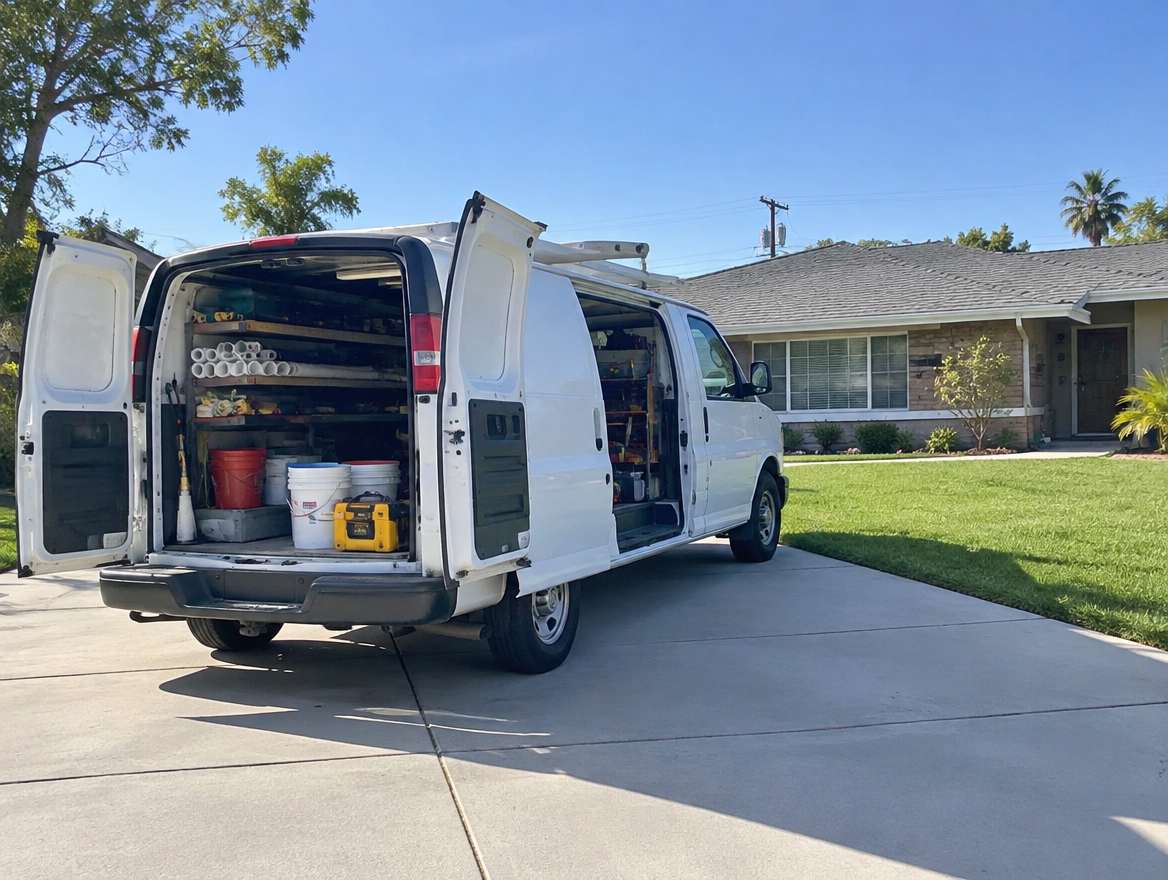
An unmarked plumbing service van parked at a home in La Habra, California

What we ask when you call

Which drains are acting up, whether sewage has come up anywhere, how old the house is, where the cleanout sits, and whether anyone has cleared or filmed the line before. Big trees near the line and past repairs help us too.

We clear and camera the line before we recommend a method. You get the quote in writing after that inspection: the method, the length of pipe, the permit, how we restore the yard or driveway, and what happens if the ground holds a surprise.

Sewer lines in La Habra

La Habra filled in fast after World War II. Many neighborhoods are single-story slab homes from the 1950s through the 1970s, built with clay or cast-iron sewer laterals that are now decades old. Mature street and yard trees send roots after them.

The city maintains the public mains. The private lateral serving your house is generally yours. Confirm with the city of La Habra where that responsibility ends at your address, and which permits and inspections apply before work starts.

  • Ask the city of La Habra which permits and inspections apply to lateral repair at your address.
  • Ask where your responsibility for the lateral ends and the city's begins.
  • Get a CSLB license number from any contractor and check it at cslb.ca.gov.
  • Ask for the camera video before and after the work, along with the written report.
  • Ask any company to confirm your La Habra address is in its service area.
Map shows the area served, not an office location. Open in Google Maps

ZIP codes served: 90631 (La Habra).

Also nearby: 90603, 92835, 92833, 90604, 90638, 90605, 92832, 90621, 91748, 92831, 91745, 90602, 92821, 92801, 92870, 90620, 90601, 90623.

Sewer line questions

Is it the sewer line or one clogged drain?

One slow fixture points to a local clog. Several fixtures backing up together, water rising in the tub when a toilet flushes, or a clog that keeps returning point to the main line. A camera inspection settles it.

What does a sewer camera inspection show?

Video of the inside of your lateral: roots, cracks, offset joints, low spots holding water, collapsed sections and the pipe material. A locator marks where each defect sits and how deep.

Can tree roots be cleared for good?

Cutting restores flow, and the roots grow back through the same joints. Lining or replacing the damaged section closes those openings.

What is trenchless sewer repair?

Methods that rebuild or replace the line with less digging. Lining cures a resin tube inside the old pipe. Pipe bursting pulls new pipe along the old path and breaks the old pipe outward. The camera footage shows whether your line suits either one.

Do I need a permit for sewer line work in La Habra?

Lateral repair and replacement generally need one, and the details depend on the job. Check with the city of La Habra and ask your contractor who pulls the permit and books the inspection.

Who is responsible for the line between my house and the street?

The private lateral is generally yours and the public main is the city's. The boundary varies, so confirm it with the city before work starts.

Can I clean up a sewage backup myself?

A small spill on tile or vinyl, yes, with gloves, eye protection and disinfectant, and with kids and pets kept out. Soaked carpet or drywall, standing water or sewage in a crawl space call for professional cleanup.

Can I reach La Habra Sewer Line Repair through this site?

This is a preview site for La Habra Sewer Line Repair. The phone number shown is a temporary placeholder, and the request form is visible but not yet connected to a destination, so a submission is not sent anywhere yet.

Before you hire anyone

How do I check a plumber's license?

Ask for the CSLB license number and look it up at cslb.ca.gov. The lookup shows license status, classification and bond information.

A company says I need a full replacement. How can I be sure?

Watch the camera video yourself and have each defect pointed out with its distance from the cleanout. For a large job, a second opinion on the same footage is reasonable.

What should a written sewer quote include?

The method, the length and type of pipe, who pulls the permit, how they restore the yard, driveway or floor, any new cleanouts, a camera run after the work, and how they handle surprises underground.

Will lining work on my pipe?

A liner needs pipe that still holds its shape and has no major sag. Collapsed sections and bad bellies need digging or replacement.

Should I pay the full amount up front?

Be careful. California limits the down payment a contractor can ask for on most home improvement jobs; the CSLB website explains the rules. Get the payment schedule in writing.

Does homeowners insurance cover sewer line repair?

That depends on your policy and the cause. Some policies cover backup damage and leave out the pipe; some sell separate service line coverage. Call your insurer and keep photos and invoices.

Ask for the contractor's CSLB license number and check it at cslb.ca.gov. Ask who will do the work, employees or subcontractors. Get the price and the method in writing before anyone starts.

La Habra Sewer Line Repair is the business name for this site. Licensing and service details will be published here once confirmed.

Questions to ask before hiring a plumber

Sewer backing up in La Habra?

Stop running water, keep everyone away from the sewage, and get the line cleared and filmed before you choose a repair. Call us or send us the details. This is a preview site: the number shown is temporary and the form is not connected yet. Whoever you hire, check their CSLB license at cslb.ca.gov.

Tell us what the drains are doing

Which drains, since when, and whether sewage has come up anywhere. Urgent? Call (562) 555-0138.

By sending this form you agree to the privacy policy.

Call Get help